


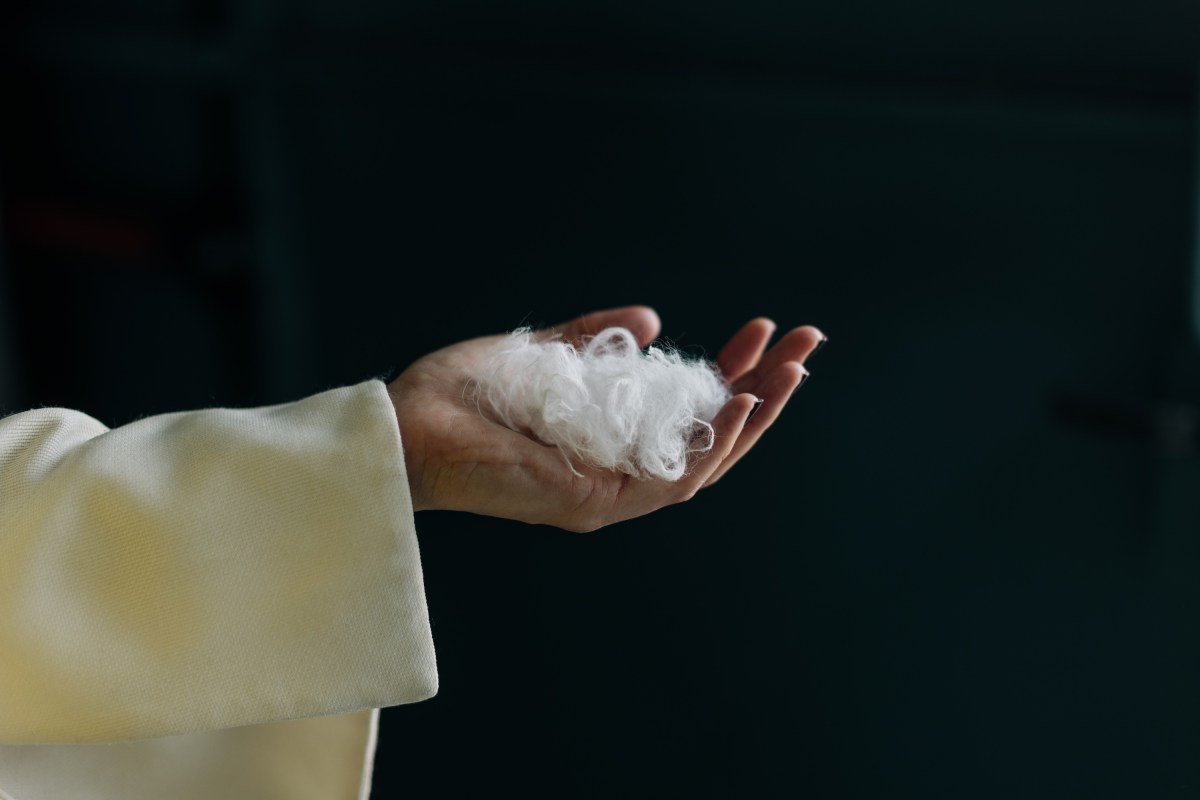
Cashmere sweaters are everywhere these days, often at unbelievably low prices. The appeal is obvious: if you’ve ever worn cashmere, you know it’s soft, light, and warm — an impressive fiber that’s hard to give up. Unfortunately, those bargain prices usually come with a catch.
Cashmere comes from the fine undercoat of a handful of goat breeds. Typically, one goat will be sheared twice a year, producing just four to six ounces (113 to 170 grams) of cashmere annually. That’s not a lot of supply for a growing market.
“The producers of raw materials are actually under a lot of stress,” Sim Gulati, co-founder and CEO of Everbloom, told TechCrunch. “What you’re seeing now, especially with the advent of $50 cashmere sweaters, is that they’re being sheared way more often. The quality of the fiber is not as good, and it’s creating unsustainable herding practices.”
Rather than try to change herding practices or convince consumers to only buy high-quality cashmere, Gulati and his team at Everbloom had a different idea. The startup, which has raised over $8 million from investors including Hoxton Ventures and SOSV, set out to create an upcycled material that’s nearly indistinguishable from the real thing.
To do this, Everbloom has created a material science AI called Braid.AI. The model can fine tune various parameters to create fibers with different qualities. Cashmere is one target, but so are other materials widely used in the textile industry.
At its core, Everbloom’s process is the same regardless of final product. To make its material, the company currently collects waste from across the fiber supply chain, including cashmere and wool farms and mills, as well as down bedding suppliers. In the future, it plans to expand to other waste sources, including feathers from the poultry industry. These waste streams share one thing in common: they’re all made of keratin, the key protein that underpins Everbloom’s process.
The company then chops the waste to size and combines it with proprietary compounds. The mix is pressed through a plastic extrusion machine (which shapes material by forcing it through a die), and the pellets that come out the other end are fed through spinning machines that are normally used to produce polyester fiber. “That equipment is used for 80% of the textile market,” Gulati said. “You have to be a drop in replacement.”
Techcrunch event
San Francisco
|
October 13-15, 2026
To transform waste into new fiber, all of the necessary chemical reactions occur within those two machines. Everbloom can create fibers that replicate everything from polyester to cashmere by using its AI to tweak the formulation and how the two machines process it.
The startup said every fiber it produces should be biodegradable, even the polyester replacement.
“All the components that we’re using are biodegradable,” Gulati said, adding that his company is currently running its products through accelerated testing to prove the hypothesis. And because Everbloom uses waste products, the environmental impact will be dramatically lower, he said.
Plus, it should be cheaper, too. “We want it to be more economically viable for brands and consumers,” Gulati said. “I don’t believe in a ‘sustainable premium’” — the idea that eco-friendly products should cost more. “In order for a material to be successful — both in the supply chain [and for] the consumer — you have to have both a product benefit and an economic benefit to everyone who touches the product. That’s what we’re aiming for.”
