


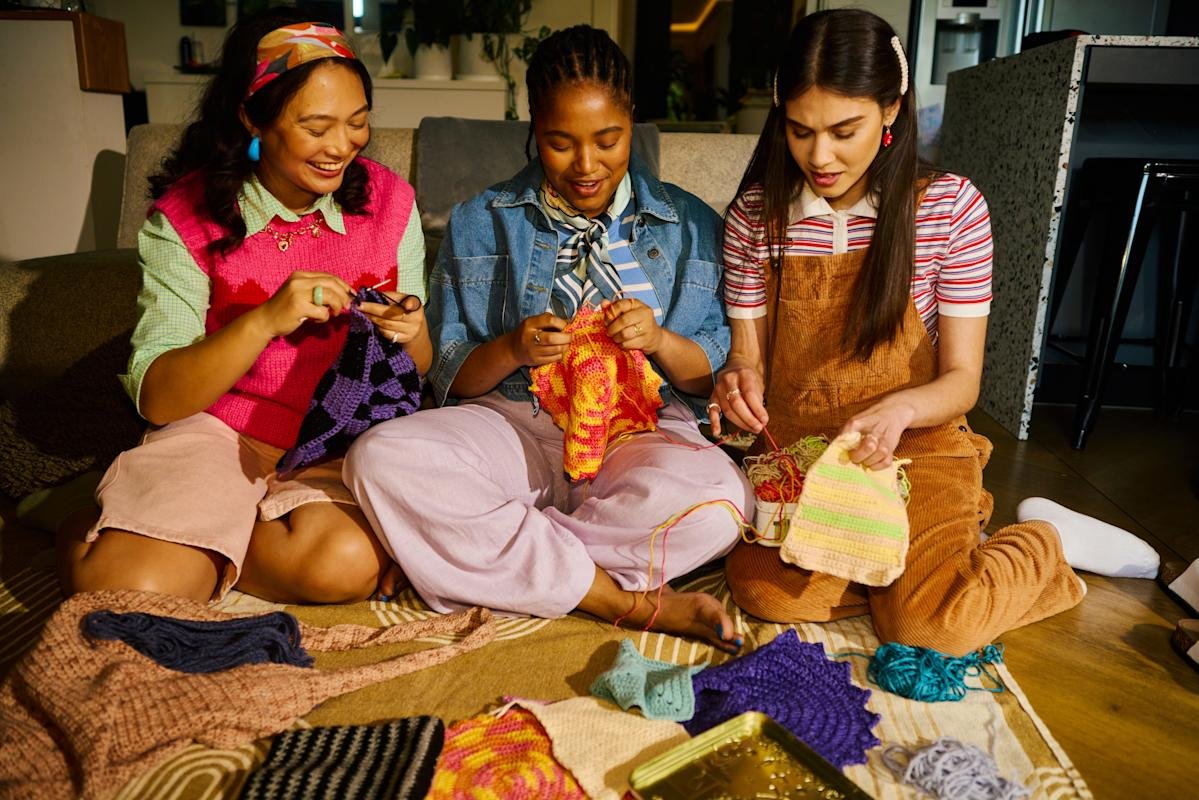
On the Wednesday, March 4, 2026, episode of The Excerpt podcast: Knitting. Crochet. Painting. Woodworking. Hands-on hobbies are booming again — and scientists say the benefits go far beyond passing the time. Daisy Fancourt, professor of psychobiology and epidemiology at University College London, joins The Excerpt to break down what happens in the brain and body when we create, why repetitive crafts can calm the mind and how creative hobbies may play a bigger role in health than many people realize.
Hit play on the player below to hear the podcast and follow along with the transcript beneath it. This transcript was automatically generated, and then edited for clarity in its current form. There may be some differences between the audio and the text.
Podcasts: True crime, in-depth interviews and more USA TODAY podcasts right here
Dana Taylor:
Scrolling, streaming, swiping for so many of us, our days are spent moving from one screen to the next. But, lately there’s been a noticeable shift in the other direction. Crochet kits are selling out. Knitting circles are filling up. Embroidery and quilting hobbies once stereotyped as old-fashioned are booming, especially among younger generations. So, what’s behind the rise of these so called analog hobbies? Is this just nostalgia or our brains and bodies pushing back against digital overload? Hello, and welcome to USA TODAY’s The Excerpt. I’m Dana Taylor. Today is Wednesday, March 4th, 2026. Today, we’re taking a deeper look at what science says about creative hobbies and whether picking up yarn, thread, or paint might actually be good for our health. Joining me now is Daisy Fancourt, professor of psychobiology and epidemiology at University College London, and author of the recently released Art Cure: The Science of How the Arts Save Lives.
Daisy, it’s so good to have you here.
Daisy Fancourt:
Wonderful to be with you.
Dana Taylor:
We’re seeing a surge in craft hobbies like knitting, crocheting, painting, and woodworking. From your perspective, what’s driving this spike right now? Is there something about this historical moment that makes us more receptive to hands-on creativity?
Daisy Fancourt:
We’re actually seeing this pattern as particularly being driven by younger adults, and I think that tells us a lot. We know that younger adults are actually a group that is starting to struggle with the volume of screen time and phones in their lives. But, these hobbies use hands in the same way. They’ve got a very similar focus in being short-term things you can do in just a few minutes. And, I think, part of it is this move away from our digital lives to more analog activities. But, it’s also a response to some of the mental health and wellbeing feelings that we’re seeing in society. Many people are now experiencing symptoms of anxiety, and depression, and stress, but activities like crafts are very good ways of regulating our emotions and reducing those symptoms.
Dana Taylor:
In your book, you talk about the ingredients of art, the sensory, emotional, and social components that make something artistic. When we think about a craft like knitting or quilting, what are the active ingredients at work?
Daisy Fancourt:
Some of it is the sensory input that we’re getting, so actually the feel of the yarn or the thread that you’re working with, the visual stimulation that we’re getting from the colors and shapes that we’re playing with, and also the creativity and imagination in terms of what our brains are imagining and then producing. And these ingredients are actually really powerful in then activating various mechanisms like psychological or biological processes that then help us to feel happier and better.
Dana Taylor:
You’re right that art is the quote, forgotten fifth pillar of health alongside things like sleep, diet and exercise. That’s a bold claim. What makes the art powerful enough to sit in that category?
Daisy Fancourt:
It’s funny that it sounds like a bold claim, because if you looked back even a few hundred years, everybody sang, danced, told stories, made art together as a part of everyday life. It’s only really in modern society that we’ve actually started to turn the art into more of a luxury rather than an everyday essential. And actually when we look at the evidence base, there is very strong evidence now that these activities, these creative arts activities, have tangible, meaningful effects on our health. And for things like mental health, for example, we actually see benefits that are equivalent to some of those other health behaviors like physical activity, but we’re just not talking about it in that way, even though the evidence is there.
Dana Taylor:
So Daisy, when someone sits down to crochet, what is happening in the brain and the body? What systems are being activated?
Daisy Fancourt:
So, if we’re enjoying that hobby and it’s bringing us feelings of happiness, we know this is because there are regions at the heart of the brain involved in our pleasure response that are being activated, as well as specific reward networks like the dopaminergic reward system in our brain that leads to the release of neurotransmitters like dopamine that help us to feel happy. But, we often also feel a reduction in physiological stress. So, reductions in things like our heart rate and blood pressure as a result of changes in our sympathetic nervous system activity. We also see reductions in stress hormones like cortisol, and we can even see reductions in things like inflammation in our immune system, which is related actually to symptoms like depression, tying together these psychological and biological results of arts engagements.
Dana Taylor:
When you describe how the brain’s reward system, especially dopamine, is activated not just by pleasure, but by anticipation. Tell me about that.
Daisy Fancourt:
If we’re doing things like listening to stories or making music, listening to songs, there’s a temporal element there as well. We can start to predict what might be about to come. So, many people will know that the chorus in their song is about to come back, and the anticipation of those pleasurable moments in that song actually lead to dopamine release, as well as those peak moments like the chorus itself. So, essentially because the arts play on our expectations, giving us moments of tension and resolution, that’s why they’re so effective at manipulating our reward networks and giving us that dopamine response.
Dana Taylor:
These hobbies are repetitive, they’re rhythmic. Do those patterns help quiet the brain’s tendency toward rumination and overthinking? Is that part of why they feel calming to some people?
Daisy Fancourt:
Absolutely. When we get into the groove of things like knitting or crochet, for example, there’s a rhythm to that. And actually that rhythm that you might have with your fingers, with the needles you’re using, we actually automatically synchronize to that rhythm with our brains, with our breathing, with our heart rate. It’s a process called entrainment. And actually, as we synchronize to that, we actually find ourselves reducing the rate of our heart rate and breathing, so that helps us to physiologically relax. So actually, and also we can get into the flow of the activity. Sometimes people will be crafting and they’ll suddenly realize an hour has gone by and it only felt like 10 minutes. And that feeling of flow is because we actually have synchronization across the medial, central part of our brain, which means that we’re so deeply engrossed in what we’re getting that all of our tension gets very focused. And this is a really positive state for our brains to experience.
Dana Taylor:
I want to circle back to something that you mentioned earlier. Do we have evidence that regular creative practice, even at an amateur level, can lower stress hormones and inflammatory markers? And then what about the risk of depression?
Daisy Fancourt:
We actually do have evidence that if people are regularly engaging, so they have that hobby they keep coming back to, that it actually does have a longer term physiological effect. In fact, people who are regularly engaged in arts activities actually have patterns of gene expression, which indicate a slower pace of biological aging. They have clinical physiological markers, like markers in their inflammatory systems and their circulatory systems that indicate a slower biological age as well. And in fact, they even have brains that indicate a younger brain age from regular engagements. So, this is really exciting in showing the depth of the effects. And actually, exactly as you mentioned, we actually see this in terms of long-term health risk. People who are more regularly engaged in the arts have a lower risk of developing depression, as well as things like chronic pain over the subsequent years. And they actually also have higher levels of life satisfaction, meaning, and purpose, and happiness in their lives.
Dana Taylor:
What happens biologically and psychologically when crafting becomes communal, like knitting circles or stitch-alongs?
Daisy Fancourt:
This is a really lovely thing, because actually essentially the craft becomes a vehicle for people then having other health promoting behaviors like engaging with others. We know that social engagements has benefits for our health, and crafts can be a really good way of supporting that. And in fact, some studies have shown that arts activities can help you to bond socially with people even faster than non-arts activities. So, recent studies looking at groups singing found that if people will get together and sing together, they’ll feel emotionally closer to people faster than if they just start chatting or go to the gym and exercise together.
Dana Taylor:
You’re careful to say the art [inaudible 00:08:36] in that the science can be overstated. Where does the hype outrun the evidence?
Daisy Fancourt:
There are plenty of examples, unfortunately, of hype, myth, magic, and superstition when we’re talking about the health benefits of the arts. But, this is something that I really call out in Art Cure. I try to highlight some of the myths like the idea that playing Mozart to babies will make them more intelligent, or the idea that playing music to cells in Petri dishes will affect their growth. I think that these are good examples to call out, because actually when we look at the science that is robust and has been replicated, actually those results are far more interesting and exciting than the myths. So, I think, it’s really good to put those myths to bed, but instead share the exciting science that’s actually remained a bit of a secret so far.
Dana Taylor:
Daisy, for someone listening who’s intrigued but unsure where to begin, what might a small realistic dose of creativity look like?
Daisy Fancourt:
We’re all used to having these rules in our lives about how many vegetables to eat each day, for example. And, I think, it can really help to figure out what’s our personal equivalent of that. Can you manage 10, or 15, or 20 minutes a day of creative activity, or can you try and make swaps in your life? So, instead of scrolling your phone on your commute, is that a great time to do 20 or 30 minutes of a craft activity? Or if you’re meeting up with friends, instead of just meeting up for drinks or dinner, can you meet up and do something that’s creative together? I think a bit like with our diet as well, it’s good to remember that variety is really important. So, actually trying different arts experiences can bring different benefits to your health. So, it’s a really positive thing not to worry about how good you’re going to be, but just to focus on the enjoyment of the experience and sampling lots of different things till you find something you like.
Dana Taylor:
And I’m just going to ask, do you have a favorite creative activity that you look forward to?
Daisy Fancourt:
I love playing with piano and making music, but actually recently I’ve been trying to sort of test new things. I’ve recently tried embroidery and I’ve really loved it. What I’m producing doesn’t look that great, but that’s not the points. The point is that I’m really enjoying that sensory experience, that joy of learning a new skill and the excitement of being able to show friends what I’ve produced.
MUSIC:
(music)
Dana Taylor:
Daisy’s new book, Art Cure: The Science of How the Arts Save Lives is on bookshelves now. Daisy, thank you so much for your time.
Daisy Fancourt:
Thank you.
MUSIC:
(music)
Dana Taylor:
Thanks to our senior producer, Kaely Monahan for her production assistants. Our executive producer is Laura Beatty. Let us know what you think of this episode by sending a note to podcasts@usatoday.com. Thanks for listening. I’m Dana Taylor. I’ll be back tomorrow morning with another episode of USA TODAY’s The Excerpt.
This article originally appeared on USA TODAY: The surprising health benefits of crafting | The Excerpt
