


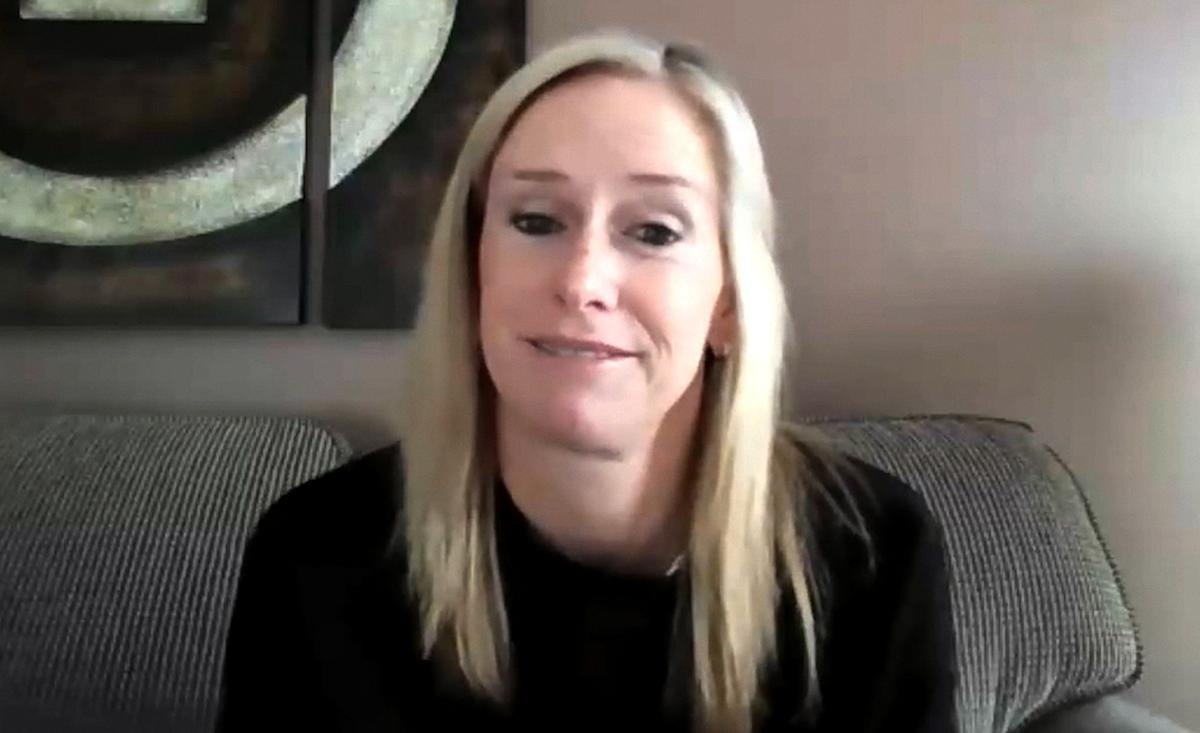
A 41-year-old mom who nearly died after experiencing sudden cardiac arrest while riding a bicycle is searching for the strangers who helped save her life.
Lindsay MacOdrum was on a family vacation to New York City last June when her heart stopped pumping. She and her family were riding bikes in Central Park when she said she stepped off her bike and collapsed.

ABC News – PHOTO: Lindsay MacOdrum opens up to “Good Morning America” about experiencing a cardiac arrest during a family vacation in 2025.
“My color went like, gray, and my lips started to go blue, and I just, like, I wasn’t moving,” the physical education teacher from Canada told “Good Morning America.”
MacOdrum’s 19-year-old stepson Maddox MacOdrum had been recertified in cardiopulmonary resuscitation, or CPR, the week before and recognized she was in cardiac arrest.
“My dad was, like, in shock. Kind of froze up a bit,” he recalled to “GMA.” “And then, that’s kind of when I’m like, that’s kind of when we have to start it.”
He said he quickly started CPR.

ABC News – PHOTO: Lindsay MacOdrum’s stepson Maddox MacOdrum talks about using CPR to “Good Morning America.”
Unlike a heart attack, cardiac arrest occurs when there is an electrical issue and the heart develops an arrhythmia and can’t effectively pump blood to the brain and other organs, according to the Centers for Disease Control and Prevention.
A heart attack is typically a circulation issue where there is a blockage in an artery that supplies blood to the heart, preventing oxygen supply to the heart muscle, resulting in tissue damage that limits the heart’s ability to pump blood.
MacOdrum’s family said park bystanders called 911, and a doctor near them jumped in to help and took over CPR from Maddox MacOdrum. When paramedics arrived, Lindsay MacOdrum said they needed to shock her seven times before her heart started beating again.
Teen athlete saved after cardiac arrest speaks out: What to know about lifesaving role of CPR, AEDs in schools
Lindsay MacOdrum was rushed to and treated at Mount Sinai Hospital, where doctors told her family she had less than a 10% chance of survival. Her parents also traveled to New York City to say goodbye.
Despite the low odds, Lindsay MacOdrum’s condition improved, and she said she later learned she had cardiomyopathy, or weakening of the heart muscle, caused by a gene mutation.
Looking back, Lindsay MacOdrum recognized some warning signs she said she had previously dismissed.
“I remember feeling exhausted on a couple of my runs before this happened,” she said. “And I remember telling a couple of my friends, saying, ‘Oh, I think I’m just, I’m getting older, I’m getting out of shape.'”
How to spot signs of cardiac arrest
Now, Lindsay MacOdrum said she is forever proud of her stepson for saving her life and encourages everyone to get trained in CPR.
“If something feels off, you need to get it checked out,” she said. “And CPR saves lives. Everyone needs to be trained in CPR.”
Women and cardiac arrests
Cardiovascular or heart disease is the No. 1 cause of death in the country, claiming more than 600,000 lives every year, according to the CDC.
ABC News chief medical correspondent Dr. Tara Narula, a cardiologist who did not treat MacOdrum, explained that women in particular should pay attention to their risk of cardiovascular disease.
“There are female-specific risk factors like early periods, early menopause, pregnancy complications, autoimmune conditions, inflammatory bowel disease,” Narula said on “GMA” Tuesday.
Narula said women should also learn the symptoms of cardiovascular disease, which may also vary for women.
“In women, many times, it can be jaw pain, shoulder pain, back pain, shortness of breath. It can be palpitations, fainting or feeling lightheaded. And then one common one can just be extreme fatigue or exhaustion,” Narula continued, adding that women should not ignore symptoms and should advocate for themselves.
