


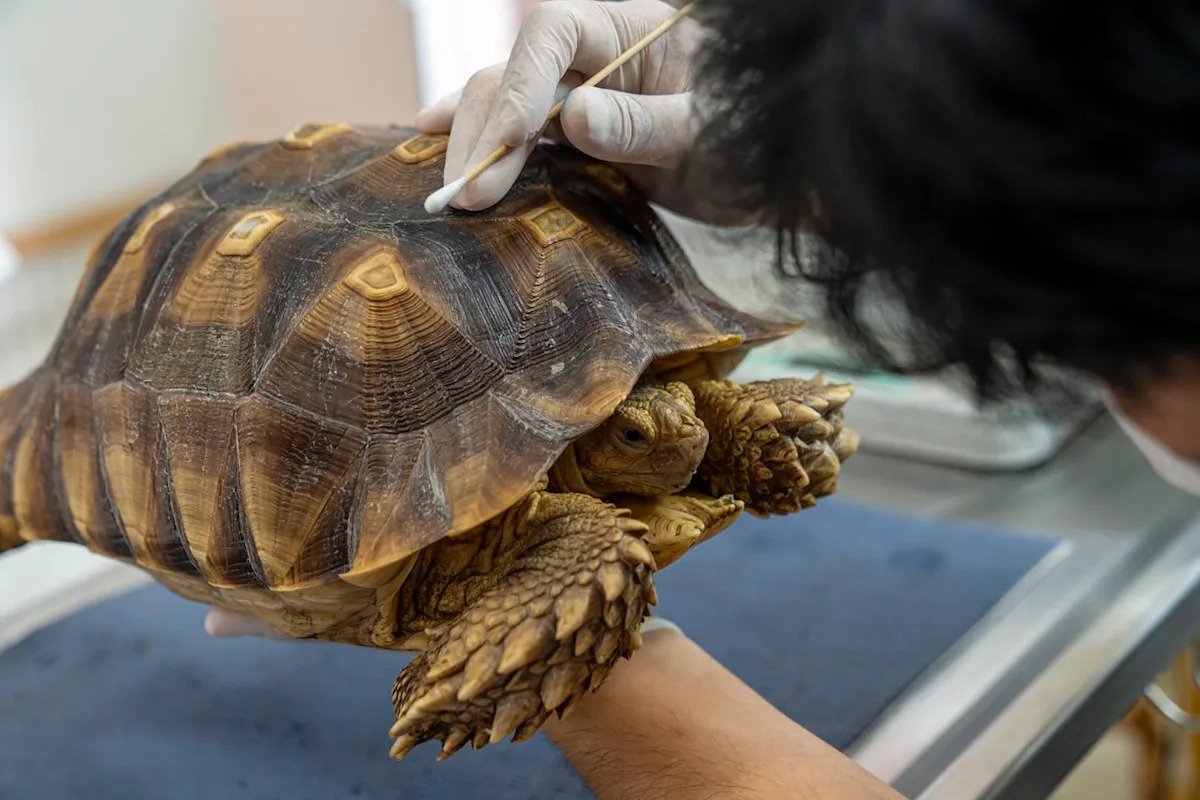
In my work as a veterinary pharmacologist, I never know exactly what I’m going to get when I open my email. It could be a request from a veterinarian asking my team to determine the concentration of a drug to treat the shell of a turtle infected with fungal disease. Or it could be an inquiry from a researcher wondering whether we can help them figure out the dose of antacid they should give goats and sheep with ulcers.
In one email, a veterinarian wanted to know whether we could determine the concentration of an extended-release antibiotic in tigers to determine how to best treat them. Figuring this out would make the difference between trying to give a sick tiger a pill every 12 hours – a difficult task – or a shot once a month.
At our veterinary pharmacology lab, my colleagues and I analyze drug levels in animals from zoos and aquariums nationwide, from tiny mice to majestic elephants and from penguins to farm animals. Whether it’s a dolphin with an infection or a tiger in pain, we help veterinarians determine the right treatment, including how much medicine is best for each animal.
Here’s a peek behind the scenes to experience a day in the life of a veterinary pharmacologist, and what it takes to ensure these creatures get the care they need to thrive.
Beluga milk and antibiotics
One day, I received an email from an aquarium asking whether my team and I could determine the concentration of an antibiotic in milk – specifically beluga whale milk.
Beluga whales live in cold waters throughout the Arctic and are extremely sociable mammals that hunt and migrate together in pods. They are recognized for their distinctive white color and are known as the “canaries of the sea” for the wide variety of sounds they make. Whales like the beluga are at the top of the food chain and play an important role in the overall health of the marine environment. However, these animals are threatened by extinction. There are roughly 150,000 beluga whales left in the world today, and certain populations are considered endangered.

The aquarium reached out to us as part of their research on the factors threatening the sustainability of belugas in the wild and what steps can be taken to protect them. The team there works with animals both in human care and in their natural habitats to improve husbandry methods, understanding of the underwater world and the conservation of aquatic life.
We agreed to try to extract the drug from the milk. However, we first needed a sample of whale’s milk. So, the first question: How do you get milk from a whale? Through my decades of working in this field, my team has studied samples from a wide range of species, but this was the first time someone asked us to analyze whale’s milk.
Unfortunately, I never did find out how they actually got the sample. But I cannot imagine it was easy. The sample we received reminded us of a thick buttermilk, very clumpy with a little bit of a blue tint.
The milk sample they gave us came from a whale with an infection who was also nursing a calf. The veterinarians wanted to know whether the antibiotic was crossing into the milk, indicating that the calf may have been exposed to the drug.
Each chemical compound requires its own unique process to extract from a particular sample type. This extraction can range from one to 15 steps and can take from one to six hours to perform. After we devised a method and procedure to extract the antibiotic from milk, we set to analyzing the sample.
We found the presence of drug in the sample, which meant the nursing calf was getting exposed to antibiotic from its mother’s milk. This posed health risks to the calf, including disruption to its gut microbiome that could lead to a weakened immune system, increased susceptibility to infections and antibiotic resistance.
Making a treatment plan
Now that the aquarium knew the beluga milk contained the antibiotic, it could devise a treatment plan. Beluga calves are dependent on nursing for the first year of life until their teeth emerge. So stopping the calf from drinking its mother’s milk wasn’t an option.
When prescribing antibiotics, a veterinarian needs to carefully consider the potential risks and benefits to both the nursing mother and her offspring. The goal is to provide effective treatment for the parent while minimizing the risk of harm to the offspring.
In order to determine whether the nursing calf was at risk, the veterinarian wanted to determine the concentration of antibiotic in the calf.
To measure how much antibiotic the calf was ingesting from the milk, the aquarium sent us a plasma sample from the calf to analyze. While we did find measurable amounts of the drug in the sample, there was not enough to cause harm to the calf.
With this information, the veterinarian decided to continue to give the mother the antibiotic. The veterinarian gave our team samples from both the mother and the calf to continue monitoring the drug concentrations.
Effectively treating animals
For many animals, there is limited information available to guide clinicians when deciding treatment plans. Many dosage regimens are extrapolated from animals with different physiologies and metabolisms compared to the animal receiving the drug. What might cure one species might kill another.
Evaluating how safe and effective a drug is for a particular species is essential to not only properly treat and prevent disease but also to relieve pain. The research we do provides needed information on appropriate doses in vulnerable species for which there is no scientific data available.
I find the work we do rewarding because we provide information to so many veterinarians to help them take care of remarkable creatures great and small.
This article is republished from The Conversation, a nonprofit, independent news organization bringing you facts and trustworthy analysis to help you make sense of our complex world. It was written by: Sherry Cox, University of Tennessee
Read more:
Sherry Cox does not work for, consult, own shares in or receive funding from any company or organization that would benefit from this article, and has disclosed no relevant affiliations beyond their academic appointment.
