


By Nancy Lapid
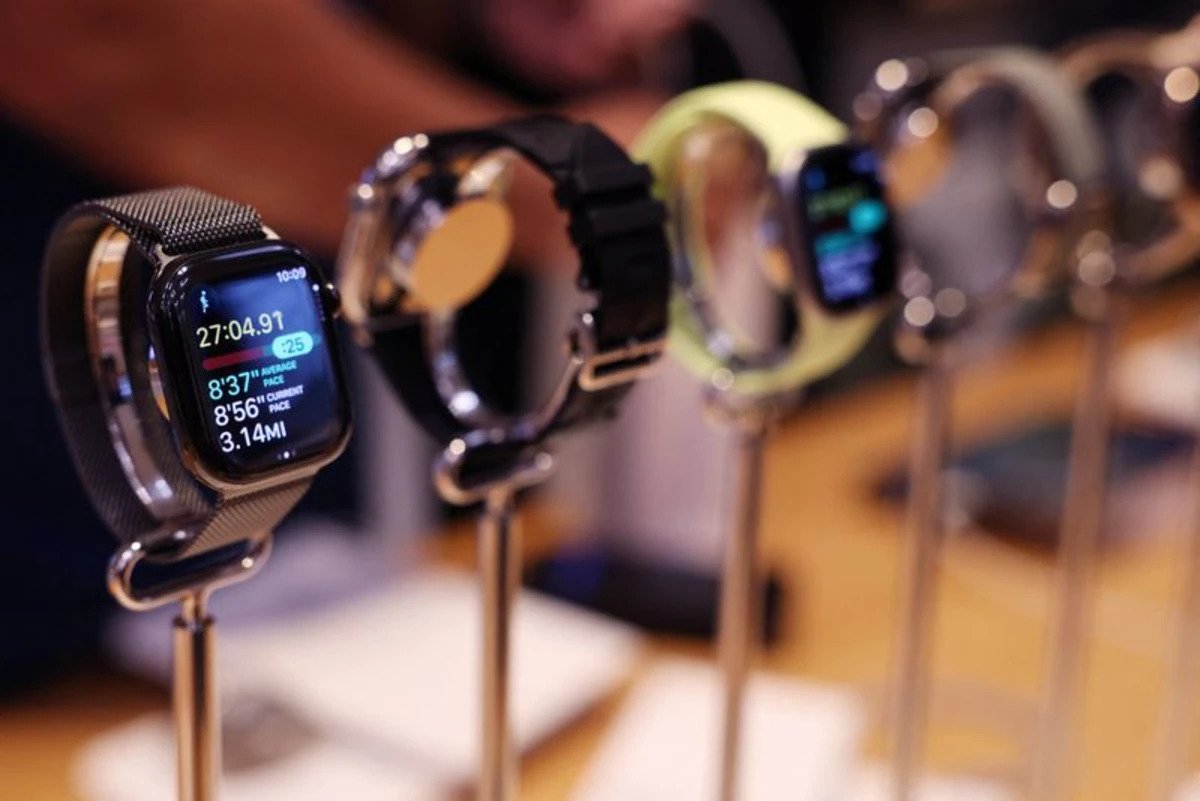
Jan 30 (Reuters) – Apple watches are proving useful in screening for the common heart rhythm disorder atrial fibrillation, or AFib, according to two studies published in the Journal of the American College of Cardiology.
AFib, which significantly raises the risk of strokes, can be difficult to diagnose because often the rhythm irregularities are intermittent. Apple watch models capable of screening for possible AFib can either passively monitor the wearer’s pulse with an optical sensor, or the wearer can place a finger on the crown to produce a one-lead electrocardiogram.
For one of the studies, researchers in The Netherlands enrolled 437 adults at high risk for stroke and randomly assigned half of them to wear an Apple watch, paired with their smartphone, for six months. Everyone also received standard medical care.
Patients were asked to wear the watch for at least 12 hours a day and to record a one-lead ECG whenever they felt an irregular heartbeat. All ECGs were reviewed within 24 hours by a telemonitoring clinician.
At six months, new cases of AFib had been detected in 9.6% of the watch-wearing group. Most of the episodes had not produced any symptoms. This indicates that without monitoring by the watch, patients would not have realized their heart rhythms were irregular.
In the control group, 2.3% of patients were found to have AFib. All of those patients had felt the irregularity and reported it to their doctors.
The higher proportion of silent intermittent cases “likely reflect the ability of smartwatch monitoring to capture brief, self-terminating episodes that symptom-based approaches may miss,” the researchers said.
Separately, researchers in the UK recruited 168 patients who had undergone catheter ablation – a minimally invasive treatment for AFib – and had half of them wear Apple watches afterward to monitor for recurrence of the disorder.
Despite a greater number of recurrences in the watch-monitoring arm, that group experienced fewer unplanned hospitalizations – possibly because patients were able to learn immediately whether rhythm irregularities were worrisome or benign, the researchers said.
The smartwatches improved the diagnosis of AFib recurrences and reduced the time it took to recognize them, the UK researchers wrote.
NASAL SALINE MAY EASE OBSTRUCTIVE SLEEP APNEA IN CHILDREN
Nasal saline sprays are as effective as steroid sprays for treating children with obstructive sleep apnea, helping them breathe and sleep better and possibly avoid surgery, an Australian study suggests.
With obstructive sleep apnea, in which breathing stops and starts repeatedly during sleep, the upper airway is repeatedly blocked, partially or completely, often by enlarged tonsils or adenoids. The blockages trigger snoring, noisy breathing, and pauses in breathing that force the brain to wake up slightly.
The researchers recruited 150 children with sleep-related breathing issues and had them use a saline spray in each nostril daily for six weeks. Parents reported improvement in symptoms for nearly 30% of the children.
Ninety-three children with persistent symptoms were then randomly assigned to receive either a nasal steroid spray or the saline spray for an additional six weeks.
Rates of symptom resolution were similar, at slightly more than 35%, in both groups.
When the treatment period ended, there were no differences between the groups in proportions of parents who believed their child needed a specialist appointment or surgery, researchers reported in JAMA Pediatrics.
Six weeks after the end of treatment, symptoms were still under control in roughly 36% of children treated only with saline and 20% in the children who were switched to the steroids.
“We know how important sleep is for the health and development of kids, and we now understand that a simple saline nasal spray could be key to unlocking good sleep,” said lead author Dr. Gillian Nixon from Monash Children’s Hospital in Melbourne.
The researchers said nasal saline sprays are a safe and accessible option. And they are available without a prescription.
Under the guidance of their primary care provider, Nixon added, “families should consider saline for 12 weeks to help resolve common symptoms associated with obstructive sleep apnea before turning to specialist care and surgery.”
(To receive the full newsletter in your inbox for free sign up here)
(Reporting by Nancy Lapid; Additional reporting by Shawana Alleyne-Morris; Editing by Bill Berkrot)
