


When it comes to describing what an antioxidant is, it’s all in the name: Antioxidants counter oxidants.
And that’s a good thing. Oxidants can damage the structure and function of the chemicals in your body critical to life – like the proteins and lipids within your cells, and your DNA, which stores genetic information. A special class of oxidants, free radicals, are even more reactive and dangerous.
As an assistant professor of nutrition, I’ve studied the long-standing research showing how the imbalances in antioxidants and oxidants lead to oxidative stress, which is linked to cancer, diabetes, cardiovascular disease and dementia and Alzheimer’s disease. In fact, a primary cause of aging is the damage accumulated across of a lifetime of oxidative stress.
Simply put: To help prevent oxidative stress, people need to eat foods with antioxidants and limit their exposure to oxidants, particularly free radicals.
The research: Food, not supplements
There’s no way for any of us to avoid some oxidative stress. Just metabolism – the processes in your body that keep you alive, such as breathing, digestion and maintaining body temperature – are a source of oxidants and free radicals. Inflammation, pollution and radiation are other sources.
As a result, everyone needs antioxidants. There are many different types: enzymes, minerals, vitamins and phytochemicals.
Two types of phytochemicals deserve special mention: carotenoids and flavonoids. Carotenoids are pigments, with the colors yellow, orange and red; they contain the antioxidants beta-carotene, lycopene and lutein. Some flavonoids, called anthocyanins, are pigments that give foods a blue, red or purple color.
Although your body produces some of these antioxidants, you can get them from the foods you eat, and they’re better for you than supplements.
In fact, researchers found that antioxidant supplements did not reduce deaths, and some supplements in excessive amounts contribute to oxidative stress, and may even increase the risk of dying.
It should be pointed out that in most of these studies, only one or two antioxidants were given, and often in amounts far greater than the recommended daily value. One study, for example, gave participants only vitamin A, and at an amount more than 60 times an adult’s recommended intake.
Foods rich in antioxidants
In contrast, increased antioxidant intake from whole foods is related to decreased risk of death. And although antioxidant supplementation didn’t reduce cancer rates in smokers, the antioxidants in whole foods did.
But measuring antioxidants in foods is complicated. Extensive laboratory testing is required, and too many foods exist to test them all anyway. Even individual food items that are the same exact variety of food – such as two Gala apples – can have different amounts of antioxidants. Where the food was grown and harvested, how it was processed and how it was stored during transportation and while in the supermarket are factors. The variety of the food also matters – the many different types of apples, for instance, can have different amounts of antioxidants.
Nonetheless, in 2018, researchers quantified the antioxidant content of more than 3,100 foods – the first antioxidant database. Each food’s antioxidant capacity was determined by the amount of oxidants neutralized by a given amount of food. The researchers measured this capacity in millimoles per 100 grams, or about 4 ounces.
For fruits easily found in the grocery store, the database shows blueberries have the most antioxidants – just over 9 millimoles per 4 ounces. The same serving of pomegranates and blackberries each have about 6.5 millimoles.
For common vegetables, cooked artichoke has 4.54 millimoles per 4 ounces; red kale, 4.09 millimoles; cooked red cabbage, 2.15; and orange bell pepper, 1.94.
Coffee has 2.5 millimoles per 4 ounces; green tea has 1.5; whole walnuts, just over 13; whole pecans, about 9.7; and sunflower seeds, just over 5. Herbs and spices have a lot: clove has 465 millimoles per 4 ounces; rosemary has 67; and thyme, about 64. But keep in mind that those enormous numbers are based on a quarter-pound. Still, just a normal sprinkle packs a powerful nutritional punch.

Other tips
Other ways to choose antioxidant-rich foods: Read the nutrition facts label and look for antioxidant vitamins and minerals – vitamins A, C, E, D, B2, B3 and B9, and the minerals selenium, zinc and manganese.
Just know the label has a drawback. Food producers and manufacturers are not required to list every nutrient of the food on the label. In fact, the only vitamins and minerals required by law are sodium, potassium, calcium, iron and vitamin D.
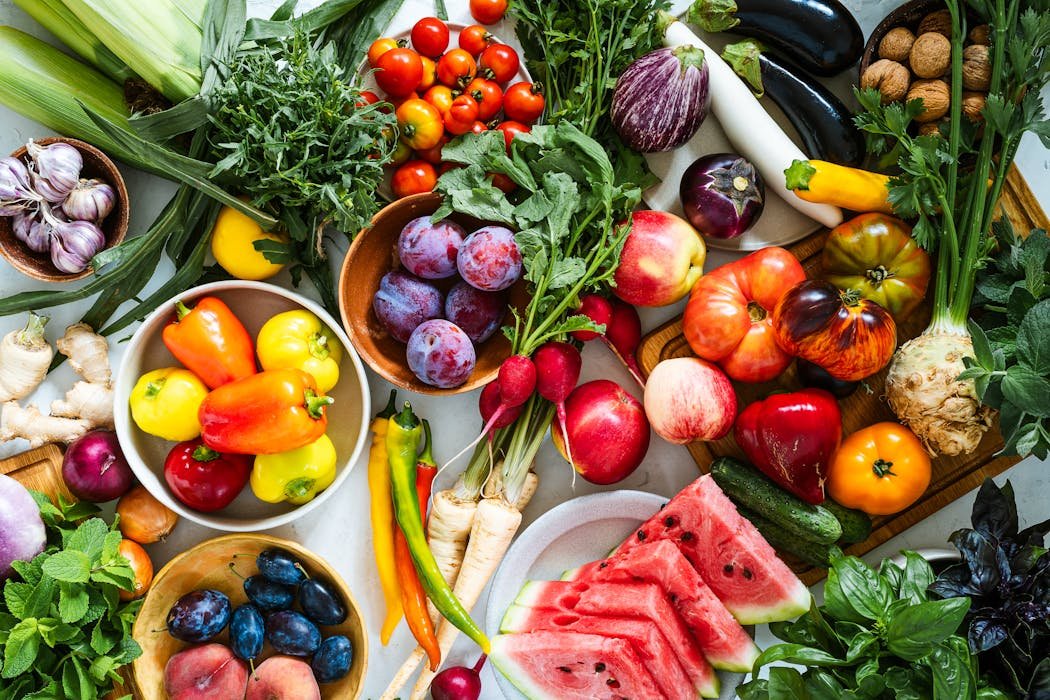
Also, focus on eating the rainbow. Colorful foods are often higher in antioxidants, like blue corn. Many darker foods are rich in antioxidants, too, like dark chocolate, black barley and dark leafy vegetables, such as kale and Swiss chard.
Although heat can degrade oxidants, that mostly occurs during the storage and transportation of the food. In some cases, cooking may increase the food’s antioxidant capacity, as with leafy green vegetables.
Keep in mind that while blueberries, red kale and pecans are great, their antioxidant profile will be different than that of other fruits, vegetables and nuts. That’s why diversity is the key: To increase the power of antioxidants, choose a variety of fresh, flavorful, colorful and, ideally, local foods.
This article is republished from The Conversation, a nonprofit, independent news organization bringing you facts and trustworthy analysis to help you make sense of our complex world. It was written by: Nathaniel Johnson, University of North Dakota
Read more:
Nathaniel Johnson does not work for, consult, own shares in or receive funding from any company or organization that would benefit from this article, and has disclosed no relevant affiliations beyond their academic appointment.
