


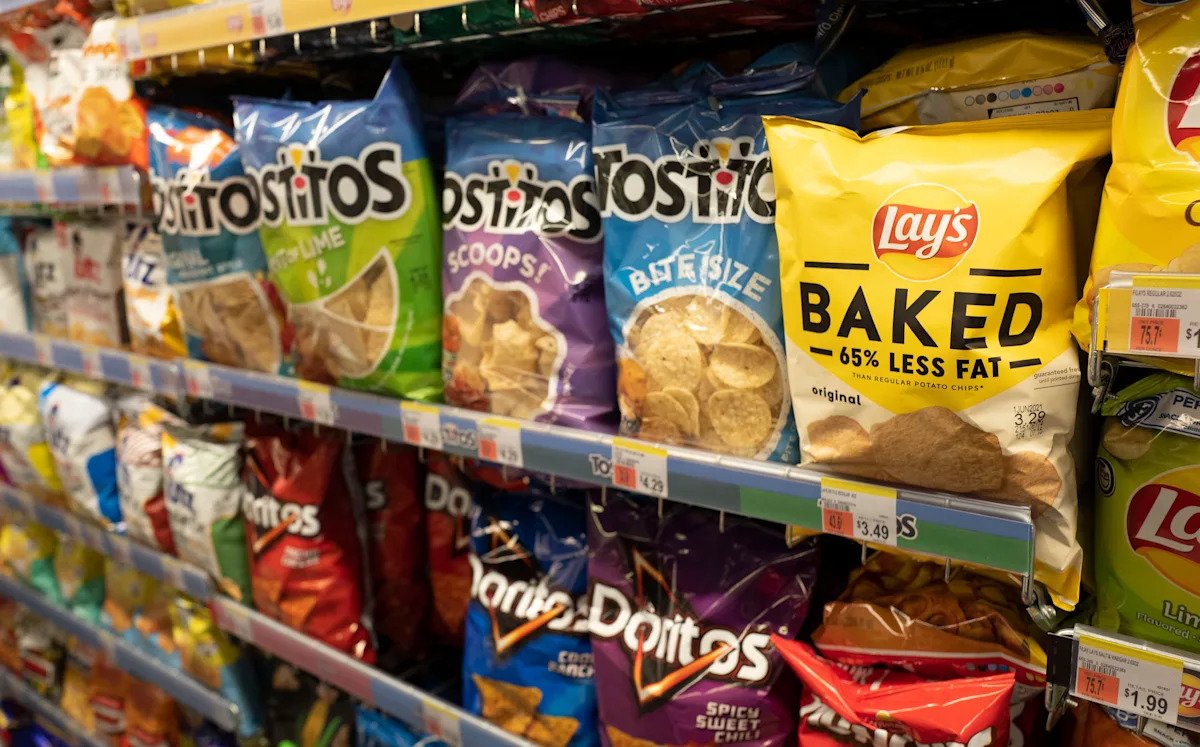
Most Americans get more than half their calories from ultra-processed foods, those super-tasty, energy-dense foods typically full of sugar, salt and unhealthy fats, according to a new federal report.
Nutrition research has shown for years that ultra-processed foods make up a big chunk of the U.S. diet, especially for kids and teens.
For the first time, however, the U.S. Centers for Disease Control and Prevention has confirmed those high levels of consumption, using dietary data collected from August 2021 to August 2023.
The report comes amid growing scrutiny of such foods by Health Secretary Robert F. Kennedy Jr., who blames them for causing chronic disease.
“We are poisoning ourselves and it’s coming principally from these ultra-processed foods,” Kennedy told Fox News earlier this year.
Overall, about 55% of total calories consumed by Americans age 1 and older came from ultra-processed foods during that period, according to the report. For adults, ultra-processed foods made up about 53% of total calories consumed, but for kids through age 18, it was nearly 62%.
The top sources included burgers and sandwiches, sweet baked goods, savory snacks, pizza and sweetened drinks.
Young children consumed fewer calories from ultra-processed foods than older kids, the report found. Adults 60 and older consumed fewer calories from those sources than younger adults. Low-income adults consumed more ultra-processed foods than those with higher incomes.
The results were not surprising, said co-author Anne Williams, a CDC nutrition expert.
What was surprising was that consumption of ultra-processed foods appeared to dip slightly over the past decade. Among adults, total calories from those sources fell from about 56% in 2013-2014 and from nearly 66% for kids in 2017-2018.
Williams said she couldn’t speculate about the reason for the decline or whether consumption of less processed foods increased.
But Andrea Deierlein, a nutrition expert at New York University who was not involved in the research, suggested that there may be greater awareness of the potential harms of ultra-processed foods.
“People are trying, at least in some populations, to decrease their intakes of these foods,” she said.
Concern over ultra-processed foods’ health effects has been growing for years, but finding solutions has been difficult. Many studies have linked them to obesity, diabetes and heart disease, but they haven’t been able to prove that the foods directly cause those chronic health problems.
One small but influential study found that even when diets were matched for calories, sugar, fat, fiber and micronutrients, people consumed more calories and gained more weight when they ate ultra-processed foods than when they ate minimally processed foods.
Research published this week in the journal Nature found that participants in a clinical trial lost twice as much weight when they ate minimally processed foods — such as pasta, chicken, fruits and vegetables — than ultra-processed foods, even those matched for nutrition components and considered healthy, such as ready-to-heat frozen meals, protein bars and shakes.
Part of the problem is simply defining ultra-processed foods.
The new CDC report used the most common definition based on the four-tier Nova system developed by Brazilian researchers that classifies foods according to the amount of processing they undergo. Such foods tend to be “hyperpalatable, energy-dense, low in dietary fiber and contain little or no whole foods, while having high amounts of salt, sweeteners and unhealthy fats,” the CDC report said.
U.S. health officials recently said there are concerns over whether current definitions “accurately capture” the range of foods that may affect health. The U.S. Food and Drug Administration and the Agriculture Department recently issued a request for information to develop a new, uniform definition of ultra-processed foods for products in the U.S. food supply.
In the meantime, Americans should try to reduce ultra-processed foods in their daily diets, Deierlein said. For instance, instead of instant oatmeal that may contain added sugar, sodium, artificial colors and preservatives, use plain oats sweetened with honey or maple syrup. Read food packages and nutrition information, she suggested.
“I do think that there are less-processed options available for many foods,” she said.
___
The Associated Press Health and Science Department receives support from the Howard Hughes Medical Institute’s Department of Science Education and the Robert Wood Johnson Foundation. The AP is solely responsible for all content.
