


Amanda Peet is opening up about her breast cancer diagnosis, which she learned around the same time both of her parents were in hospice care.
In a personal essay published Saturday in The New Yorker, the actress detailed the difficult period, sharing that she had long been monitored closely due to having “dense” and “busy” breasts, which require extra screening.
“I had been seeing a breast surgeon every six months for checkups,” she wrote.
Breast cancer deaths fall in US while women in poorer countries face rising risks, report finds
After a routine scan in late August showed an unusual ultrasound result, Peet said her doctor performed a biopsy that detected a tumor that “appeared” small but required an MRI to determine “the extent of the disease.”
As she began planning the next steps in her treatment, Peet said her parents — who were “long divorced” and lived on “opposite coasts” — both entered hospice care. Her father died suddenly before she was able to reach him.
“Our mother’s had started in June, but our father’s was only a week in, so we hadn’t expected him to go first,” she wrote. “I flew to New York. I didn’t make it before my father took his last breath, but I got to see his body before it was taken from his apartment.”

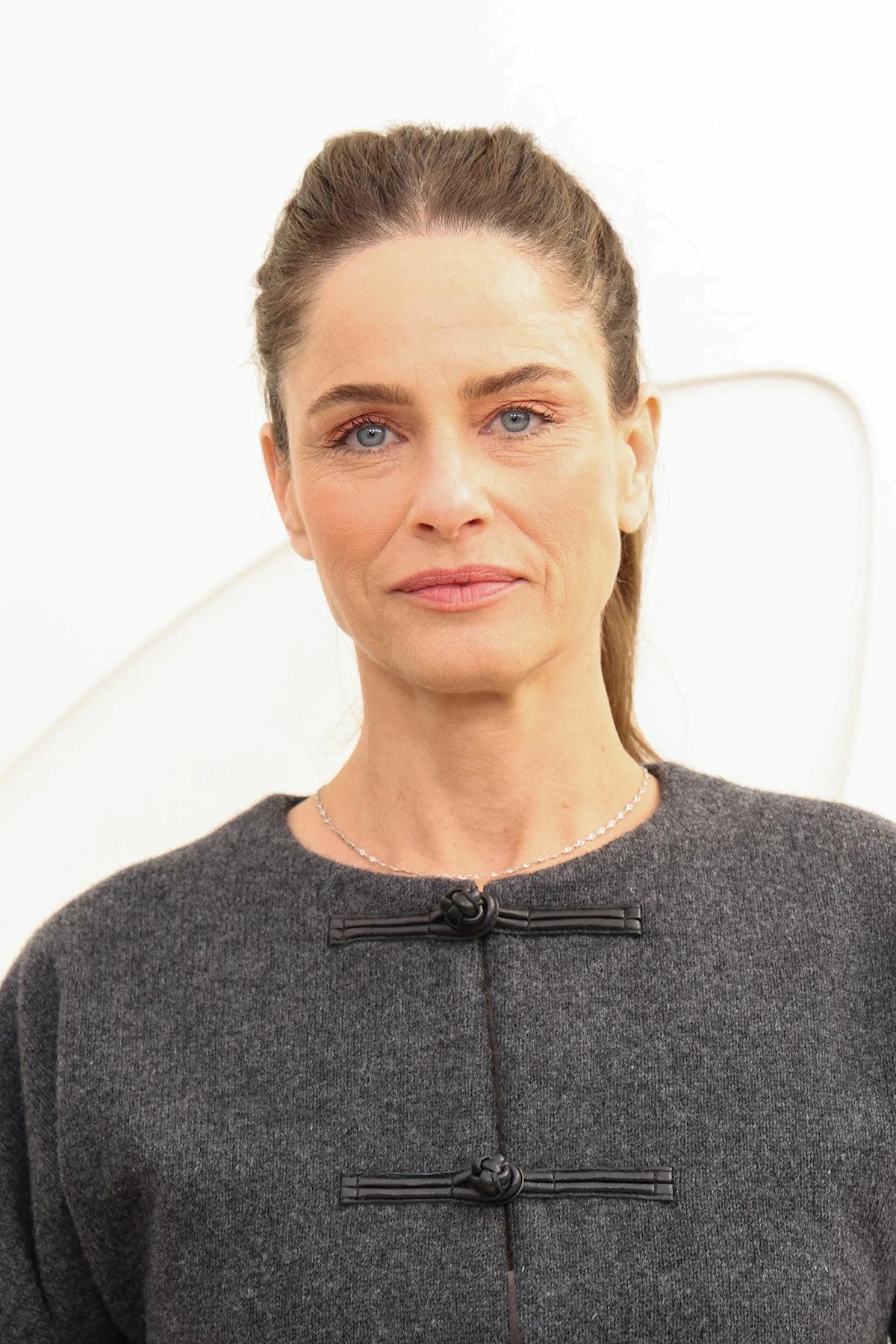
Valerie Macon/AFP via Getty Images – US actress Amanda Peet attends the Apple TV Press Day in Santa Monica, California, on February 3, 2026.
Peet, who married David Benioff and shares three children with him, said that upon returning to Los Angeles, she learned her stage I cancer was “hormone-receptor-positive” and “HER2-negative,” news that briefly made her feel “happier than I’d been pre-diagnosis, when I was just a regular person who didn’t have cancer.”
“But after about 10 minutes, I remembered that I still needed the MRI and regressed to baseline terror,” she wrote, explaining that her doctor told her the radiologist would also examine her lymph nodes and “the left side for any surprise findings,” with results expected within a week.
“It was dawning on me that cancer diagnoses come in a slow drip,” she wrote.
Doctors later found another mass in her breast that was determined to be benign, and she said her treatment would include a lumpectomy and radiation.
Concluding her essay, Peet shared tender moments of a bittersweet farewell with her mother, who had battled Parkinson’s disease, recalling the final moments they shared together.
“The morphine was taking forever to kick in, and she was looking at the ceiling and whimpering, so I climbed onto her rented hospital bed to get in her line of vision,” she wrote. “We locked eyes and she quieted down, and then she and I continued to stare at each other for what felt like several minutes.”
She added, “I wasn’t sure whether my mom knew that she was looking at me or whether I was just a constellation of interesting, disembodied shapes. I said ‘howdy doodle’ — that’s how she often greeted me. But then I realized that she was communing without words, and I followed suit. Time was running out, and, besides, I had already told her everything.”
