


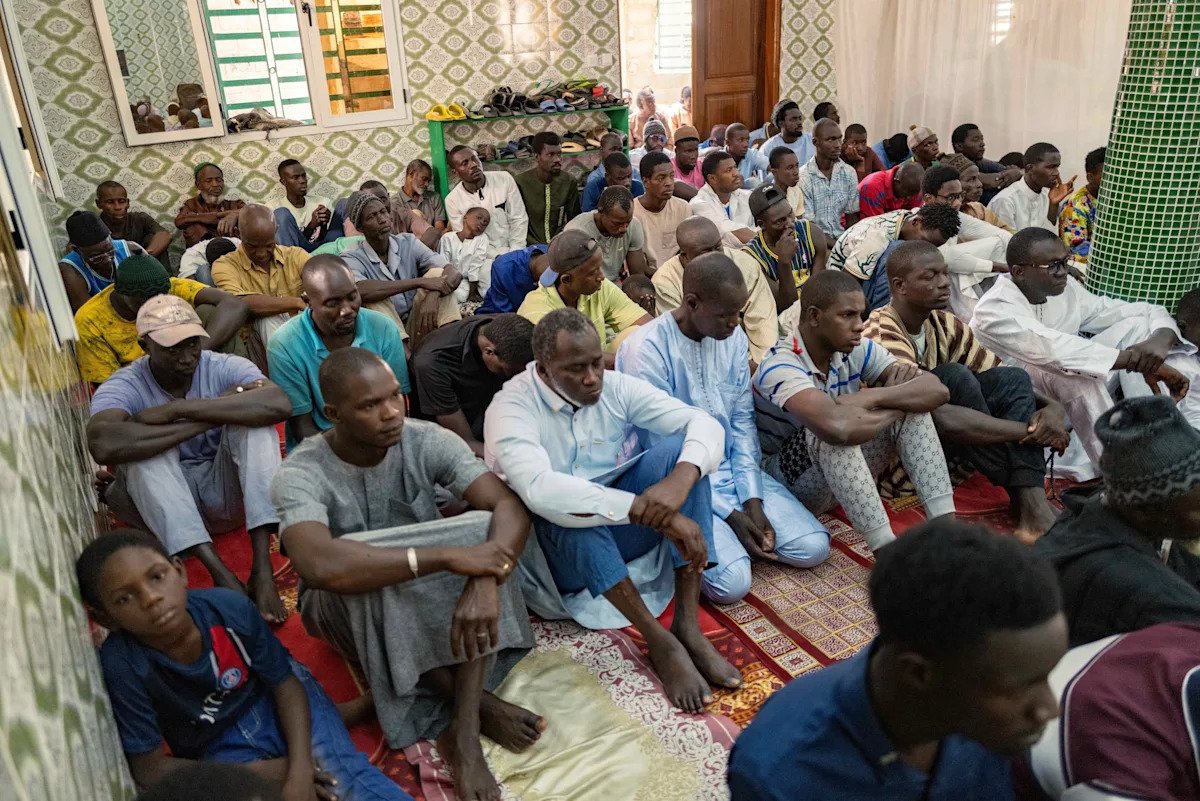
DAKAR, Senegal (AP) — On a recent evening in Senegal ‘s capital of Dakar, an imam named Ibrahima Diane explained to a group of men why they should be more involved in household chores.
“The Prophet himself says a man who does not help support his wife and children is not a good Muslim,” the 53-year-old said, as he described bathing his baby and helping his wife with other duties.
Some of the 14 men chuckled, not quite sold. Others applauded.
Diane was taking part in a “school for husbands,” a United Nations-backed initiative where respected male community members learn about “positive masculinity” in health and social issues and promote them in their communities.
In Senegal, as in many other West African countries with large rural or conservative populations, men often have the final say in major household decisions, including ones related to health.
Women may need their permission for life-changing decisions on accessing family planning or other reproductive health services, along with hospital deliveries or prenatal care.
Following his sessions at the school for husbands, Diane regularly holds sermons during Friday prayers where he discusses issues around gender and reproductive health, from gender-based violence to fighting stigma around HIV.
“Many women appreciate my sermons,” he said. “They say their husbands’ behavior changed since they attended them.” He said some men have told him the sermons inspired them to become more caring husbands and fathers.
Habib Diallo, a 60-year-old former army commando, said attending the sermons and discussions with the imam taught him about the risks of home births.
“When my son’s wife was pregnant, I encouraged him to take her to the hospital for the delivery,” Diallo said. “At first, he was hesitant. He worried about the cost and didn’t trust the hospital. But when I explained how much safer it would be for both his wife and the baby, he agreed.”
No more barking orders
The program launched in Senegal in 2011 but in recent years has caught the attention of the Ministry of Women, Family, Gender and Child Protection, which sees it an effective strategy to combat maternal and infant mortality.
“Without men’s involvement, attitudes around maternal health won’t change,” said 54-year-old Aida Diouf, a female health worker who collaborates with the program. Many husbands prefer their wives not be treated by male health workers, she said.
The classes for husbands follow similar efforts in other African countries, particularly Niger, Togo, and Burkina Faso, where the United Nations Population Fund says it improved women’s access to reproductive health services by increasing male involvement, growing the use of contraceptives by both men and women and expanding access to prenatal care and skilled birth attendants.
Discussions for men also have focused on girls’ rights, equality and the harmful effects of female genital mutilation.
The program now operates over 20 schools in Senegal, and over 300 men have been trained.
In some communities, men who once enforced patriarchal norms now promote gender equality, which has led to a reduction in the number of forced marriages and more acceptance of family planning, according to Senegal’s ministry of gender.
Men join the groups after being recruited based on trust, leadership and commitment. Candidates must be married, respected locally and supportive of women’s health and rights.
After training, the men act as peer educators, visiting homes and hosting informal talks.
“My husband used to not do much around the house, just bark orders. Now he actually cooks and helps out with daily tasks,” said Khary Ndeye, 52.
Still too many dying in childbirth
While maternal and infant deaths in Senegal have declined over the past decade, experts say it still has a long way to go. It recorded 237 maternal deaths for every 100,000 live births in 2023, while 21 newborns out of every 1,000 died within their first month. The U.N. globally wants to reduce maternal deaths to 70 deaths per 100,000 live births and newborn deaths to under 12 per 1,000 by 2030.
One key problem was that many women have been giving birth at home, said El Hadj Malick, one of the Senegal program’s coordinators.
“By educating men about the importance of supporting their wives during pregnancy, taking them to the hospital and helping with domestic work at home, you’re protecting people’s health,” Malick said.
He said he still experiences difficulty changing mindsets on some issues.
“When we just talk to them about gender, there is sometimes tension because it’s seen as something abstract or even foreign,” Malick said. Some men mistakenly believe such talk will promote LGBTQ+ issues, which remain largely taboo in much of West Africa.
“But when we focus on women’s right to be healthy, it puts a human face on the concept and its becomes universal,” Malick said.
___
For more on Africa and development: https://apnews.com/hub/africa-pulse
___
The Associated Press receives financial support for global health and development coverage in Africa from the Gates Foundation. The AP is solely responsible for all content. Find AP’s standards for working with philanthropies, a list of supporters and funded coverage areas at AP.org.
