


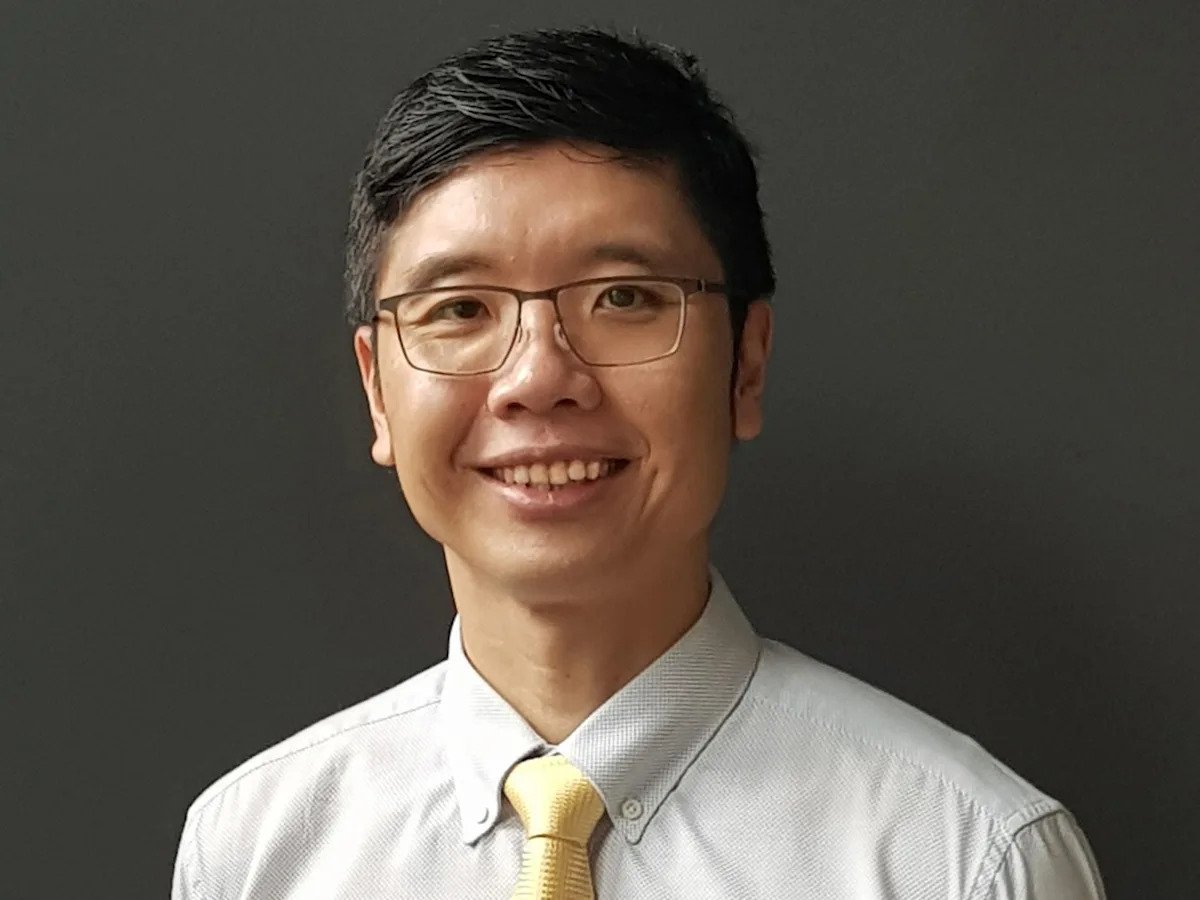
AI is used in pathology in Singapore to improve diagnostic confidence and efficiency.
Dr. Cheng Chee Leong said AI could allow pathologists to do more with less.
This is important as patient cases get more complex, said the anatomical pathologist.
This as-told-to essay is based on a conversation with Dr. Cheng Chee Leong, the head of the department of anatomical pathology at Singapore General Hospital. This interview has been edited for length and clarity.
I’m drawn to pathology because accurate diagnosis is the critical starting point for proper treatment and management. In my field, we examine tissues under the microscope to determine a patient’s disease or condition.
Pathologists need to spend more time dealing with the increasing complexity of our practice. AI has the potential to improve our productivity.
With the increasing aging population, we will be dealing with more complex patients. Our elderly population is living longer, and we will have patients with multiple conditions at the same time.
We’re always dealing with a relative shortage of manpower, and that is complicated by the fact that we are being asked to actually do more and more with the tissue.
For example, in the past, prostate biopsies might require four parameters for an entire case. Now, we have to deal with more specific parameters for each individual specimen.
Sometimes, the number of specimens can reach 20 to 30, which is at least 10 to 20 times the amount of work that we’re actually used to. This is not very sustainable because you will never be able to increase the number of manpower needed to deal with things by 10 to 20 times.
That’s where AI will need to come in, allowing us to do more with less and deal with more parameters without increasing the amount of resources.
AI could highlight areas of interest more quickly than we might examine under high magnification, improving both confidence and efficiency.
AI has been part of pathology for years
I’ve been involved in medical informatics for more than twenty years, starting when I was a medical officer in the Singapore Armed Forces.
We were exposed to machine learning-based tools for digital pathology images about a decade ago.
A project between Singapore General Hospital and AI Singapore from 2020 to 2021 focused on using AI to differentiate a tumor called fibroepithelial lesions. These aren’t your traditional breast cancers, but rather two related conditions that can sometimes mimic each other: fibroadenomas and phyllodes tumors.
We built AI algorithms to attempt to differentiate between these two lesions on biopsy materials. The goal was to improve our diagnostic confidence and better guide treatment decisions.
AI isn’t infallible — especially in complex cases
Even the best-trained AI will have a margin of error, and its performance depends heavily on input data.
AI still has some way to go in integrating complex data to guide us to the correct diagnosis alongside what we see under the microscope.
For example, we examine other data, such as patients’ electronic records and radiology reports, to better understand the whole clinical picture.
Unlike trained professionals, AI still has issues with adaptability and generalization, including dealing with issues in less-than-optimal circumstances.
AI is very dependent on its training data. When AI encounters tissue that’s been processed differently — for example, samples from overseas labs that have different colors or appearances — it may perform suboptimally.
Sometimes, AI will mistake folded tissue on the slide as a positive finding when it shouldn’t be. A trained human professional will be able to find ways to approach novel findings and situations they have less experience with, rather than trying to force-fit into a category that AI may tend to do.
For now, the human in the loop is inevitable. We always practice a margin of safety to ensure that we don’t make mistakes.
After all, many years of training helped us build the knowledge base that will allow us to make accurate interpretations and diagnoses.
With time, AI, given enough training, data, and the right guidance, may actually be able to do better.
While AI will not replace doctors or humans in the medium to long term, a human without AI ability will not be able to keep up with the rapidly evolving healthcare field.
AI will eventually transform the way we work. It will require us to acquire a different skill set and demand that we practice at a higher standard.
Do you have a story to share about AI in healthcare? Contact this reporter at cmlee@businessinsider.com.
Read the original article on Business Insider
