


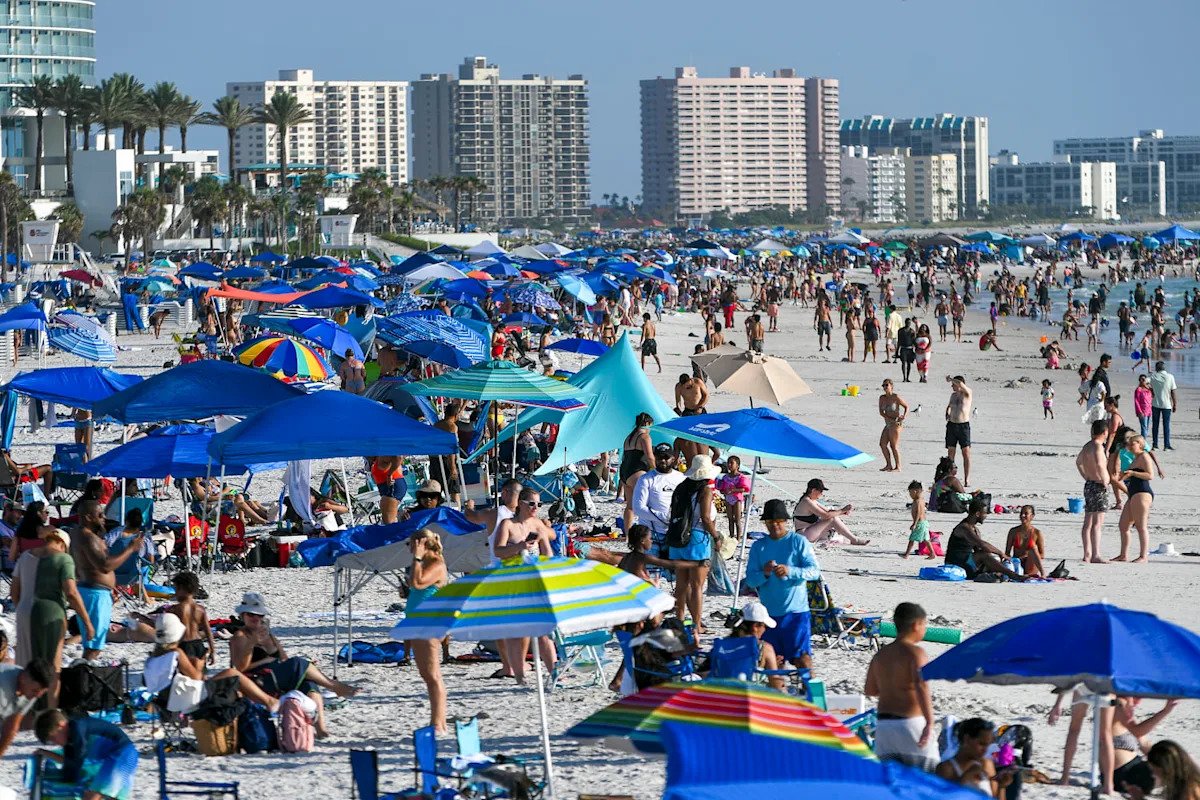
Deaths from “flesh-eating” bacteria are on the rise across the southeastern coasts of the U.S. At least five people in Florida, four in Louisiana and one in the Outer Banks have died this year from infections that can cause necrotizing wounds.
The culprit, the bacteria Vibrio vulnificus, thrives in warm seawater. Florida has seen 16 cases this year, according to the state’s health department. Seventeen cases have been reported in Louisiana — more than previous years’ annual averages. North Carolina has seen seven cases this year so far, the state Department of Health and Human Services confirmed to NBC News. And Mississippi has had three cases so far this year, the state’s health department says.
Initial deaths from the infection in Florida were reported in counties spread around the state’s extensive coastline, from Bay County in the Panhandle and Hillsborough County, where Tampa is, on the Gulf Coast, to Broward County in Southeastern Florida and St. Johns County just south of Jacksonville.
The bacteria can get into the body through open wounds in the skin and cause the surrounding tissue to die, a condition known as necrotizing fasciitis, or flesh-eating disease, according to the Centers for Disease Control and Prevention. People can also get Vibrio vulnificus from eating contaminated foods, particularly raw oysters. It’s unclear how the people in Florida were infected.
About 1 in 5 people with a Vibrio vulnificus infection die, according to the CDC.
Antarpreet Jutla, an engineering professor at the University of Florida, said that infections are still rare but “something is off this year.” Still, he said there are too many unknowns to be certain what’s causing the rise in infections at this time.
“This is certainly not normal, that’s one thing,” Jutla said. “We haven’t had that many cases early on in the summer for a very long time.”
Jutla said Vibrio vulnificus infections tend to increase after hurricanes. Last year, Florida saw a total of 82 cases, which may have been exacerbated by the “extremely active” hurricane season. The bacteria can linger in hurricane floodwaters.
“Something happened this year that triggered the pathogens a little bit more than before,” he said.
Hurricane season this year is still expected to be above normal as the U.S. enters its peak period, the National Oceanic and Atmospheric Administration reported Thursday.
Jutla’s research group is investigating why there are high concentrations of plankton and chlorophyll — indicators for vibrio — across Florida’s panhandle. He calls it a “concern.”
What is Vibrio vulnificus?
Vibrio vulnificus is one of over 200 species of Vibrio bacteria, said Rita Colwell, a professor emerita of microbiology at the University of Maryland.
The majority of Vibrio infections aren’t harmful to humans, Jutla said. Some only affect other animals.
But Vibrio bacteria do cause about 80,000 infections in people each year, according to the Cleveland Clinic. Most of those cases are gastrointestinal. Only a small handful — 100 to 200 cases — are due to Vibrio vulnificus. Other Vibrio species, including Vibrio parahaemolyticus and Vibrio alginolyticus, are often the cause of those stomach illnesses. Another type of Vibrio, Vibrio cholorae, causes the diarrheal disease cholera.
Because Vibrio bacteria prefer warm water, they are typically found along the southeastern shores of the U.S., but they are also found on the West Coast. As ocean temperatures warm, more cases have been found farther north in recent years, Jutla said, including some in New York, Connecticut and Maryland.
Who is at risk?
Vibrio bacteria can creep in open wounds after spending time in salty or brackish water, said Dr. Norman Beatty, an infectious disease doctor at University of Florida Health. Most cases he’s seen have been associated with spending extended time in the water, but he says that even a brief exposure could be the “only thing needed.”
Visible signs of an infection can start in just a few hours, Beatty said, and include redness, swelling and “bull’s-eye” blisters. The site will also be painful. If infection progresses, it can get into the bloodstream and cause sepsis, which can be deadly. Symptoms of sepsis include fever, chills and dangerously low blood pressure, according to the CDC.
People with liver cirrhosis, weakened immune systems and those over 65 are most at risk for infection, Jutla said.
Vibrio vulnificus infections can be treated with antibiotics.
How to prevent Vibrio infections
Beatty said he recommends covering up any open wounds before going into the ocean. Even a waterproof Band-Aid does the job, he said.
If people think they have an infection, they should seek care immediately, Beatty said. Delaying can be the difference between developing severe complications and a more mild infection.
“A delay in presenting to health care is truly the likely reason why most people have a more serious outcome than others,” he said. “People who present within the same day with signs and symptoms of early infection, who receive antibiotics, can do well and can avoid a lot of these serious complications.”
This article was originally published on NBCNews.com
