


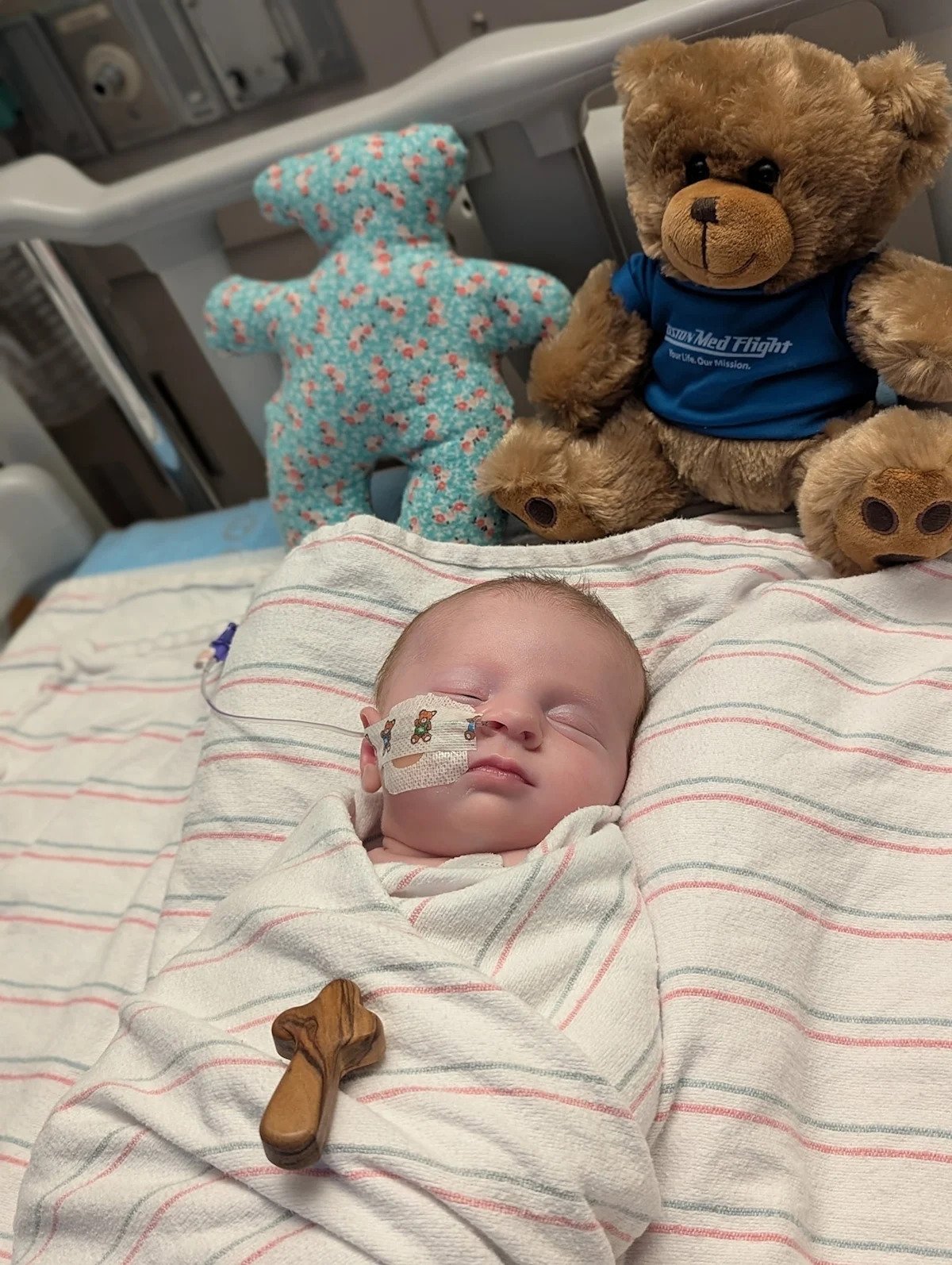
A Massachusetts mom says her infant daughter may be the patient that state health officials recently said is under investigation for contracting a rare tick-borne virus infection.
“Public health officials are investigating preliminary results of a Powassan virus infection in a Martha’s Vineyard resident,” Barnstable County said in a press release Tuesday, without identifying the resident.
Barnstable County, which comprises the 15 towns of Cape Cod and sits just north of Martha’s Vineyard, said that according to data from the Centers for Disease Control and Prevention, there has been just one other known case of Powassan virus in the area in the last 20 years and only three total Powassan virus cases in Massachusetts this year.
The CDC notes there are currently 24 reported Powassan cases nationwide.

Courtesy of Tiffany Sisco – PHOTO: Tiffany Sisco told Boston ABC affiliate WCVB her five-week-old daughter, Lily Belle Sisco, has been in the hospital, fighting a rare tick-borne virus called Powassan virus.
Tiffany Sisco, who declined to be interviewed by ABC News, told Boston ABC station WCVB that she found a tick on her 5-week-old daughter Lily Belle Sisco during an outdoor walk, and despite removing it, she noticed Lily developed symptoms a week later.

Courtesy of Tiffany Sisco – PHOTO: Tiffany Sisco told Boston ABC affiliate WCVB her five-week-old daughter, Lily Belle Sisco, has been in the hospital, fighting a rare tick-borne virus called Powassan virus.
“I found this tiny, tiny, tiny [tick], the teeniest one on her ankle,” Sisco said. “I picked it off. A week later, she started getting a fever of 102 [degrees Fahrenheit]. I said, ‘I’m taking her right in.'”
What is the Powassan virus?
Powassan virus is a disease or illness caused by the Powassan virus and is mostly spread by infected ticks that have the Powassan virus or deer tick virus, according to the CDC. The ticks may get infected when they feed on other animals that have the virus, such as groundhogs, mice, squirrels or other rodents.
ER visits for tick bites near record levels this summer across US
Although considered rare, the CDC notes that Powassan infections have been increasing in recent years, with most infections occurring in northeast states and the states around the Great Lakes region in the spring and fall, when ticks are most active.
The Powassan virus can also be transmitted by blood, so anyone who has the virus should not donate blood or bone marrow for at least 120 days after infection.
In an emailed statement to ABC News, Dr. Catherine M. Brown, a state epidemiologist for the Massachusetts Department of Public Health, said the department has recently increased testing for Powassan virus disease.
“Most people exposed to tick-borne viruses don’t get sick, but it is a virus that can invade the central nervous system and so a small proportion of people that are exposed become severely ill,” Brown said. “In the past, testing for Powassan virus was only available through the CDC, but in recognition of the importance of this virus, the Massachusetts Department of Public Health’s State Public Health Laboratory can now perform the initial screening test and confirmatory testing is still performed at CDC. Data from tick testing suggests that fewer than 2% of black-legged (deer) ticks carry the virus in Massachusetts.”
What are the symptoms of Powassan virus and how is it treated?
Symptoms of Powassan virus include headache, fever, vomiting and weakness, according to the CDC.
The virus can also cause severe disease, the agency states, including inflammation of the brain or inflammation of the membranes around the brain or spinal cord. Symptoms of a severe infection may include confusion, loss of coordination, trouble speaking, and seizures.
Some people, such as children, older adults and people with weakened immune systems, may be at higher risk of developing severe symptoms.
People with Powassan virus may require fluids, pain medications and rest to alleviate symptoms, but anyone with severe disease may need to be admitted to a hospital for further treatment.
What to know about tick-borne illnesses
How to prevent tick-borne illnesses
There are currently no medications or vaccines to prevent a Powassan virus infection, according to the CDC. However, there are precautions you can take to protect you and your family from tick bites and any subsequent infections.
These include:
Applying EPA-registered insect repellents.
Wearing long-sleeved clothing and pants.
Avoiding bushy and wooded areas.
Checking for ticks thoroughly and removing any after spending time outdoors.
The CDC also advises treating outdoor clothing and gear with products containing 0.5% permethrin, an insect repellent, which will “remain protective through several washings.”
