


You’d think venture capitalists and startups would support an antitrust crackdown on Big Tech. These behemoths regularly squash promising young startups, using their unrivaled power over users, data, and various digital markets.
But when antitrust regulators gave enforcing regulation a real shot in recent years, the VC industry’s howls of displeasure became very loud.
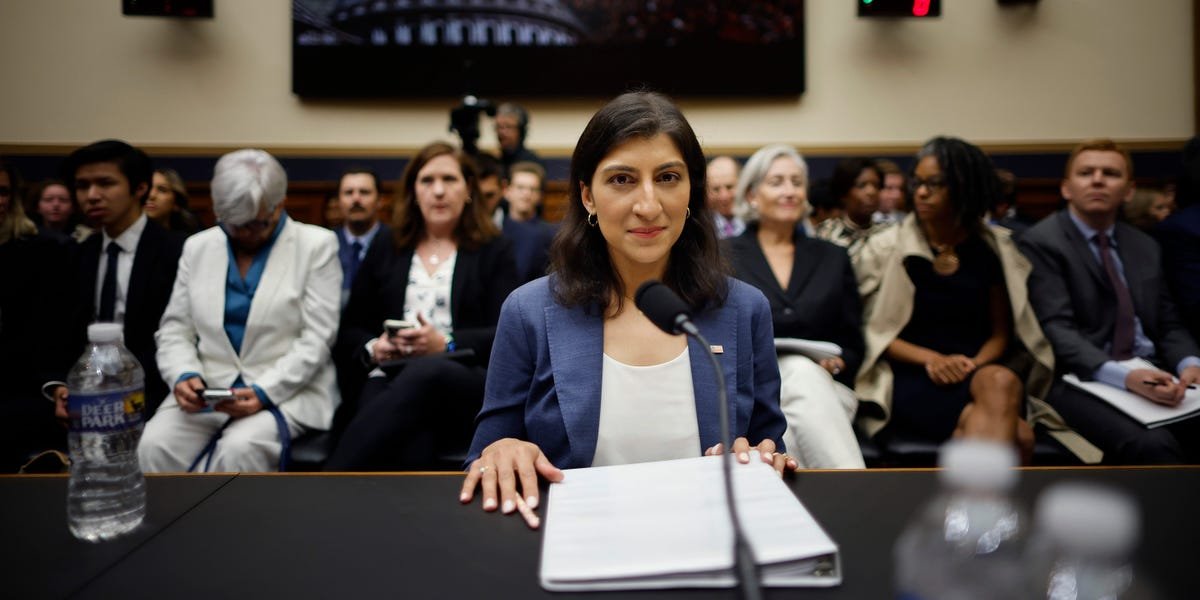
The apotheosis of this arrived last week, after Figma IPO-ed and its stock surged 250%. Former FTC Chair Lina Khan took a victory lap, saying regulators’ efforts to block an earlier Adobe acquisition resulted in a far better outcome.
“A great reminder that letting startups grow into independently successful businesses, rather than be bought up by existing giants, can generate enormous value,” Khan wrote on X. “A win for employees, investors, innovation, and the public.”
Silicon Valley goes berserk
“Colossal stupidity,” responded Vinod Khosla, one of the most successful VCs in Silicon Valley.
“Lina Khan cuts off the right hand of a genius pianist, who nevertheless perseveres and produces a one-handed masterpiece, for which she then takes credit,” Shea Levy, a software engineer at defense tech startup Anduril, wrote on X.
“It’s crazy that you prevented that acquisition and infuriating that you’re taking credit for Figma’s success,” Trevor Gehman, cofounder of a startup called Clearstream, tweeted.
I asked a Silicon Valley M&A advisor for comment on Friday, and they responded with a kind of manic poem. This person asked not to be identified when discussing sensitive matters. Their response really captures the strength of feelings here, so it’s worth sharing.
“She doesn’t deserve s***.
She has done zero to create anything.
Related stories

Business Insider tells the innovative stories you want to know
Business Insider tells the innovative stories you want to know
Ever.
Anywhere.
Except carnage and havoc.”
Is that a Haiku? I’m not sure. Anyway, why so much vitriol?
How VCs make a living
The real reason VCs and their advisors hate limits on M&A is that they threaten the main way they make money.
The industry loves to pretend it’s in it for the long haul and wants to build enduring businesses that disrupt the goliaths of the sector. But in reality, M&A deals are the main way VCs make money from their startup investments.
While they tweet publicly about changing the world, they often privately push founders to sell out to Big Tech. So if anyone gets in the way of such transactions, they become very twitchy.
“People wonder why VCs cheer on Big Tech deals, it’s simple: M&A offers a soft landing. Startups can flame out quietly instead of dying publicly,” said Jordan Thibodeau, who worked on M&A deals at Google and now hosts the SVIC podcast. “Compared to the compliance nightmare of an IPO, getting acquired is the cleanest escape hatch and ensures most employees have a safe landing.”
“FDIC insurance for bad bets”
Thibodeau said, pre-Lina Khan, and before Republicans decided to target the tech industry, Google, Facebook, and Microsoft were a kind of welfare office for founders and their VC sponsors.
“M&A was basically FDIC insurance for bad bets,” he added. “If it crashes, rich uncle Sundar or daddy Zuck will bail us out.”
At least legendary VC Paul Graham made some effort to be honest here, although he could have been clearer that Y Combinator relies heavily on larger tech companies buying the startups he backs.
“Startups are risky. Sometimes when you keep rolling the dice things turn out well. Sometimes not. But founders should be able to decide for themselves when to stop,” he wrote in response to Khan’s post on X.
We want our M&A fees
For anyone else involved in tech M&A, such as investment bankers and deal lawyers, any limits on transactions mean fewer commissions and other fees. So, of course, they’re inclined to criticize antitrust enforcement — whether deals are good for consumers and society or not.
In the US, the DOJ was officially responsible for questioning Adobe’s acquisition of Figma. But a lot of the ire for this, and other similar situations, has focused on Khan, a revolutionary antitrust regulator who ran the FTC during President Biden’s recent term in office.
She pioneered a new type of tech antitrust enforcement that focused on factors other than the traditional US test of whether consumers might see higher prices from M&A. Jonathan Kanter, a DOJ antitrust official, was part of this movement, but Khan is often credited with starting it.
“Lina Khan did her job. She was active, competent, and gave the Biden administration what they wanted, aggressive oversight on tech,” Thibodeau said, while saying that he disagreed with some of her antitrust moves, such as the FTC’s efforts to block Microsoft’s acquisition of Activision and the successful challenge to Amazon’s purchase of iRobot.
During Biden’s time in office, her new approach led to a pretty big decline in tech M&A activity, as you can see from that chart above.
So, when Khan tweeted a victory lap after the Figma IPO, it’s understandable that VCs went berserk on X — just not for the reasons they said publicly.
Sign up for BI’s Tech Memo newsletter here. Reach out to me via email at abarr@businessinsider.com.
