


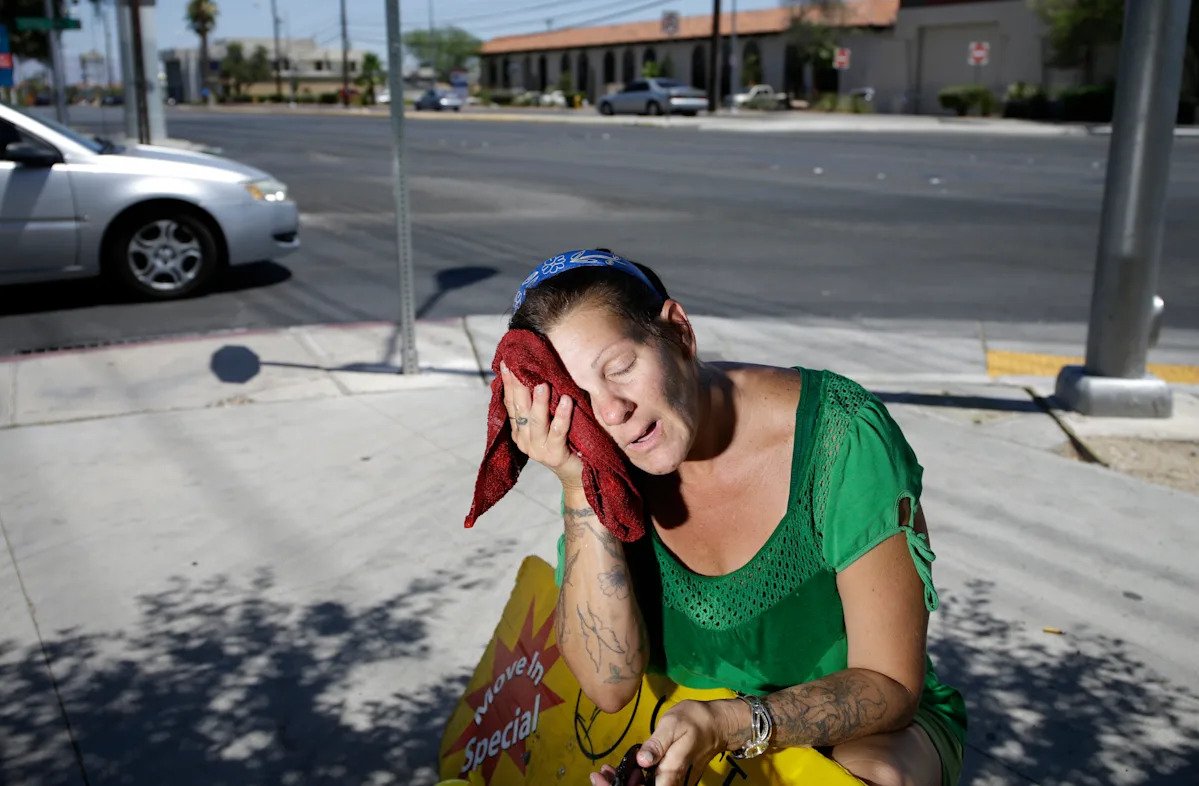
As the earth experiences hotter and hotter summers, new research using data from California emergency departments shows that the heat may be making us sicker than we know, and in ways we may not anticipate.
A study published Wednesday in the journal Science Advances tracked emergency department visits and fatalities in the state over the course of 11 years and found that while deaths increased both in cold and hot temperatures, especially among older adults, emergency room visits steadily increased as temperatures did – particularly among young children.
Subscribe to The Post Most newsletter for the most important and interesting stories from The Washington Post.
The findings underscore the impact that a hotter planet has on lives, health and medical infrastructure.
While scientists have spent decades covering how extreme heat and cold lead to death, “we have a relatively poor understanding of whether those relationships are the same for morbidity – rates of disease and poor health,” said Carlos Gould, the paper’s lead author and an environmental health scientist at the University of California San Diego.
The focus on fatalities could be because of how deadly heat is – it’s the most lethal form of extreme weather. High temperatures have been linked to cardiovascular deaths, chronic kidney disease mortality and respiratory failure. Heat can put undue stress on organs: The heart pumps faster to get blood flow to the skin; kidneys work harder to preserve the body’s water. Those with preexisting conditions are more at risk in hot weather.
Extreme heat is the biggest weather-related killer. But most temperature-related deaths globally are attributed to cooler temperatures, likely because we spend more time in lower temperatures than extremely high ones. As Earth warms, some projections indicate that temperature-related fatalities could decrease, but the effects would be unequal: Hotter and poorer countries would see an increase in deaths, while colder, wealthier countries would see a decrease.
Some researchers contend it’s a fraught comparison to begin with.
“It remains problematic to trade off mortality and morbidity from hot versus cold temperature extremes,” said Kristie Ebi, a professor at the Center for Health and Global Environment at the University of Washington. “People are not fungible. The goal of public health is to prevent as much morbidity and mortality as possible.”
Gould said deaths are just the tip of the iceberg when it comes to temperature’s effects on society. Between 2006 and 2017, more people in California visited emergency rooms as temperatures went up, further burdening public health systems as the world got hotter.
“It is helpful to have more detailed analyses of temperature-morbidity relationships, to help identify interventions that could decrease hospitalizations during heat waves,” said Ebi.
Gould added that while he was reluctant to generalize beyond the data from California, its rates of mortality to extreme temperatures were in line with those from across the country.
The study found that as temperatures increased, more people visited emergency rooms for illnesses including those linked to poison, respiratory symptoms and nervous system problems. Data also showed that children under 5 visited emergency rooms at a higher rate than any other age group.
“Hot days can worsen our health far before they lead to deaths,” said Gould. “And it can be a large range of things that we get sick from.”
In some cases, it’s difficult to know how these illnesses are linked to heat, said Robert Meade a research fellow at the Harvard T.H. Chan School of Public Health who studies heat’s impacts on the human body. It could be an error in how the data was analyzed, or it could further highlight the challenge of anticipating heat’s indirect effects on our health.
For example, researchers cautioned against using the data to draw a direct link between hotter temperatures and more poison-related illness.
“The mechanisms might not be clear to us, but it still could reflect a very complex interaction between heat and people’s behavior that causes this rise,” Meade added.
Ebi also noted that the analyses didn’t consider other factors, such as wildfires, which are drivers of cardiovascular and respiratory illnesses and mortality, especially in California.
“Climate change is increasing the numbers of wildfires, which could have influenced the results because wildfires are often associated with hot days,” she said.
She also pointed out that the data ends in 2017, which means it missed many large, extreme heat waves over the last 7½ years that could have altered the way we respond to heat exposure.
Gould hopes the data will help public health officials broaden their understanding of who needs to be protected during heat waves.
“Deaths are of course the most severe outcome, and protecting deaths is one of the single largest priorities of public health,” he said. “But these illnesses can affect kids, working families, reduce our productivity and strain our hospitals and communities.”
“Even when heat doesn’t kill,” said Gould, “it hurts a lot.”
– – –
Kevin Crowe contributed to this report.
Related Content
Diplomas, proud parents: High school graduation in the D.C. jail
Kamala Harris will not run for California governor, opening door for 2028 run
The U.S. military is investing in this Pacific island. So is China.
