


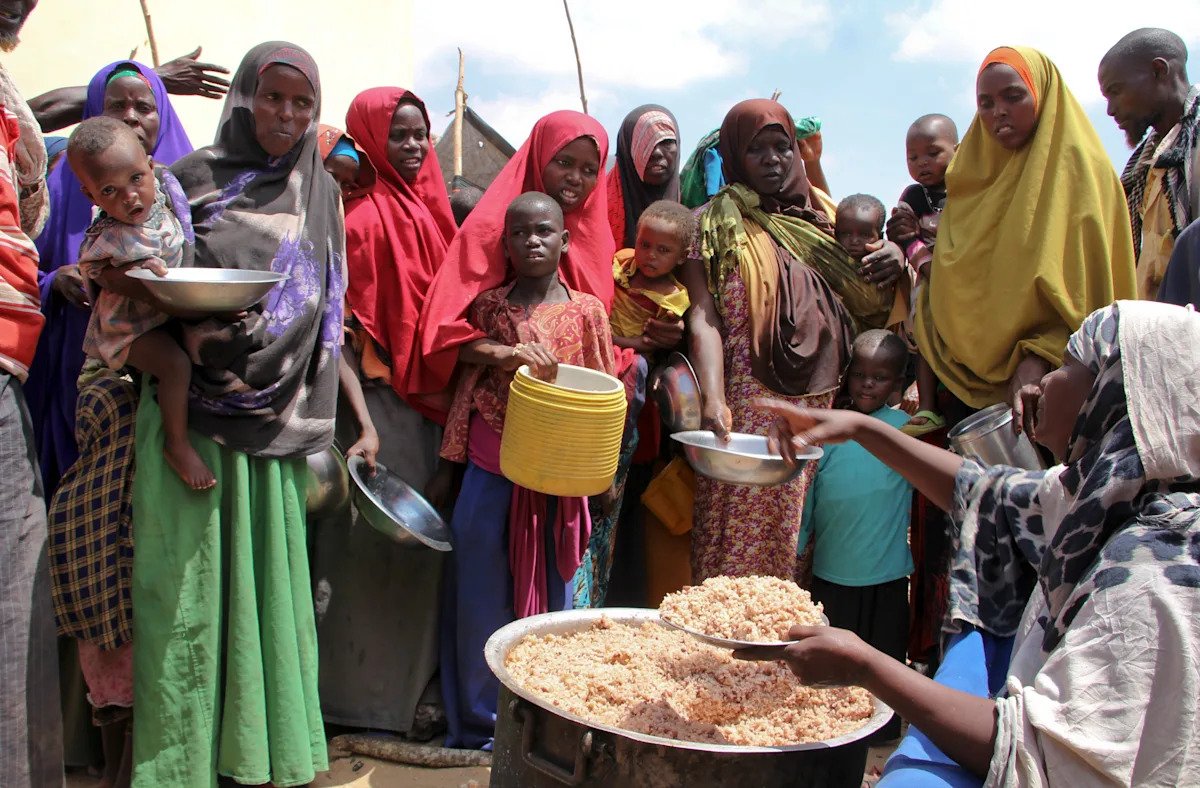
KAMPALA, Uganda (AP) — Food insecurity is rising in many parts of Africa, with the number of people unable to afford a healthy diet surpassing 1 billion — some two-thirds of the continent’s population — in 2024, according to a United Nations report published Monday.
The prevalence of moderate or severe food insecurity in Africa is more than double the global average of 28%, whereas figures from Latin America and the Caribbean, Asia and Oceania don’t reach that mark, the report said.
The annual report, produced by five U.N. agencies, analyzes trends in efforts to achieve the goal of zero hunger around the world by 2030. Those agencies include the World Health Organization, the Food and Agriculture Organization and the World Food Program.
An estimated 8.2% of the global population may have faced hunger in 2024, down from 8.5% in 2023 and 8.7% in 2022, a positive trend that “contrasts with the steady rise in hunger in most subregions of Africa” and in western Asia, or parts of the Middle East and South Asia, the report said.
The prevalence of undernourishment, a key measure of progress, surpassed 20% in Africa and rose to 12.7% in western Asia, it said.
The report is the latest to suggest that eliminating food insecurity universally remains a serious challenge. Africa remains the most vulnerable continent.
According to the current projection, 512 million people in the world may be chronically undernourished in 2030, with nearly 60% of them to be found in Africa, the report said.
“We must urgently reverse this trajectory,” said Máximo Torero, chief economist with the FAO.
A major mark of distress is the number of Africans unable to afford a healthy diet. While the global figure fell from 2.76 billion in 2019 to 2.6 billion in 2024, the number increased in Africa from 864 million to just over 1 billion during the same period.
That means the vast majority of Africans are unable to eat well on the continent of 1.5 billion people.
The U.N. warned in a report in October that conflicts, economic instability and climate shocks — in addition to reduced funding for emergency food and agriculture assistance — were driving alarming levels of acute food insecurity in 22 “hunger hot spots.”
That report, by FAO and WFP, mentioned Sudan, South Sudan, Haiti, Mali and the Palestinian territories as being of the “highest concern level.”
Chad, Lebanon, Myanmar, Mozambique, Nigeria, Syria and Yemen were classified as “hotspots of very high concern,” where large numbers of people faced or were projected to face critical levels of acute food insecurity.
Torero, the FAO chief economist, said the situation in Africa is “concerning,” driven in part by the failure of agricultural production to keep up with population growth in many areas.
At the same time, he said, many parts of Africa face violent conflict and setbacks stemming from climate change.
“These shocks interact and reinforce each other, weakening already fragile agrifood systems,” he said, speaking about the latest U.N. report. “Conflict zones such as Sudan and the Sahel face particularly acute challenges. Additionally, climate poses a serious threat, particularly to the most vulnerable populations.”
___ More AP Africa news: https://apnews.com/hub/africa
