


A rare “flesh-eating bacteria” that lives in warm saltwater has led to at least four deaths this year, but some simple safety precautions can keep you safe while on vacation.
The bacteria, Vibrio vulnificus, most often causes infection through open wounds and the consumption of undercooked or raw seafood. That has caused worries for some vacationers and residents in the Gulf Coast, especially in Florida where infections are most prevalent.
Earlier this month, the Florida Department of Health said the bacteria led to four deaths in four counties across the state and made at least seven people ill in 2025.
Vibrio vulnificus is not the only microscopic threat sparking worry among swimmers and vacationers. A children’s hospital in South Carolina recently confirmed one of its patients died of Naegleria fowleri, a “brain-eating amoeba” that thrives in warm fresh water sources like lakes and streams.
While Vibrio vulnificus and the rarer Naegleria fowleri don’t share much in common, both are fueled by warm temperatures and may be becoming more prevalent due to climate change, studies show.
Here’s how you can limit your risk of exposure to these dangerous infections.

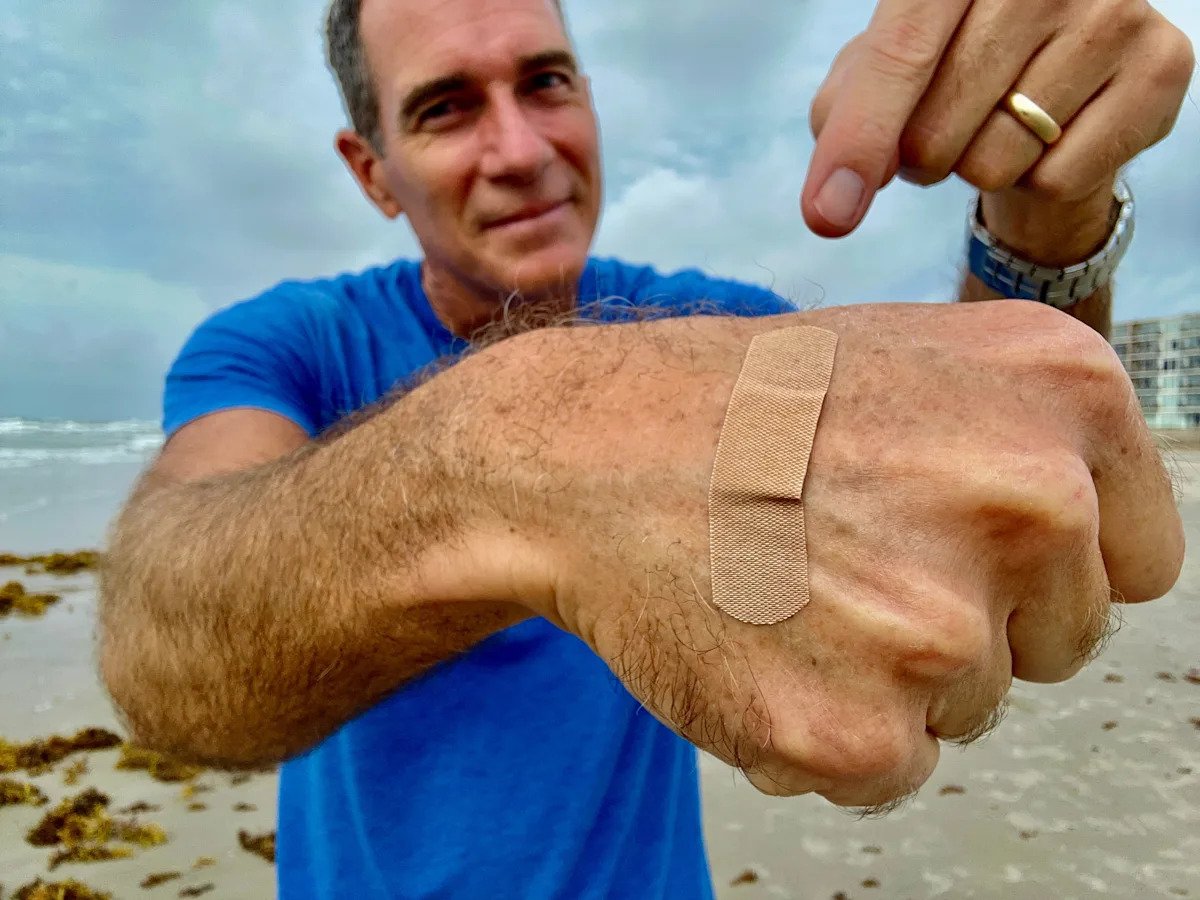
Jace Tunnell holds up his hand with a Band-Aid, showing that he would not go in the water with an open wound to avoid an infection from Vibrio vulnificus, aka the “flesh-eating bacteria.”
How to avoid Vibrio vulnificus
First, the good news: infections are rare, with an an average of 150 to 200 cases reported each year to the Centers for Disease Control and Prevention (CDC), most of them in Gulf Coast states.
And while the “flesh-eating bacteria” can be deadly, Vibrio vulnificus does not technically eat tissue. If the bacteria enters the body through a cut, scrape or wound, it can cause necrotizing fasciitis, and the flesh around the infection site could die. The bacteria cannot penetrate unharmed skin and can only can enter through an existing break.
Most infections occur when people swallow contaminated water or get it in an open wound. Another source of infection is contaminated raw or undercooked seafood, especially shellfish such as oysters.
Below are some tips to avoid Vibrio vulnificus, according to the Florida Department of Health and the CDC.
Stay out of saltwater and brackish water (fresh water mixed with saltwater) if you have an open wound or cut. If you get a cut while you are in the water, leave the water immediately.
If your open wounds and cuts could come in contact with salt water, brackish water or raw or undercooked seafood, cover them with a waterproof bandage.
Cook shellfish (oysters, clams, mussels) thoroughly.
Avoid cross-contamination of cooked seafood and other foods with raw seafood and juices from raw seafood.
Always wash your hands with soap and water after handling raw shellfish.
Seek medical attention right away for infected wounds.

A University of Maryland graduate student shows frozen cultures of Vibrio vulnificus.
How to avoid catching a brain-eating amoeba
Naegleria fowleri is often called a “brain-eating amoeba” because it can infect the brain and destroy brain tissue, according to the CDC. The agency says if water contaminated with the amoeba reaches the brain through the nose, it can cause a rare but deadly infection.
From 2011 to 2022, the CDC received reports of about 40 infections nationwide.
The amoeba can be found in warm fresh water sources but has been detected in poorly maintained pools, splash pads and even tap water. Here are some tips on how to avoid Naegleria fowleri.
When jumping or diving into fresh water, hold your nose or wear a nose clip.
In hot springs, keep your head above water.
Don’t dig in shallow water because the ameba is more likely to live there.
Use distilled or boiled tap water when rinsing your sinuses or cleansing your nasal passages.
Remember: You cannot get infected from drinking water where the ameba is present, it can only cause infection through the nose.
Contributing: Natalie Neysa Alund, Thao Nguyen, Gabe Hauari and Mike Snider, USA TODAY; Nina Tran, Greenville News; C.A. Bridges, USA TODAY Network – Florida
This article originally appeared on USA TODAY: ‘Flesh-eating bacteria’ at Florida beaches? How to say safe.
