


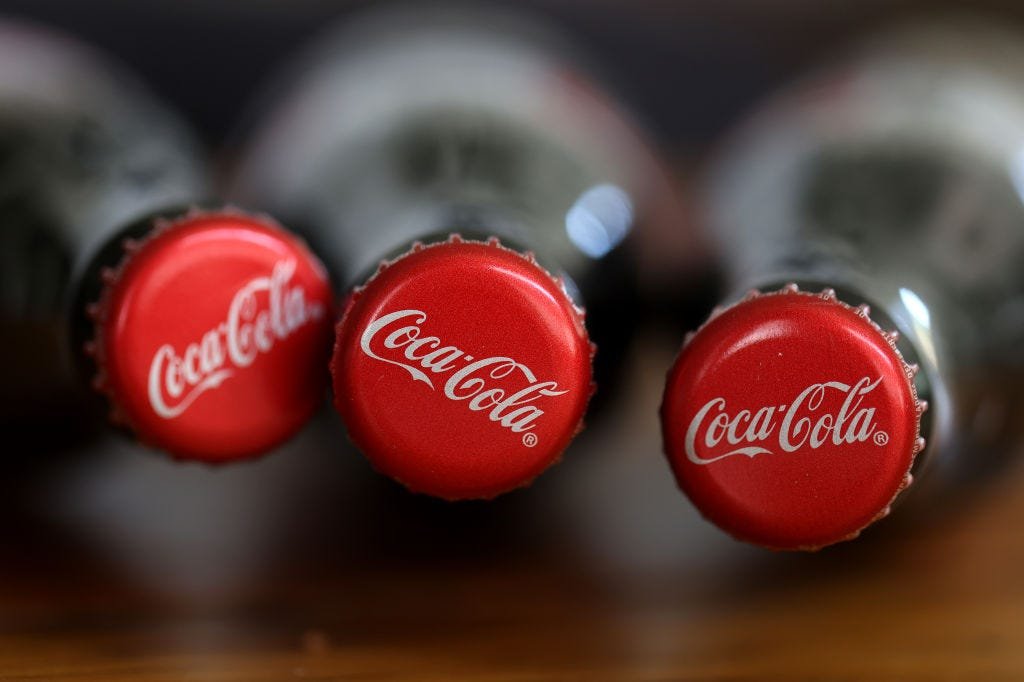
A recipe switch could be coming soon for Coca-Cola, according to President Donald Trump, who announced Wednesday, July 16, that the drink-maker had agreed to change an ingredient in its U.S. beverages.
“I have been speaking to Coca-Cola about using REAL Cane Sugar in Coke in the United States, and they have agreed to do so,” Trump wrote in a July 16 Truth Social post. “I’d like to thank all of those in authority at Coca-Cola. This will be a very good move by them — You’ll see. It’s just better!”
Coca-Cola has not yet confirmed the switch. In a statement on July 16, a spokesperson told USA TODAY the company will share details on new offerings soon and that it appreciates Trump’s enthusiasm for its product.
High-fructose corn syrup is one of the ingredients the Trump administration has pushed companies to remove from food and beverages as part of its “Make America Healthy Again” initiative. Health Secretary Robert F. Kennedy Jr. has led the efforts to move away from certain food ingredients, like artificial dyes, in an attempt to tackle common chronic health problems among Americans.
How does high-fructose corn syrup stack up to other sweeteners like cane sugar? Here’s what to know.
What is high-fructose corn syrup?
High-fructose corn syrup is a viscous, sugary substance made from corn starch. When corn starch is broken down into individual molecules, it becomes corn syrup, virtually a 100% glucose product, according to the Food and Drug Administration (FDA). Enzymes are then added to make some of the glucose into fructose, another simple sugar that naturally occurs in fruits.
The resulting product is higher in fructose compared to the pure glucose in plain corn syrup, hence the “high” in the name.
High-fructose corn syrup is used in a large number of processed and packaged foods. Because it is cheaper to make and more shelf-stable than regular sugar, it is popular in food manufacturing, according to the Cleveland Clinic.
What is cane sugar?
Cane sugar is derived from the natural byproduct of sugarcane − a tall, perennial, tropical grass from which liquid is extracted to create sugar. Corn is in the same plant family as sugarcane, which allows for the extraction of sweetener from both.
The way the raw sugarcane is processed and refined determines what product it ultimately makes. It can be made into a syrup, juice or crystallized and refined further into products like white sugar, brown sugar, molasses or jaggery, according to the United States Department of Agriculture (USDA) and WebMD. Cane sugar consists of sucrose, which is one-half glucose and one-half fructose.

Coca-Cola has not confirmed if it intends to switch from high-fructose corn syrup to cane sugar.
Is cane sugar better for you than high-fructose corn syrup?
Like all types of added sugar, both cane and high-fructose corn syrup can have negative health effects, like weight gain, diabetes and heart disease, if consumed in excess.
While some studies have suggested that high-fructose corn syrup may be linked to increased fat production and inflammation, the FDA says it is “not aware of any evidence” of a difference in safety between foods containing high-fructose corn syrup and “foods containing similar amounts of other nutritive sweeteners with approximately equal glucose and fructose content, such as sucrose, honey, or other traditional sweeteners.”
High-fructose corn syrup isn’t all that different in complexion from the white sugar on your breakfast table. White sugar is 50% fructose and 50% glucose, while high-fructose corn syrup consists of 55% fructose and 42% glucose. And while regular corn syrup has less fructose than high-fructose corn syrup, “one corn syrup is not ‘healthier’ than the other,” Lisa Young, PhD, RDN, an adjunct professor of nutrition at New York University, previously told USA TODAY.
This article originally appeared on USA TODAY: Cane sugar vs. high-fructose corn syrup: What to know amid Coke news
