


By Chad Terhune
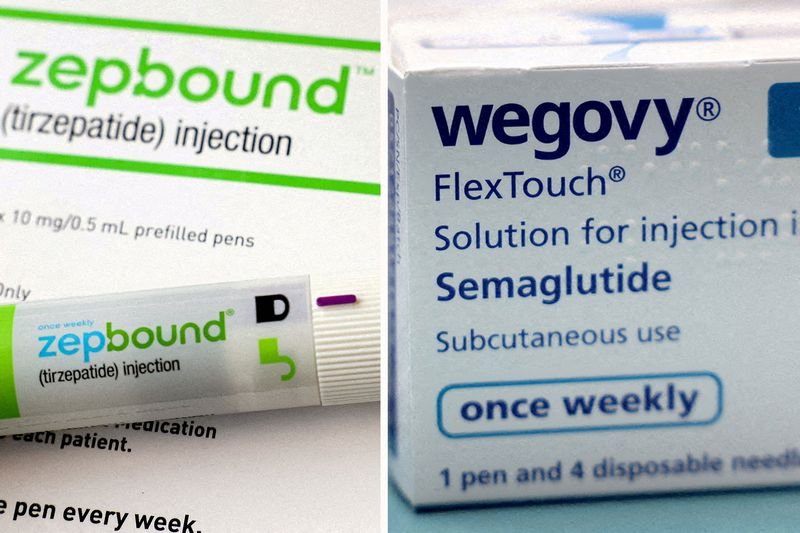
LOS ANGELES (Reuters) -Nearly two-thirds of patients who started on weight-loss drugs Wegovy or Zepbound last year were still taking them a year later, according to an analysis of U.S. pharmacy claims.
That level of persistence is higher than what prior analyses have shown, suggesting that more patients might be staying on the popular GLP-1 drugs for obesity as product shortages ease, insurance coverage expands and doctors manage side effects better, health experts say.
Sixty-three percent of patients starting on Novo Nordisk’s Wegovy or Eli Lilly’s Zepbound during the first quarter of 2024 were still taking them 12 months later. For Wegovy, that was up significantly from 40% who started therapy in 2023 and 34% who began three years ago in this analysis by Prime Therapeutics, a pharmacy benefits manager (PBM).
Patrick Gleason, Prime’s assistant vice president for health outcomes and a co-author of the analysis, said he was surprised to see persistence rise above 50%.
“It’s a near doubling from one-third persistent to roughly two-thirds now,” Gleason said. “This is a dramatic change, and I believe this is more reflective of what we will see going forward.”
Zepbound’s results were relatively unchanged year over year, though the number of U.S. patients starting on the medication in 2023 was limited since it did not launch until November of that year. Wegovy was approved in June 2021.
The analysis shared with Reuters does not include details about why patients continued or stopped therapy. Some people have reported stopping because the drugs became unaffordable or their insurance no longer covered them. Others quit due to common gastrointestinal side effects, inability to get refills due to supply shortages or achievement of their weight-loss goal, among other factors.
Studies have shown that most patients who quit their GLP-1 drugs usually regain most of the weight. The medications may require extended use to yield meaningful benefits for patients’ health.
Many employers and government agencies remain wary of adding coverage for these highly effective, but expensive medicines due to the significant upfront investment and uncertainty about any future savings.
Dr. Ezekiel J. Emanuel, co-director of the Healthcare Transformation Institute at the University of Pennsylvania, said low persistence on these weight-loss drugs had been concerning and the new data might indicate that increased insurance coverage is helping to turn the tide.
Novo declined to comment on the data. In a statement, Lilly said “Zepbound is intended to be prescribed by a doctor as part of a long-term treatment plan, alongside diet and exercise.”
Prime is owned by 19 U.S. Blue Cross and Blue Shield health insurance plans and manages pharmacy benefits for about 73 million people.
LONGER TERM DIVERGENCE
In its analysis, Prime reviewed pharmacy and medical claims for 23,025 people with commercial health plans who received prescriptions for either Wegovy or Zepbound and had a diagnosis of obesity.
Prime excluded patients with a diabetes diagnosis in their medical claims or who were using a drug for type 2 diabetes, for which these GLP-1 medicines were originally developed. The mean age of patients in the year-over-year analysis was 46 and 77% were female.
Patients were deemed persistent with their medication if they had no 60-day gaps in supply. The data allowed for switching among GLP-1 products.
The data does not include patients who took compounded versions of the weight-loss drugs or paid for their prescription out of pocket outside of insurance.
Prime also did a separate analysis of longer-term use. Only 14% of patients were still taking Wegovy after three years, the data show. That was a drop from 24% on Wegovy at the two-year mark.
That longer-term analysis examined 5,780 patients who had remained enrolled in their health insurance for three years and did not have type 2 diabetes.
The U.S. Food and Drug Administration removed semaglutide, the active ingredient in Wegovy, from its shortage list earlier this year and did the same for tirzepatide, the active ingredient in Zepbound, in December. Those moves eventually barred compounding pharmacies from making cheaper copies of the weight-loss drugs.
Some patients have purchased these weight-loss medications directly from the drugmakers outside of their health insurance. Those prescriptions were not tracked in this analysis and that cohort of patients may behave differently, said David Lassen, Prime’s vice president of clinical pharmacy services.
“That group could have a different adherence pattern,” Lassen said. “That’s something we want to continue to watch.”
(Reporting by Chad Terhune; Editing by Michele Gershberg, Muralikumar Anantharaman and Nick Zieminski)
