


The human body needs protein. Proteins carry out countless functions inside cells and they are vital for the growth, repair and maintenance of muscles, bones and skin. And with food companies rolling out high-protein versions of a huge range of foods, including milkshakes and granola bars — and even pancakes and popcorn — you might be tempted to think you need to add more to your diet.
But nutritionists say that if you are getting enough food, you are probably getting enough protein.
“Adding protein to foods is very beneficial — for the profits of that food,” said Federica Amati, nutrition lead at Imperial College London and head nutritionist at the health science company ZOE. “It is not based on health, it is not backed by science.”
The amount of protein you need depends on your age, weight and personal nutritional needs and it is especially important for children and older adults to make sure they eat protein-rich foods. Here’s what to know about how much protein you need and how to ensure you’re getting it from the best sources.
Protein is so critical that your body knows how to make it
Protein is a macronutrient, or a basic kind of food like fat or carbohydrates that your body needs to function. There are thousands of proteins, assembled from smaller molecules called amino acids — most of which can be made by the body.
“Because protein is so important, our body has adapted really well to making sure that it can reassemble and change the building blocks of these amino acids to make sure we have what we need, as long as we’re eating adequate amounts of food,” Amati said.
Still, the body can’t make all the amino acids, so some must come from food.
If you aren’t starving, you are probably getting plenty of protein
The World Health Organization recommends that healthy adults get about 0.4 grams of protein per pound of body weight (0.8 grams of protein per kilogram of body weight). That’s roughly 60 grams for men and 50 grams for women per day, based on body weights of 165 pounds (75 kilograms) for men and 143 pounds (65 kilograms) for women.
In most rich countries, the average adult gets far more, Amati said. Protein deficiencies are mostly seen in malnourished people on subsistence diet in poorer countries, she said.
Bridget Benelam, a nutritionist with the British Nutrition Foundation, said it was important to get protein from different foods, like dairy, fish, beans, nuts, vegetables and meat. She said studies suggest vegetarians and vegans have lower protein intake than meat and fish eaters, but that their average protein levels are still OK.
Having some protein at every meal is also a likely a good idea. “It appears to be better for preserving muscle function if you have some protein throughout the day, rather than just having it all in one meal,” Benelam said.
Protein can be found in a huge range of food
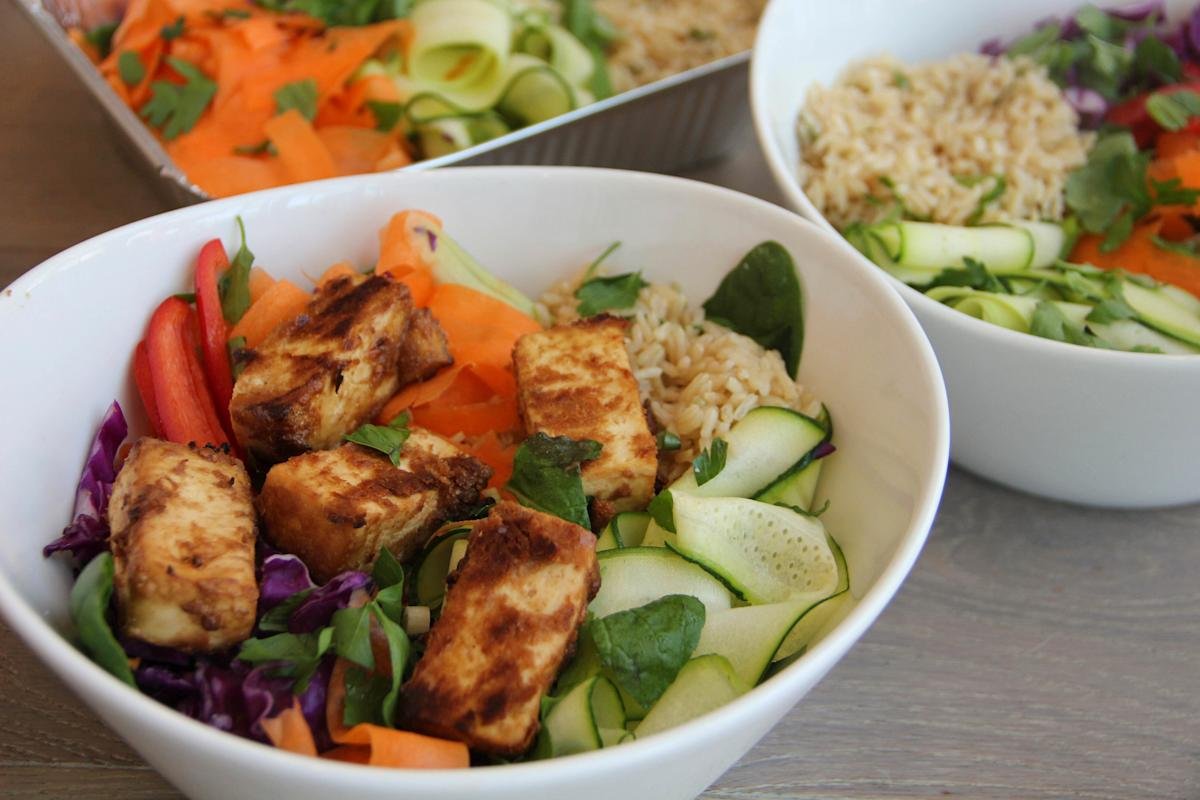
Plant-based sources of protein include foods such as beans, lentils, peas, nuts, seeds, tofu, tempeh and meat substitutes. Fish, meat, poultry, eggs and dairy foods such as milk and yogurt are also good sources of protein. Amati said that proteins from animal-based sources may be easier for the body to break down compared to plant-based proteins, which tend to have more fiber.
“If you eat a piece of beef, you’re getting protein and things like zinc and iron, but you’re also getting more saturated fat,” she said. In comparison, Amati said eating protein-rich foods like chickpeas or beans also provides the body with fiber, something that’s lacking in most of our diets.
You probably don’t need to buy products with added protein
“Unless you have a specific health issue that requires you to have more protein, most people in countries like the U.S. and the U.K. do not need more,” said Benelam of the British Nutrition Foundation.
Amati, of Imperial College London, said people should scrutinize the ingredient list of protein-enriched products to make sure they aren’t loaded with sugar and fat.
For people trying to build more muscle, she recommended a more direct solution: exercise.
“If you’re worried about your body composition and muscle strength, you have to lift (heavier) weights and give your body a challenge,” Amati said. “Eating a protein bar is not going to help.”
___
The Associated Press Health and Science Department receives support from the Howard Hughes Medical Institute’s Department of Science Education and the Robert Wood Johnson Foundation. The AP is solely responsible for all content.
