


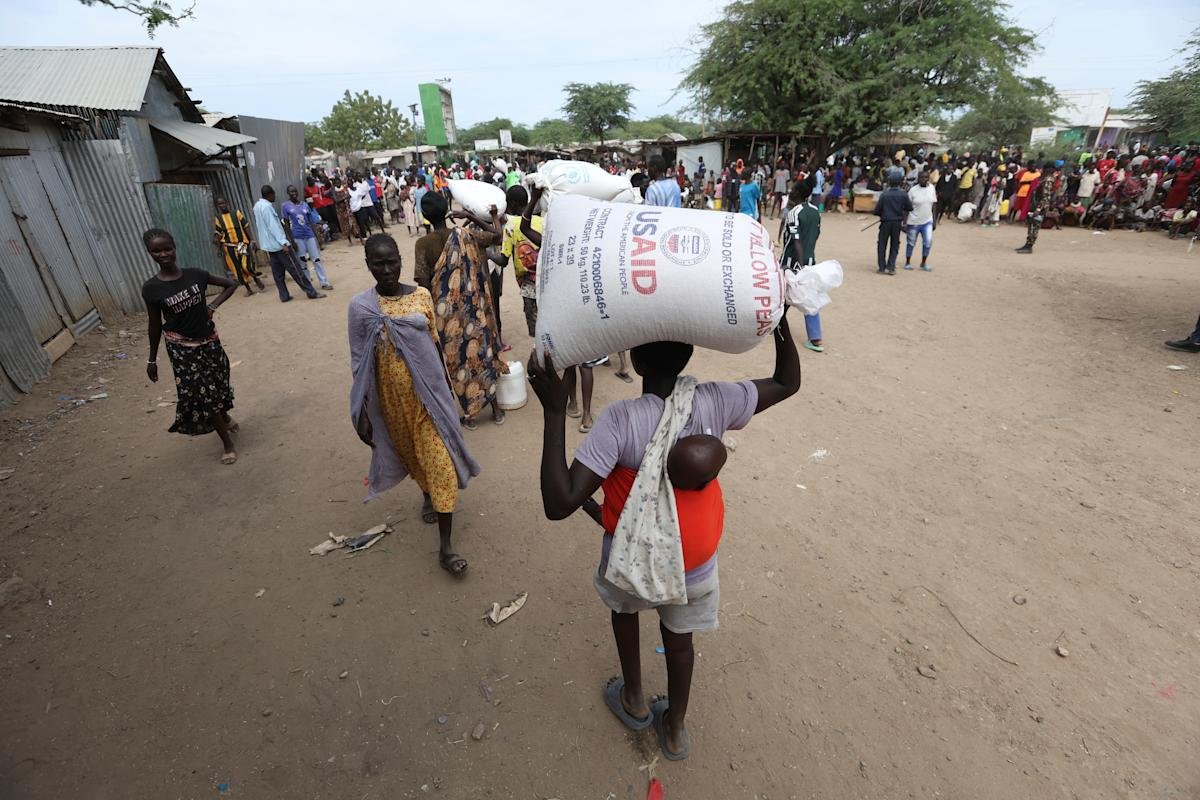
KAKUMA, Kenya (AP) — Martin Komol sighs as he inspects his cracked, mud-walled house that is one rain away from fully collapsing. Nothing seems to last for him and 300,000 other refugees in this remote Kakuma camp in Kenya — now, not even food rations.
Funding for the U.N. World Food Program has dropped after the Trump administration paused support in March, part of the widespread dismantling of foreign aid by the United States, once the world’s biggest donor.
That means Komol, a widowed father of five from Uganda, has been living on handouts from neighbors since his latest monthly ration ran out two weeks ago. He said he survives on one meal a day, sometimes a meal every two days.
“When we can’t find anyone to help us, we become sick, but when we go to the hospital, they say it’s just hunger and tell us to go back home,” the 59-year-old said. His wife is buried here. He is reluctant to return to Uganda, one of the more than 20 home countries of Kakuma’s refugees.
Food rations have been halved. Previous ration cuts led to protests in March. Monthly cash transfers that refugees used to buy proteins and vegetables to supplement the rice, lentils and cooking oil distributed by WFP have ended this month.
Each refugee now receives 3 kilograms (6 pounds) of rice per month, far below the 9 kilograms recommended by the U.N. for optimal nutrition. WFP hopes to receive the next donation of rice by August. That’s along with 1 kilogram of lentils and 500 milliliters of cooking oil per person.
“Come August, we are likely to see a more difficult scenario. If WFP doesn’t receive any funding between now and then, it means only a fraction of the refugees will be able to get assistance. It means only the most extremely vulnerable will be targeted,” said Colin Buleti, WFP’s head in Kakuma. WFP is seeking help from other donors.
As dust swirls along paths between the camp’s makeshift houses, the youngest children run and play, largely unaware of their parents’ fears.
But they can’t escape hunger. Komol’s 10-year-old daughter immerses herself in schoolbooks when there’s nothing to eat.
“When she was younger she used to cry, but now she tries to ask for food from the neighbors, and when she can’t get any she just sleeps hungry,” Komol said. In recent weeks, they have drunk water to try to feel full.
The shrinking rations have led to rising cases of malnutrition among children under 5 and pregnant and breastfeeding mothers.
At Kakuma’s largest hospital, run by the International Rescue Committee, children with malnutrition are given fortified formula milk.
Nutrition officer Sammy Nyang’a said some children are brought in too late and die within the first few hours of admission. The 30-bed stabilization ward admitted 58 children in March, 146 in April and 106 in May. Fifteen children died in April, up from the monthly average of five. He worries they will see more this month.
“Now with the cash transfers gone, we expect more women and children to be unable to afford a balanced diet,” Nyang’a said.
The hospital had been providing nutrient-dense porridge for children and mothers, but the flour has run out after stocks, mostly from the U.S., were depleted in March. A fortified peanut paste given to children who have been discharged is also running out, with current supplies available until August.
In the ward of whimpering children, Susan Martine from South Sudan cares for her 2-year-old daughter, who has sores after swelling caused by severe malnutrition.
The mother of three said her family often sleeps hungry, but her older children still receive hot lunches from a WFP school feeding program. For some children in the camp, it’s their only meal. The program also faces pressure from the aid cuts.
“I don’t know how we will survive with the little food we have received this month,” Martine said.
The funding cuts are felt beyond Kakuma’s refugee community. Businessman Chol Jook recorded monthly sales of 700,000 Kenyan shillings ($5,400) from the WFP cash transfer program and now faces losses.
Those who are hungry could slip into debt as they buy on credit, he said.
___
For more on Africa and development: https://apnews.com/hub/africa-pulse
The Associated Press receives financial support for global health and development coverage in Africa from the Gates Foundation. The AP is solely responsible for all content. Find AP’s standards for working with philanthropies, a list of supporters and funded coverage areas at AP.org.
