


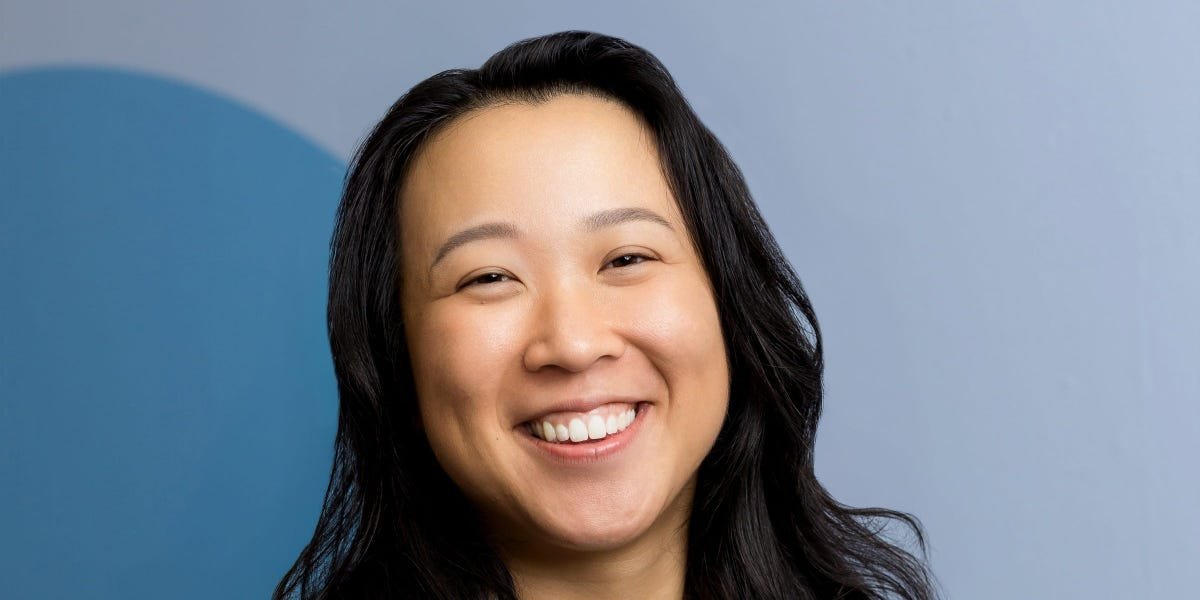
This is a conversation with Lilly Chen, the 30-year-old founder and CEO of FSH Technologies. It has been edited and condensed for clarity.
When I was 16, I dropped out of high school and became a Buddhist monk.
At the time, I was really sick. I had been diagnosed with Graves’ disease, an autoimmune disorder, and my family was on public health insurance.
I didn’t have good access to preventive healthcare,
We went through that cycle two or three times. At one point, I had a fever for more than a week and was bedridden.
My mom had always been spiritual. Eventually, she was basically like, “Screw Western medicine. Let’s become monks.”
I got ordained in America, and eventually my mom and I moved to a Buddhist monastery in rural China. I was a monk for about two years altogether, which included about six months living at that monastery.
Life there was simple. We woke up at 3 a.m. and meditated. We grew food, cleaned, fetched water, and did other chores. There was no electricity.
People also traveled to see the monks, and they would tell us about their problems. They came looking for advice, but monks don’t really give advice. We listened.
I was a teenager spending every day listening to people talk about their problems. I think that was the most important thing I learned from being a monk: How to listen to other people.
I also read constantly. Eventually, the head monk noticed and asked if I liked learning. I told him yes, and that one of the things I missed most about America was having access to public libraries.
He said, “I heard that’s what university is for.” He told me to go back to America, go to college, meet people my own age, and figure out what I found interesting.
So I came back to America, but I had no idea how to go to college. I didn’t have a high school diploma. I didn’t really have anyone helping me navigate the process. My plan was to get a GED, attend community college, and eventually transfer.
I went to a college fair at my public library to find my local community college. I saw a table marked “CC” and stopped there, thinking it meant community college. It was actually a small liberal arts school called Colorado College.
I told a woman there about my unconventional path. She told me to take the ACT and email her my score.
I got a 36, which is the highest possible score.
She told me to apply early decision to Colorado College. I asked if I could even do that without a high school diploma. She told me to apply, submit my test score, and write about my experience in my personal essay. She would figure out the rest.
I got accepted. In college, I taught myself how to code. After graduating, I became a software engineer at Meta, but I quickly grew tired of it. A year later, I founded FSH Technologies.
Outlier Partners
FSH Technologies builds software for cities, school districts, and state agencies, with a focus on replacing slow and outdated government technology systems. We’ve raised $25 million in total funding, including, most recently, a $20 million Series A led by Lachy Groom, an early investor in companies including Figma, Notion, Ramp, and Lattice.
The Series A followed an earlier $5 million seed round led by Contrary and Acrew, with General Catalyst, Scribble, and Basis Set Ventures also participating.
The way I think about the company still comes back to something I learned at the monastery.
One of my chores there was taking care of a koi pond. The monk who encouraged me to go to college would tell me, “Be the pond, not the fish.”
His point was that we tend to fixate on one problem — one fish — instead of seeing the whole system.
That is how I think about government technology. Software is one fish. There are also procurement rules, existing processes, change management, and people’s resistance to change. At FSH, we try to solve the whole problem end-to-end.
That also shapes how we compete with consulting firms.
We frequently encounter firms like Accenture in government contract bidding, and we have beaten them. Accenture is probably the competitor we see most often. After awards are made, clients will sometimes tell us which other vendors they were considering.
One of the biggest differences is our incentives. We don’t charge billable consulting hours, and we don’t have salespeople or consultants. Everyone at FSH is a builder.
I understand why governments still choose established firms like Accenture. The public sector is risk-averse, and there is comfort in hiring a familiar name.
My hope is that if we keep delivering successfully, the results will become hard to ignore.
