


The phrase “imitation is the sincerest form of flattery” doesn’t ring as true in the age of AI.
A growing number of celebrities are filing trademark applications to protect their likenesses, voices, and iconic phrases amid the AI boom. While the technology has introduced a new approach to automation and workflow, it’s also ushered in a new era of deepfakes and nonconsensual content.
AI-generated content can spread misinformation by depicting real people doing, saying, or endorsing things without their knowledge. That includes politicians, religious figures, law enforcement, celebrities, and everyday people.
Although the content is fabricated, it can have real-world consequences. Grok, a chatbot developed by Elon Musk’s xAI, which is now part of SpaceX, garnered widespread criticism in January for allowing users to create sexualized deepfakes images of real people, some of which included minors. The company is facing legal action in response.
Similarly, OpenAI faced backlash after launching its video generation platform, Sora 2, last year. At the time, OpenAI allowed users to create videos featuring trademarked characters without the copyright holders’ consent.
The app landed them in trouble with entertainment studios and actors like Bryan Cranston, who flagged unauthorized videos featuring his character Walter White from “Breaking Bad.” Following industry pushback, OpenAI implemented an opt-in approach for copyright holders before shutting down the platform altogether in April.
Celebrities like Sarah Silverman have also voiced concerns over startups stealing content to train large language models. Silverman and a group of plaintiffs sued OpenAI in 2023 for copyright infringement. A federal judge narrowed the scope of the lawsuit in February 2024, but it’s ongoing.
As a result, some celebrities are seeking legal protection as AI continues to rapidly expand.
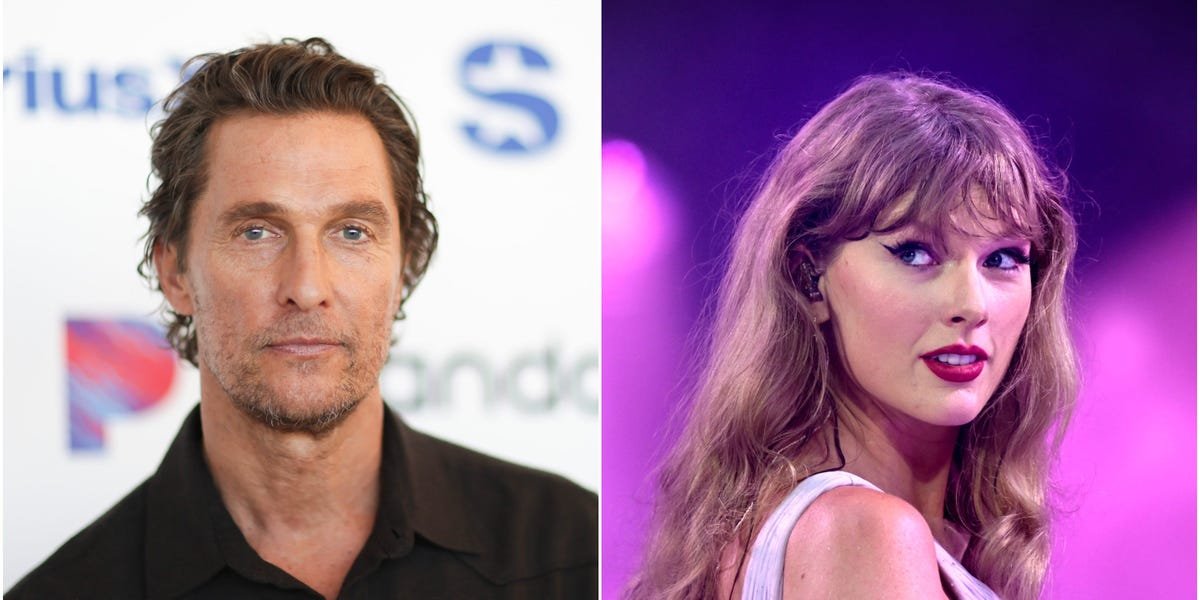
Matthew McConaughey

Rodin Eckenroth/Getty Images for SiriusXM
Taylor Swift
Gareth Cattermole/TAS24/Gareth Cattermole/Getty Images for TAS Rights Management
Jimmy Kimmel
AP Photo/Chris Pizzello
Lionel Richie
Jordan Strauss/Invision/AP
Jeremy Clarkson
Jakub Porzycki/NurPhoto via Getty Images
Backstreet Boys
Tim Mosenfelder/Getty Images
