


SpaceX’s post-IPO mega-rally has hit its first slowdown.
Shares in Elon Musk’s rocket company, which raised a record $75 billion when it went public last week, had dropped nearly 5% on market close on Wednesday, its first down day since the offering on June 12. The slide continued on Thursday, with the stock down 10% to $172.11. Shares are still up 27% from the IPO price of $135.
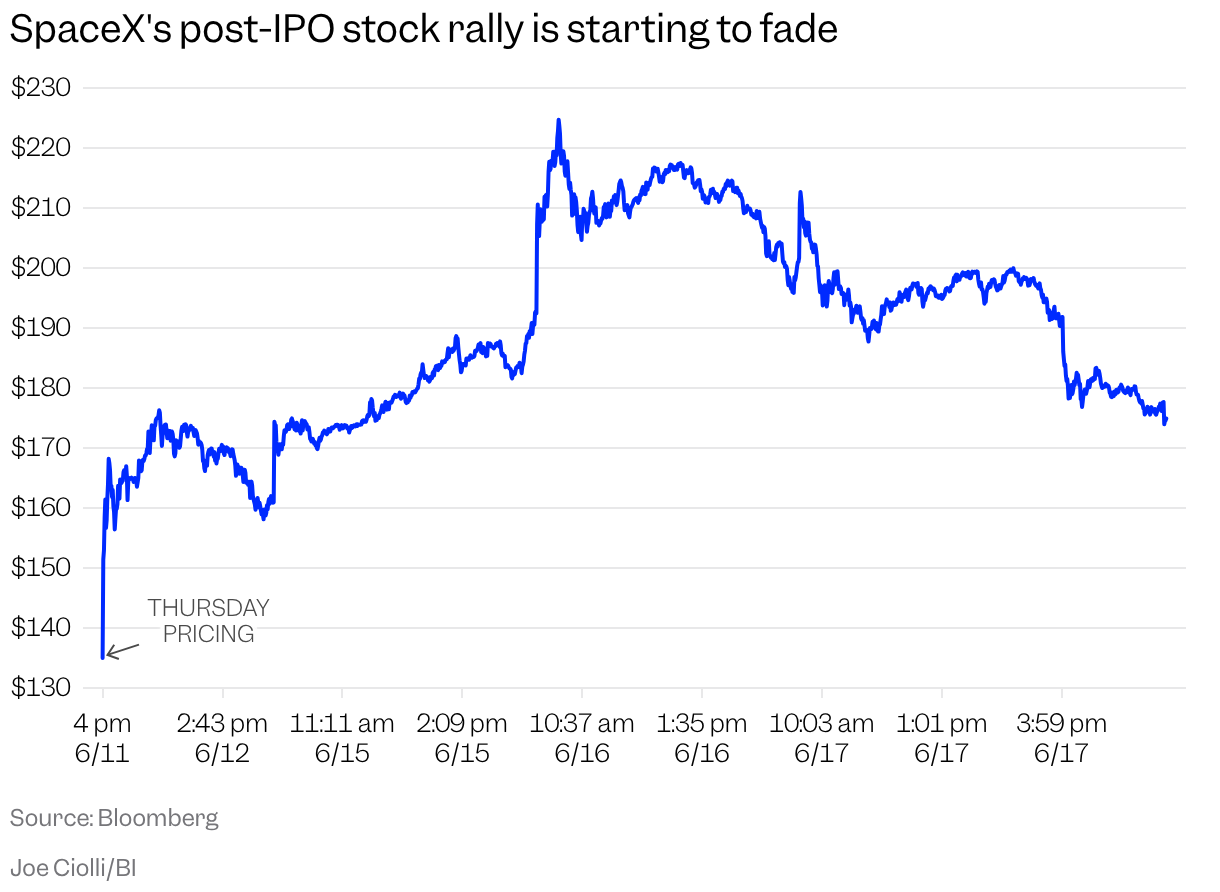
The drop ended a monster share price rally that had seen SpaceX’s market cap soar to nearly $3 trillion in its first days of trading, eclipsing Amazon as the world’s fifth most valuable company and cementing Musk’s status as the world’s first trillionaire.
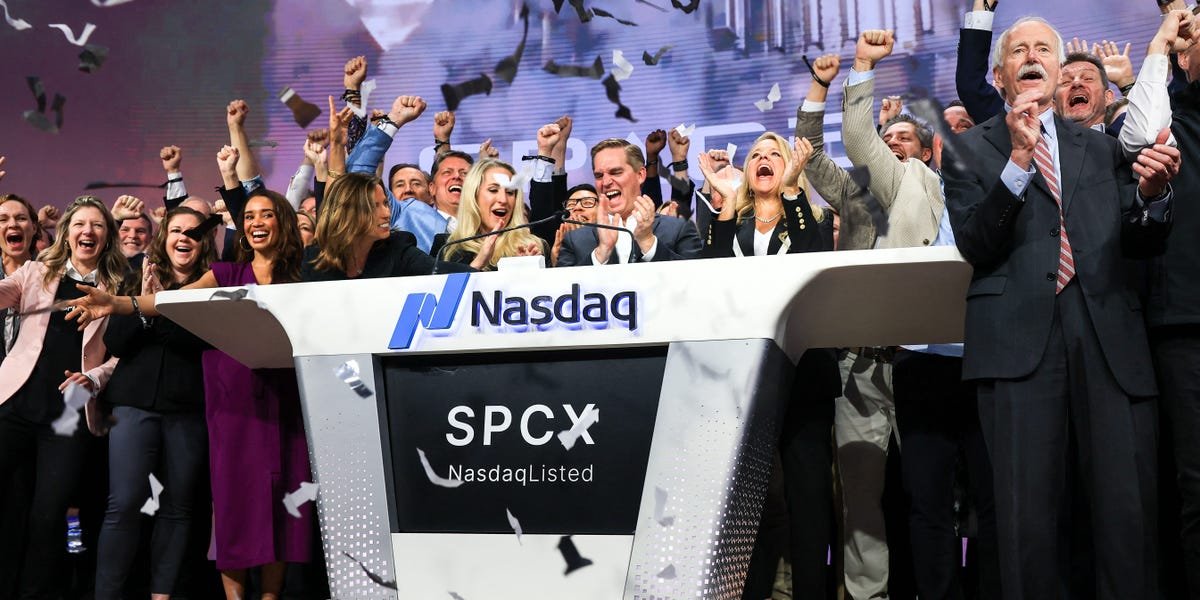
The company enjoyed a nearly flawless debut on the public markets, with shares popping 19% on their first day of trading amid feverish enthusiasm from retail investors and Wall Street institutions.
SpaceX has been busy since its history-making IPO, announcing a $60 billion deal for AI coding startup Cursor on Tuesday.
The all-stock acquisition, which saw SpaceX exercise an option to purchase Cursor that it agreed to in April, is a sign of how the company is utilizing its post-IPO surge. Pershing Square founder Bill Ackman said the deal cost “materially less in dilution” due to SpaceX’s high valuation.
SpaceX’s valuation had been questioned by some analysts in the run-up to the IPO. The company posted a $4.9 billion loss in 2025 on revenue of $18.7 billion, way below the revenue recorded by other multi-trillion-dollar tech giants like Google and Amazon.
SpaceX, which also absorbed Musk’s AI startup xAI in February, is betting on new markets for AI data centers in space to drive growth.
The company told investors that its total addressable market was worth $28.5 trillion, roughly the size of US GDP in 2024. On Sunday, Musk said that SpaceX’s revenue may reach $1 trillion by 2030.
