


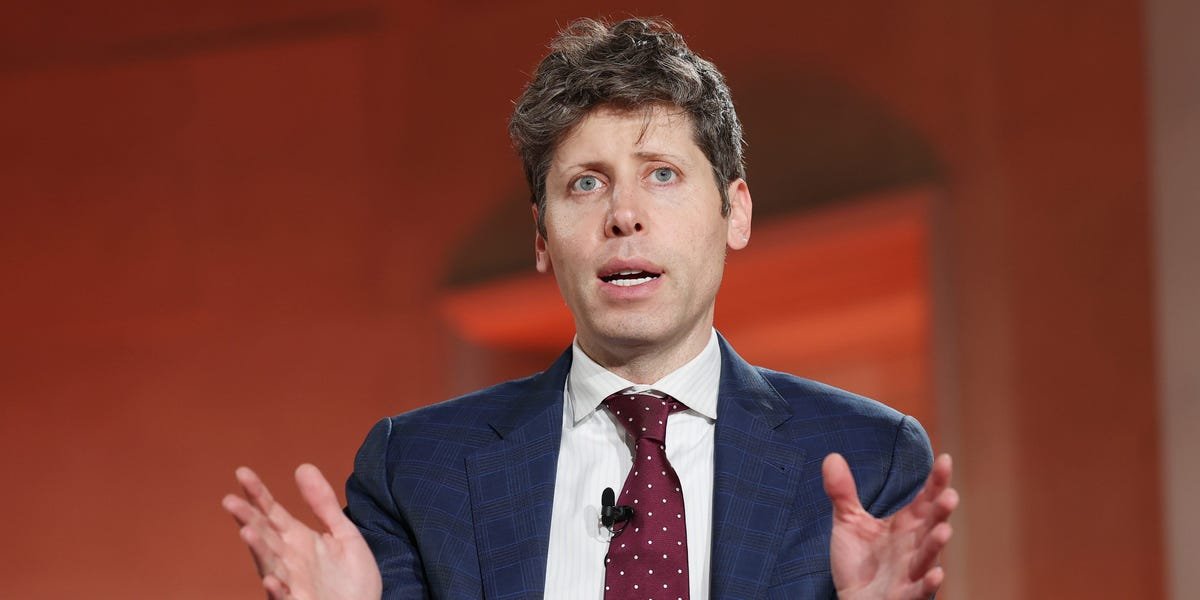
The AI jobs apocalypse has not yet come to pass — and Sam Altman says he’s happy to be wrong about that.
The OpenAI boss told a tech conference this week that his predictions about AI wiping out entry-level jobs had been wide of the mark, after once suggesting that the technology would cause “entire classes” of jobs to disappear.
“My scorecard, at the highest level, would be we’ve been roughly right on technological predictions and pretty wrong on the social and economic implications,” said Altman, according to a summary of a conversation with Matt Comyn, the CEO of Commonwealth Bank of Australia, published on Tuesday.
The OpenAI CEO said that the short-term impact of AI on entry-level white-collar jobs had not been anywhere near as bad as he once thought.
“I’m delighted to be wrong about that,” Altman said.
In the years following the release of ChatGPT in 2022, Altman was among several AI executives who warned that the technology would spark serious upheaval in the job market.
In a 2023 interview with The Atlantic, he said that “jobs are definitely going to go away” as companies embrace AI, but added that he expected far better roles to be created in their place. Last year, Altman told a Federal Reserve conference that “entire classes” of jobs would vanish.
Altman is not the only one to have issued blunt warnings about the impact of AI on the workforce. Anthropic CEO Dario Amodei said last May that AI could eliminate around 50% of entry-level office jobs, and a report from analyst firm Citrini predicting an AI-fuelled market crash and recession sent stocks tumbling earlier this year.
So far, predictions of an AI-fuelled jobs apocalypse have failed to come to pass, although tech companies like Block, Snap, and Meta have cited the technology in recent layoff announcements. In February, Altman said some companies are blaming AI for layoffs that would’ve happened anyway, but did not identify any by name.
Altman told the Commonwealth Bank conference that he thought it was important that AI companies be frank about their concerns around the impact of the technology, even if those concerns later proved to be incorrect.
“I believe that so much of society here is going to be impacted by this, that we are all stakeholders, and it is better for us to be going in the direction of too much transparency and occasionally being wrong,” Altman said, according to the summary shared by the bank.
