


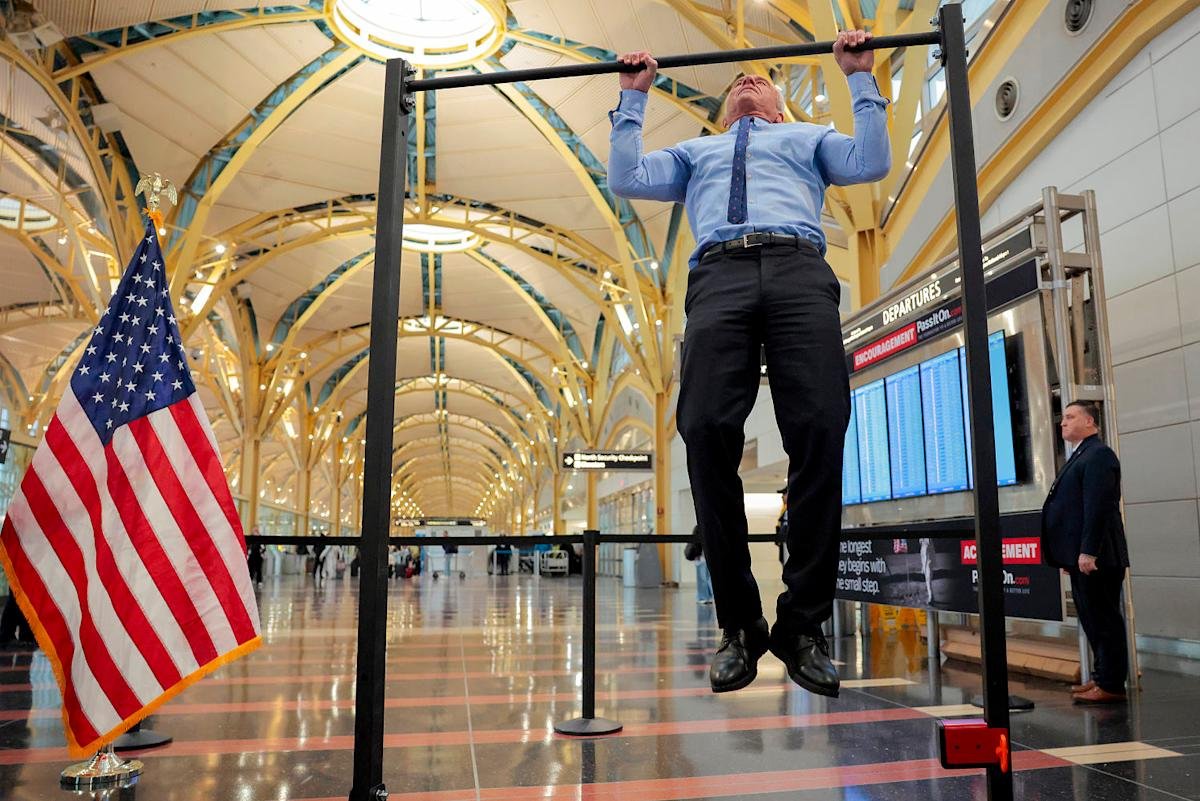
Health Secretary Robert F. Kennedy Jr. underwent surgery Tuesday for an injured rotator cuff. The 72-year-old is expected to return to work Monday, according to a spokesperson for the Department of Health and Human Services, although doctors say recovery can be slow and painful.
The key to an optimal recovery is a gradual return to activity, including wearing a sling after the surgery and physical therapy.
The rotator cuff, a group of muscles and tendons that surround the shoulder joint, is used for a whole range of motion such as raising your arm, said Dr. Gus Mazzocca, medical director of Mass General Brigham Sports Medicine. This includes activities like brushing your hair, reaching for objects on shelves or playing certain sports.
The rotator cuff is made up of four muscles and tendons, said Dr. Laith Jazrawi, chief of sports medicine at NYU Langone Health, including the supraspinatus, infraspinatus, teres minor and subscapularis.
Symptoms of an injury can start with arm weakness or a dull ache in your shoulder and lead to pain when you lift your arm above your head, Jazrawi said.
While rotator cuff injuries can happen in young athletes, it’s more common to see this among older adults as a result of age-related changes, Mazzocca said.
“Typically when you get an MRI on anyone above 60, they’re going to have some degree of rotator cuff pathology,” Jazrawi said.
A study from Finland published last month in JAMA Network Open found that 99% of the population over 40 years old had at least one detectable issue with the rotator cuff on an MRI regardless of whether they had symptoms.
Rotator cuff injuries can be complicated and the symptoms don’t always correlate to the extent of the damage, Mazzocca said.
“You can have a very small tear that is very symptomatic and we fix it, or you can have a massive tear that’s actually not symptomatic and you don’t need to fix it, and then anywhere in between,” he said.
It’s not clear when Kennedy injured his shoulder. As part of his “Get Active and Eat Real Food” campaign, he posted a workout video with musician Kid Rock on Feb. 17 featuring the shirtless health secretary speeding through push-ups and bicep curls and riding a stationary bike.
Damage to the rotator cuff, like many sports injuries, is treated with either nonsurgical or surgical options, Jazrawi said.
Nonsurgical options can include rest, ice, anti-inflammatory medications like ibuprofen, steroid injections or physical therapy.
Experimental treatments such as BPC-157, an injectable peptide, have been used by bodybuilders for recovery and are gaining popularity among other athletes.
Unfortunately, the data has not yet caught up to the hype, Jazrawi added, saying that larger studies are needed. The peptide isn’t approved
Surgery is typically reserved for severe tears or tears that don’t respond to conservative measures. Jazrawi said that older adults with degenerative changes may be more likely to be treated conservatively, while younger patients who suffer a tear from a sports injury may be more likely to need a procedure to resume an active lifestyle.
Rotator cuff repairs are typically done arthroscopically, a minimally invasive surgery that involves using a camera and small instruments through tiny incisions to repair problems with the shoulder joint. It typically results in less pain and faster recovery than an open, more invasive procedure.
The recovery after the procedure can be difficult, Mazzocca said, as patients will often complain about pain in the process. One method that doctors use to help patients involves injections of anesthetic to the nerves that control pain, a procedure called a nerve block.
Over the course of the next several months, patients can then gradually begin ramping up their activity to get their strength back.
“Typically, it’s four to six weeks in a sling,” Jazrawi said. “I typically tell patients four to six months’ recovery or back to lifting in about six months.”
This article was originally published on NBCNews.com
