


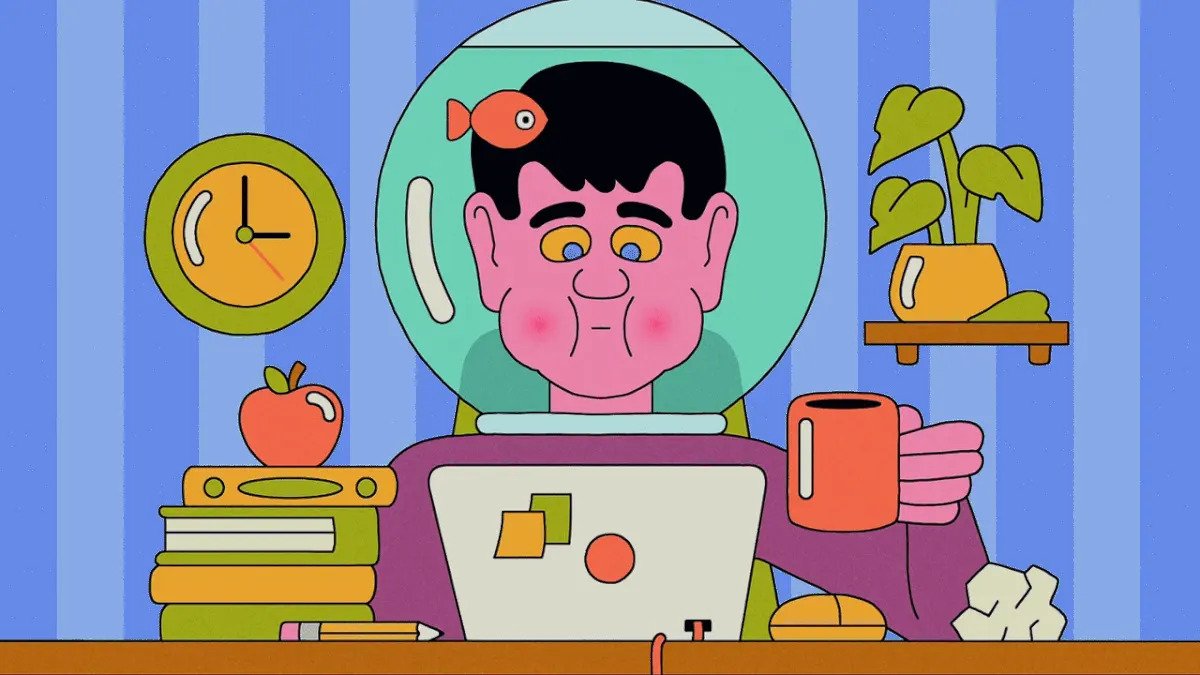
Do you need to take a breath, like right now? If so, you might be experiencing the modern-day phenomenon called email apnea. The term, coined by technology wellness expert Linda Stone, refers to holding your breath or breathing very shallowly without realizing it while reading and responding to emails or working on a computer or phone. It’s also known as screen apnea — the stress-related breathing pattern that can kick in when you’re intensely focused or overloaded by everything coming at you on your screen.
On her blog, Stone shared that she noticed she often held her breath or took shallow breaths while working through her inbox, and wondered if others were doing the same. She started testing her friends’ breathing habits and interviewing scientists and researchers, and found that it was actually a common unconscious habit.
“When we open our inbox or scroll through a work feed, the nervous system often shifts into a subtle state of alert,” Dora Kamau, the lead mindfulness and meditation teacher at Headspace, tells Yahoo. “It’s not full-blown panic mode, but it’s a kind of bracing we do to prepare ourselves for what might be waiting.”
When you’re really focused, it’s not just your mind that locks in — your breath changes too. When “the brain allocates resources to demanding cognitive tasks, breathing becomes shallower or briefly pauses and muscle tension increases,” Gabe Hatch, a clinical psychologist and senior quantitative researcher at O.C. Tanner, tells Yahoo.
These breathing changes can shift carbon dioxide levels and spike stress hormones like cortisol. That, in turn, can trigger the sympathetic nervous system, sending the body into fight-or-flight mode.
The signs of email apnea
You might not realize you’re slipping into email apnea, but your body may offer some clues. Some people catch themselves letting out a sudden deep sigh, says Kamau, which can signal the “body trying to reset after shallow breathing.” Email apnea can also trigger headaches, muscle tension, brain fog and feelings of anxiety. By the end of the day, you may feel exhausted even if you didn’t do anything particularly strenuous, notes Kamau.
Over time, chronic shallow breathing and irregular respiratory issues can take a toll on your health, including increasing blood pressure, heart rate, anxiety and more.
Email apnea in the workplace
The modern-day bombardment of communication via emails, calls, texts, Slack messages and social media, alongside the blurred boundaries of personal time and work, might be a big contributor to email apnea, says Jane Chen, a leadership development coach, public speaker and author.
Workers who are expected to always be “on” — constantly responding and perpetually available — may be especially vulnerable to it.
“When a message appears in our inbox or on our phone, it creates a sense of urgency,” Chen tells Yahoo. “Many people feel an internal pressure to respond right away to signal responsiveness, competence and commitment.”
Kamau adds that the modern workplace keeps us in a constant low-grade state of vigilance. When busyness is celebrated and rapid responses are expected, “the nervous system rarely gets a chance to settle and recover,” she says. “That can make shallow breathing the norm rather than the exception.”
How to avoid email apnea
Whether it’s triggered by deep concentration, the stress of half-expecting bad news or an ever-present sense of workplace urgency — or a mix of all three — there are ways to prevent yourself from barely breathing while staring at your screen.
Kamau says that before you even open your email or start a task on the computer, you should take a slow inhale through the nose and exhale steadily out the mouth, which boosts oxygen and helps your body calm down. Belly breathing (also known as diaphragmatic breathing) in particular has been shown to reduce stress, lower blood pressure and heart rate and even improve sleep.
Once you’re working, regularly check in on how you’re breathing. If you notice it’s shallow or tense, try to sit up straight to make literal space for those good breathing habits. And don’t underestimate the power of taking frequent mini breaks: Glance away from the screen, stand up or take a quick walk. Those brief pauses can help give your body and mind a reset.
“Small, consistent moments of awareness throughout the workday can help restore balance and reconnect us to ourselves, even in the midst of a busy modern workplace,” says Kamau.
