


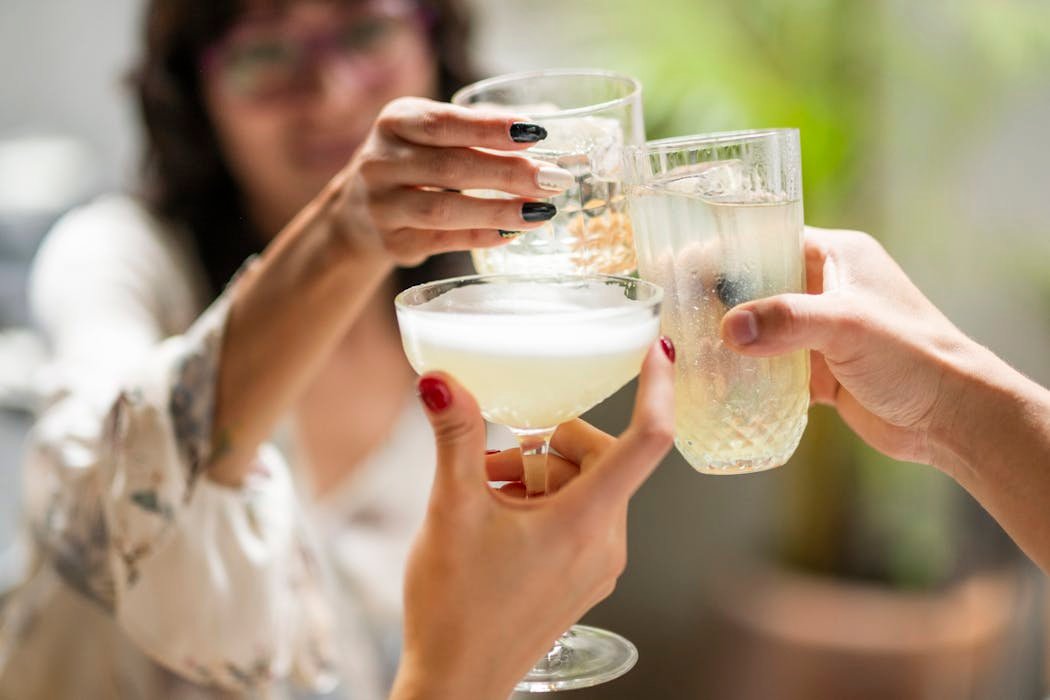
Thinking about certain types of alcohol can alter your mood and trigger certain mindsets, especially among young consumers. For instance, tequila calls up a party mindset, whiskey activates a masculine mindset, and wine primes a sophistication mindset.
Those are the key takeaways of a new study my team and I published in the journal Young Consumers.
We carried out four studies with 429 total participants to examine the cultural themes and moods people associate with different types of alcohol.
We conducted two preliminary studies to understand how people think about different types of alcohol. In the first study, participants answered open-ended questions, and in the second they completed a word-association task. These studies helped us identify common cultural associations, which we call “learned associations,” or ideas people develop through experience and cultural exposure.
We used these associations to create questions about alcohol-related mindsets. Participants rated how much they felt different qualities when thinking about a randomly assigned type of alcohol in response to the prompt, “I feel ___ when thinking about this type of alcohol.” For example, the sophisticated mindset included sophisticated, elegant, classy, formal and fancy; the masculinity mindset included masculine, tough, confident, manly and strong; and the party mindset included energetic, outgoing, fun, like partying and like celebrating.
Then we conducted two experiments where participants were randomly assigned to think about either wine, whiskey or tequila and respond to the mindset questions, allowing us to test whether different types of alcohol evoke different associations.
Importantly, participants did not consume alcohol, allowing us to isolate the learned associations these drinks evoke, separate from alcohol’s physiological effects.
Clear patterns emerged. Tequila was frequently associated with words like fun, wild, celebration and party. Whiskey elicited terms such as strong, rugged, confident and masculine. Wine, by contrast, was associated with elegance, class, refinement and sophistication.
These findings show that alcohol can function as a “symbolic cue.” In other words, the mindsets people associate with different drinks appear to originate from learned associations rather than from intoxication itself.
Why it matters
More than half of the U.S. adult population consumes alcohol: 54% in 2025. This is the lowest level recorded since Gallup began tracking the drinking habits of adults in the U.S. in 1939, and it marks a decline from 1997-2023, when over 60% of adults reported drinking.
Some drink to enhance experiences, while others drink for enjoyment, socializing or even escapism. For others, drinking may become compulsive or difficult to control, defined as an alcohol use disorder.
Research increasingly shows that even moderate drinking can carry health risks, including higher risks of several cancers.
A considerable amount of research on alcohol has explored what happens as a result of drinking. Studies have found that people become uninhibited and make risky decisions when they drink. Other researchers have found that people pick up ideas and habits about drinking from the world around them and that advertising can influence what, when and how young people drink.
Fans of the popular sitcom “How I Met Your Mother” might recall an episode titled ‘The Perfect Cocktail.“ In this episode, different alcoholic beverages reflect the personalities of Marshall (Jason Segel) and Barney (Neil Patrick Harris). It’s funny and engaging, but what if there’s a real psychological basis for these associations?
Such learned associations have not been thoroughly studied – in particular, it’s unknown whether they can activate distinct drinking mindsets even without actual consumption.
One reason why this is important is that even though Gen Zers drink less alcohol than previous generations, they are still exposed to alcohol-related media and cultural cues. Understanding these psychological cues may help explain how alcohol-related social norms and expectations develop and influence drinking decisions.
What’s next
Learned associations for different alcoholic drinks can influence how people feel, which in turn might shape their intentions, choices and social expectations. For example, if thinking about tequila prompts a “party” mindset, it could influence how a person plans their evening and what choices they make.
A better understanding of these associations could help public health campaigns promote moderation and responsible drinking, such as pacing drinks, staying hydrated and avoiding overconsumption. Future research could examine how these associations form in different social contexts, how they vary across age groups or cultures, and how interventions might shift them to further reduce risky behaviors and encourage safer, more responsible alcohol consumption.
The Research Brief is a short take on interesting academic work.
This article is republished from The Conversation, a nonprofit, independent news organization bringing you facts and trustworthy analysis to help you make sense of our complex world. It was written by: Logan Pant, University of Evansville
Read more:
This research was funded by the Department of Marketing at the University of North Texas.
