


When Dawson’s Creek star James Van Der Beek died of colorectal cancer at 48 in February, people didn’t just pay tribute — they booked screenings. ZocDoc reported a 140% surge in bookings for colon cancer screenings following the actor’s death. That increase comes less than six years after Black Panther star Chadwick Boseman died of colorectal cancer at age 43 — a loss that drove a more than 700% spike in searches for colon cancer screenings.
“We believe in screening so deeply because psychologically, we still believe that cancer is automatically a death sentence, that there is nothing we can do and we have no control,” David Ropeik, risk assessment expert and author of Curing Cancerphobia: How Risk, Fear, and Worry Mislead Us, tells Yahoo. That lack of control, he says, means we seek out anything we can do. “The first thing we grasp for is screening,” he notes.
That instinct is typically a good thing, especially since catching cancer early can improve outcomes in many cases. But for people who don’t meet the age guidelines or who don’t have symptoms or a family history that would typically warrant an early colonoscopy, mammogram or other cancer screening, health anxiety can push them to look elsewhere for reassurance.
Private companies are capitalizing on this quest for information. Grail’s Galleri blood test screens for more than 50 different types of cancer from a single blood draw, while full-body MRI scans, such as from the celebrity-favored company Prenuvo, are promoted as an efficient — albeit expensive — way to detect disease early.
But as tempting as it can be to get ahead of cancer, experts say that more testing isn’t always better. And in some cases, the risks can outweigh the benefits. Here’s what doctors say actually works for cancer prevention and detection — and where it pays to be cautious.
What reduces the risk of cancer
Dr. Fola May, a UCLA Health cancer prevention researcher and gastroenterologist, tells Yahoo that there are several scientifically backed things you can do to lower your risk of getting cancer: maintain a healthy weight, limit — or avoid — alcohol, don’t smoke or use tobacco products and regularly engage in physical activity (even a daily 10-minute burst of activity helps).
With colorectal cancer featured so prominently in the news, many people are also eager for answers on how to prevent that specific disease. Studies show that following the Mediterranean diet and eating more fiber can reduce your risk, along with avoiding red and processed meats like deli meat or bacon.
While healthy habits help lower cancer risk, May says they don’t eliminate it entirely. Genetics, family history and environmental exposures — many of which are outside a person’s control — also play a role in who develops cancer.
Which screenings to get — and when
Evidence-based cancer screenings have saved millions of lives. Between 1975 and 2020, an estimated 4.75 million deaths from breast, cervical, colorectal, lung and prostate cancers were averted thanks to prevention and screening interventions.
These screenings are generally very safe, though there are some small potential risks. Colonoscopies, for example, carry a very low risk of infection and rare complications such as colon perforation. Mammograms can come with the potential of false positives, leading to emotional distress and additional testing, which can cost time and money.
So how do you know which screenings are more beneficial than they are risky? Ropeik points to guidelines from the U.S. Preventive Services Task Force (USPSTF), an independent panel of medical experts that reviews scientific evidence to weigh the benefits and potential harms of preventive services for the general population.
The task force assigns letter grades to screenings based on the strength of evidence and the balance of benefits vs. potential harm: A and B ratings mean there is strong or moderate evidence of meaningful net benefit and the screening is recommended, while C means the benefit is small so decisions should be made on a case-by-case basis. D rating means evidence shows no net benefit, or that it could do more harm than good, and an I rating means evidence is insufficient. You can view their recommendations for cancer screenings here.
The basic cancer screenings adults should get, per the USPSTF, include:
Breast cancer: Women ages 40 to 74 should get a mammogram every two years. (This differs from the American Cancer Society’s guidance, which recommends that women 45 to 54 get annual exams and that women 55 and older switch to screenings every other year or keep doing yearly mammograms if preferred.)
Cervical cancer: Women ages 21 to 29 should get a Pap smear every three years; women ages 30 to 65 should get a Pap test every 3 years, an HPV test every 5 years, or a combination of both every five years
Colorectal cancer: Adults ages 45 to 75 should get a colonoscopy typically every 10 years (unless a polyp is found or there’s a family history) or a stool-based test every one to three years.
Lung cancer: High-risk adults ages 50 to 80 who have smoked the equivalent of a pack a day for 20 years and currently smoke or quit within the last 15 years should get a low-dose CT scan every year.
Prostate cancer: Men ages 55 to 69 can get a PSA blood test after discussing the pros and cons with their doctor.
It’s important to note, Ropeik says, that these recommendations are based on the general population — not on an individual with their own risk factors. The best person to speak to about whether it’s a good idea to get certain cancer screenings, and when, is your health care provider.
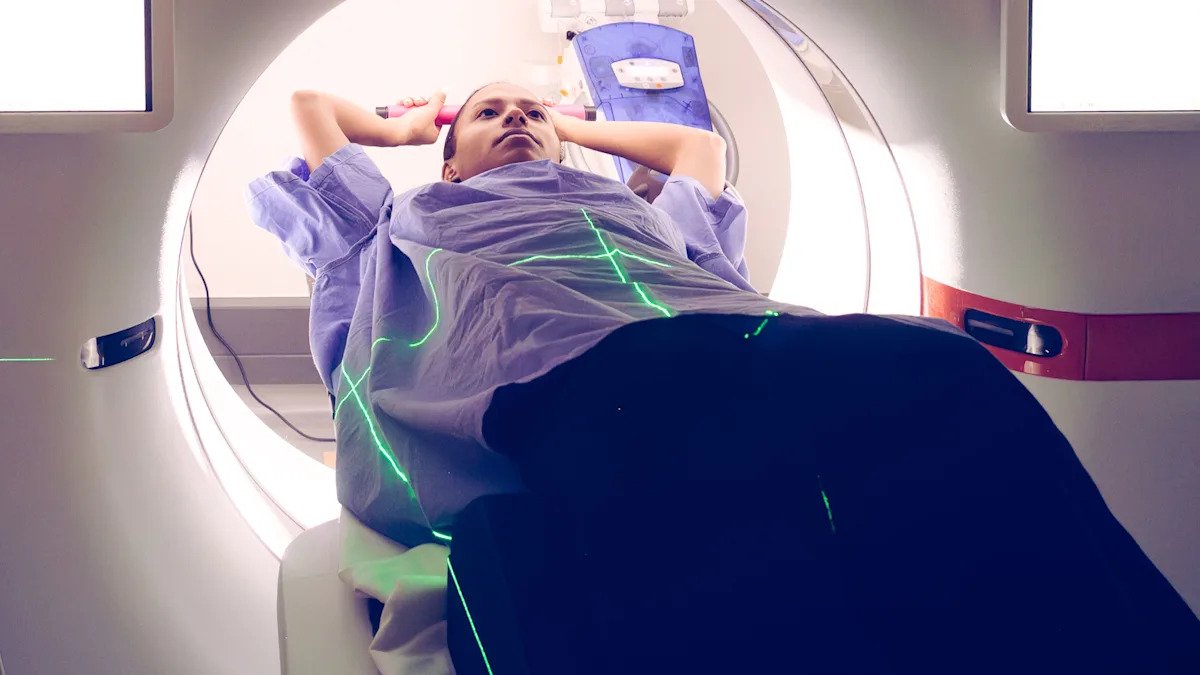
But what about tests that, so far, fall outside of mainstream screenings for cancer, such as full-body MRIs or blood tests? Experts say it’s important to proceed with caution.
A full-body MRI scan may be able to catch something that otherwise would have remained unknown — but that’s not always a good thing. A tumor in the body may be benign, never grow or never cause harm — yet a positive result on a full-body MRI can lead to more testing, procedures or even invasive surgery that comes with its own set of risks, Ropeik says.
May says blood tests that can detect various cancers are “very promising.” However, they are still in the data-collection phase. Her biggest concern is, “What happens if one of these blood tests turns up positive, and when we look more closely at that organ, we don’t see a cancer?”
She questions what doctors can do for those patients. “Are they living in constant fear that they have cancer in their body somewhere? Do we just test them over and over again, which exposes them to increased risk for complications and iatrogenic problems [health issues caused by medical tests or treatments] with their medical care?” May asks. She says that the “diagnostic cascade” that can follow these tests hasn’t been clearly established for her to recommend them to patients who are considering seeking them out.
These tests are also pricey. A full-body MRI from Prenuvo can cost upwards of $4,000, while the Grail blood test costs more than $900. None of that includes follow-up exams or other procedures should these screenings flag any issues.
For people eager to be proactive about cancer screenings beyond what’s recommended by their doctors, Dr. Ernest Hawk, head of Cancer Prevention and Population Sciences at The University of Texas MD Anderson Cancer Center, has an idea: You may be able to participate in clinical research trials, which are often looking for healthy individuals to help with data collection around cancer prevention, he tells Yahoo.
“Contact a local cancer center or primary care provider and find out if there’s research that can actually help answer some of these questions, so that we have better answers for…the next generation,” he says.
