


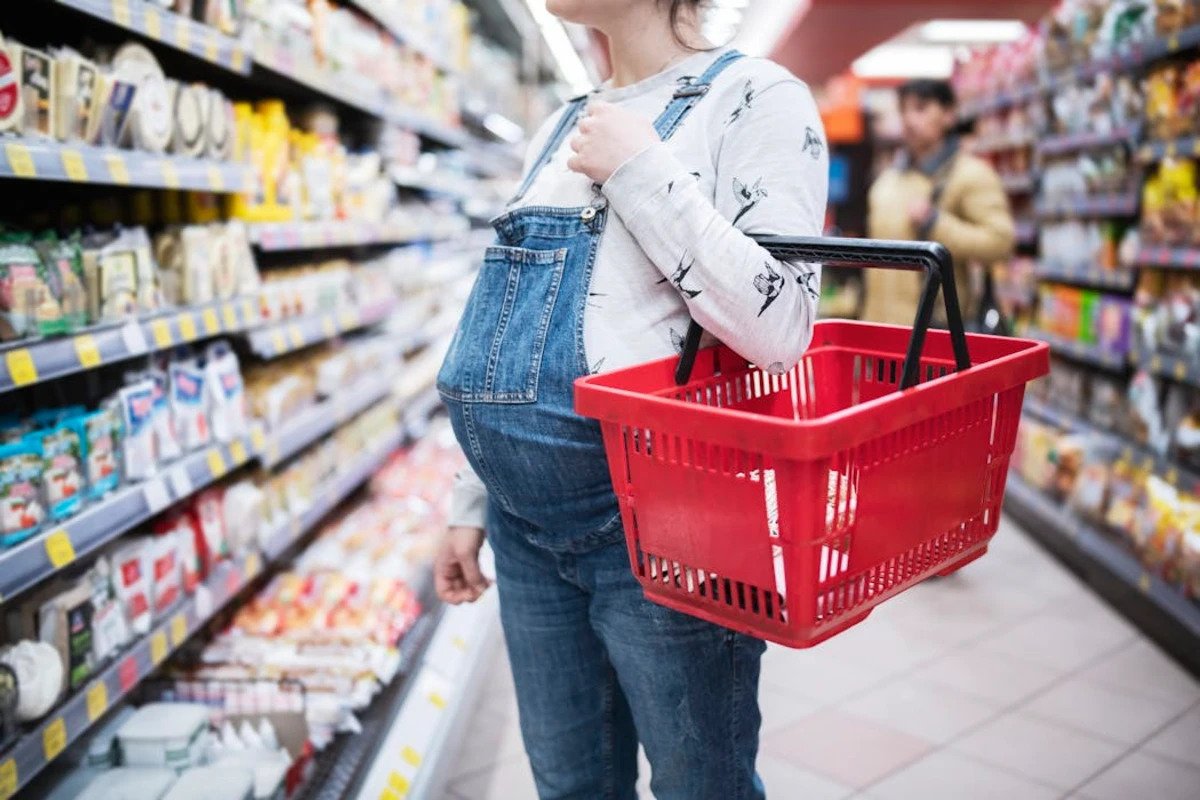
The federal government’s message in its new Dietary Guidelines for Americans, released in January 2026, couldn’t be simpler: “Eat real food.”
But for pregnant women in rural America, that straightforward advice runs headlong into a harsh reality: Rural women have less access to healthy whole foods.
We are a public health professor and postdoctoral researcher who are working on the Pregnancy 24/7 Cohort Study at West Virginia University and the University of Iowa. The five-year observational study investigated how 24-hour behavioral patterns throughout pregnancy affected maternal and fetal health, including pregnancy complications.
Most pregnant women in the United States aren’t meeting dietary recommendations. This is especially true for women living in rural communities. In our recent study, 500 pregnant were recruited from university-affiliated clinics in Pennsylvania, West Virginia and Iowa reported their dietary habits during each trimester using a questionnaire.
About 1 in 5 participants lived in rural areas, as determined by a federal classification system that used the women’s home address. We found that pregnant women living in rural areas consumed more added sugars from sugar-sweetened beverages — about half a teaspoon more per day — than women living in urban areas. Rural women also consumed less fiber and ate fewer vegetables.
Research suggests less healthy dietary habits could be why rural pregnant women tend to have more pregnancy complications, such as preterm birth, gestational diabetes and hypertensive disorders.
Diets lacking adequate nutrition during pregnancy can also lead to can not only lead to pregnancy complications, but also result in obesity and diabetes. Left unaddressed, these nutrition gaps could perpetuate cycles of poor health across generations.
Poverty, not location, drives differences in pregnancy diets
Our study also assessed whether socioeconomic status influenced pregnant women’s diets in both rural and urban areas. West Virginia and Iowa site participants provided the majority of rural data.
There were 124 participants from Pittsburgh, and all but three were considered “urban” based on where they live. Compared to rural participants across the three-state sample, urban women consumed significantly fewer added sugars from sugar-sweetened beverages in the first and second trimesters and had consistently higher fiber intake across pregnancy.
However, socioeconomic status in the Pittsburgh site emerged as the stronger predictor of diet quality: Participants with a low socioeconomic status – including those in Pittsburgh – consumed 1.29 to 1.49 more teaspoons per day of added sugars from sugar-sweetened beverages and 1.5 to 1.6 grams less fiber per day than their high socioeconomic status counterparts. The lower-income women also consumed 31 to 58 milligrams less calcium per day.
While Pittsburgh’s participants and urban participants at the other study sites fared better than their rural peers on some measures, income and education level were more strongly tied to diet quality than geography alone.

About 20% of the U.S. population is rural. Pregnant women in these areas often travel long distances to access fresh produce and whole grains. The food outlets closer to home are often convenience stores, gas stations or dollar stores, which primarily sell processed, calorie-dense foods with lower nutritional value. Even when healthier options are available, they tend to cost more.
These less healthy dietary patterns are particularly concerning since pregnant women have additional dietary needs than women who are not pregnant. Low-income and rural women are often missing out on nutrients such as calcium, iron, folate and choline. Calcium supports bone development and is found in dairy, fortified plant milks and leafy greens. Iron and folate, found in beans, lentils and dark green vegetables, support the growing baby. Choline assists with brain and spinal cord development and can be found in eggs, beans and nuts.
Making ‘eat real food’ accessible
The new dietary guidelines have a few key messages for all adults, including instructions to eat whole and minimally processed foods, and to avoid sugar-sweetened beverages and highly processed foods.
Telling Americans to “eat real food” may seem like straightforward advice based on decades of research. But our study highlights that following this advice might be harder for some women during pregnancy. Pregnant women in rural and low-income communities could benefit from subsidies for fresh produce, or supplemental nutrition assistance.

The USDA’s Shop Simple with MyPlate tool offers practical strategies for eating well on a budget. Planning meals for the week, avoiding impulse purchases and buying a mix of fresh, frozen and canned foods are cost-effective ways to accomplish this.
Frozen and canned fruits and vegetables – without added salt or sugar – are just as nutritious, last longer, often cost less than fresh produce and help reduce waste. Choosing water over sodas, buying whole grains like oatmeal and brown rice, and using low-cost protein sources such as beans, lentils and eggs can help stretch a grocery budget. This can also improve diet quality, and make a meaningful difference for both mom and baby.
This article is republished from The Conversation, a nonprofit, independent news organization bringing you facts and trustworthy analysis to help you make sense of our complex world. It was written by: Bethany Barone Gibbs, West Virginia University and Alex Crisp, University of Iowa
Read more:
Bethany Barone Gibbs receives funding from the National Institutes of Health and the American Heart Association.
Alex Crisp does not work for, consult, own shares in or receive funding from any company or organization that would benefit from this article, and has disclosed no relevant affiliations beyond their academic appointment.
