



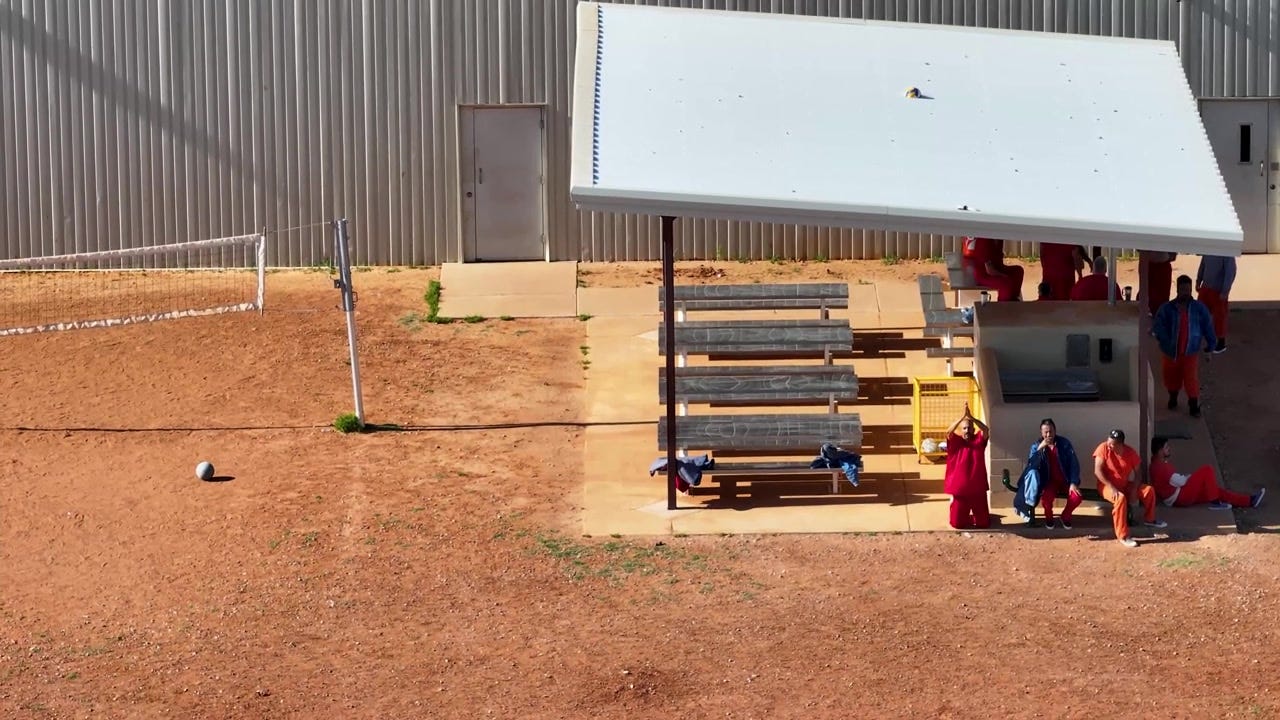

ICE halts ‘all movement’ at Texas detention center after measles cases
DHS confirmed two measles cases at the South Texas Family Residential Center, and have stopped all movement inside the facility,
Southern California public health officials are warning residents to watch for measles symptoms after travelers infected with the contagious virus visited Disneyland, the Los Angeles International Airport and other places in the region in recent days.
It comes as the virus, which had been declared eliminated in the United States in 2000, surged in cases last year, including outbreaks in Texas and an ongoing outbreak in South Carolina. In Northern California, officials recently confirmed the first measles case in a Shasta County resident since 2019.
At the end of January, the OC Health Care Agency reported a case of measles in an unvaccinated toddler in Orange County who had not traveled outside the area or had known exposures. Across the nation, there have been nearly 600 confirmed measles cases in 2026, including California, the U.S. Centers for Disease Control and Prevention reported.
Is there a measles outbreak at Disneyland?
An international traveler who arrived at Los Angeles International Airport and who visited the Disneyland Resort was confirmed to have measles, the OC Health Care Agency said on Jan. 31.
That person visited the following locations at the Disneyland Resort on Jan. 28, with potential exposure windows including:
Goofy’s Kitchen in Disneyland Hotel, 10:30 a.m. to 1:30 p.m.Disneyland Park and Disney California Adventure Park, 12:30 p.m. to closing
People who were at these locations during this time “may be at risk of developing measles from 7 to 21 days after being exposed,” the OC Health Care Agency said. Health officials are working to contact Disneyland employees who also may have been exposed.
A measles outbreak is defined by the CDC as three or more related cases.
Disneyland measles exposure: What should I do?
If you visited those Disneyland Resort locations during the potential exposure window on Jan. 28, the OC Health Care Agency recommends you monitor yourself for symptoms and consider getting the measles, mumps and rubella vaccine — known as the MMR vaccine. The latter suggestion is only if you aren’t fully immunized or unsure about your immunization status.
You’re recommended to stay home and limit your interactions with others for 21 days after exposure, if the exposure occurred more than seven days ago and you aren’t immune to measles.
When, where measles was reported in LA County, from LAX and more
The Los Angeles County Department of Public Health alerted residents to the third case of measles they reported in the past week on Monday, Feb. 2.
People who were at the following location may be at risk of developing measles due to exposure to this case:
Jan. 24, 2026: Mardi Gras Tuesday restaurant, 14543 Ventura Blvd., Sherman Oaks, from 11:30 a.m. to 2:30 p.m.
Another recent measles case involved an international traveler through LAX. More specifically, this traveler arrived on Viva Aerobus Flight #518 at the Tom Bradley International Airport Terminal B, Gate 201A on Jan. 26, the public health department said.
Travelers who were at this terminal between 10:45 p.m. Jan. 26 and 1 a.m. Jan. 27 may be exposed to the measles virus. Also at risk are individuals who were at the following Dunkin’ Donuts on Jan. 30:
Dunkin’ Donuts, 22020 Ventura Blvd., Woodland Hills from 3 p.m. to 4:45 p.m.
Like the case involving Disneyland Resort, the public health department is warning that people at these locations during those time frames may be at risk of developing measles from seven to 21 days after being exposed.
Here’s how long the public health department said people should monitor symptoms for:
Mardi Gras Tuesday exposure: The last day to monitor for symptoms is Feb. 14.LAX exposure: The last day to monitor for symptoms is Feb. 16.Dunkin’ Donuts exposure: The last day to monitor for symptoms is Feb. 20.
Here’s what to know about measles symptoms
Measles symptoms appear one to two weeks after contact with the virus, typically beginning with a high fever, cough, runny nose and red, watery eyes, according to the CDC.
Two to three days after symptoms begin, tiny white spots may appear inside the mouth, the CDC said. The measles rash, which typically starts at the face and spreads down the rest of the body, occurs three to five days after the first symptoms.
How does measles spread?
Measles spread through the air when an infected person breathes, talks, coughs or sneezes, and the virus can stay in the air and on surfaces for many hours, the Los Angeles County public health department said. You can become infected by breathing in that contaminated air or touching the contaminated surface and then touching your eyes, nose or mouth.
Is there a vaccine for measles?
Yes. The vaccine is known as the MMR vaccine, or the measles, mumps and rubella vaccine. Children who are 12 months through 12 years old may be given the MMRV vaccine, which also combines the chickenpox vaccine, according to the CDC.
Can you get measles if you’ve been vaccinated?
The CDC said the MMR vaccine is “very effective at preventing measles” and that a measles infection in a vaccinated person is “rare.” But even in that case, the CDC said there are still benefits to the vaccine, including experiencing the illness in milder form and being less likely to spread the virus to others.
Paris Barraza is a reporter covering Los Angeles and Southern California for the USA TODAY Network. Reach her at pbarraza@usatodayco.com.
