


By Maggie Fick, Bhanvi Satija and Mariam Sunny
LONDON, Feb 2 (Reuters) – The long-held Wall Street expectation that the global market for obesity drugs would reach $150 billion in the next decade is looking a lot less certain with U.S. prices falling for GLP-1 treatments from Novo Nordisk and Eli Lilly and competition heating up in the cash-pay consumer market.
The fast-changing landscape, which includes the expected entry of new drugs and generic competition, has led to a recalculation of what the peak will be and when those heights may be reached, analysts and investors say.
“The peak has come down a little bit,” said Terence McManus, portfolio manager at Switzerland’s Bellevue Asset Management and a Lilly shareholder, pointing to pricing in the new consumer market and the launch of generic versions of Novo’s Ozempic.
“Maybe a few years ago people didn’t appreciate that that would happen so quickly,” he said.
Unprecedented demand for the potent new weight-loss drugs targeting the GLP-1 hormone led analysts to project a market of $150 billion – or even $200 billion – by the early 2030s. But 2030 forecasts are around 30% lower at about $100 billion or so and that $150 billion target has shifted to 2035 for some.
Jefferies revised down by 20% its forecast in January for the weight-loss market to peak at $80 billion from its estimate in 2023 of over $100 billion by the early 2030s.
“That $150 billion pie is gone, even if you’re very bullish on volumes,” said Jefferies analyst Michael Leuchten.
Novo and Lilly, which both report fourth-quarter financial results on Wednesday, are the dominant players in the market, with Lilly reaching a $1 trillion valuation last year and Novo’s new Wegovy weight-loss pill getting off to a strong start.
Some analysts said Novo will forecast a decline in sales and operating profit for 2026 when it issues its financial outlook on Wednesday. Analysts expect Lilly to generate over 21% more revenue and adjusted earnings to grow over 40% in 2026 compared to 2025 estimates, according to LSEG data.
Novo declined to comment. Lilly did not immediately respond to requests for comment.
MOST BULLISH FORECASTS ‘STAND ON THIN ICE’
Goldman Sachs analysts also pared back expectations. Their current estimate for global obesity drug sales by 2030 is $105 billion, down from earlier forecasts of $130 billion, based on steeper price erosion and changing customer-use patterns.
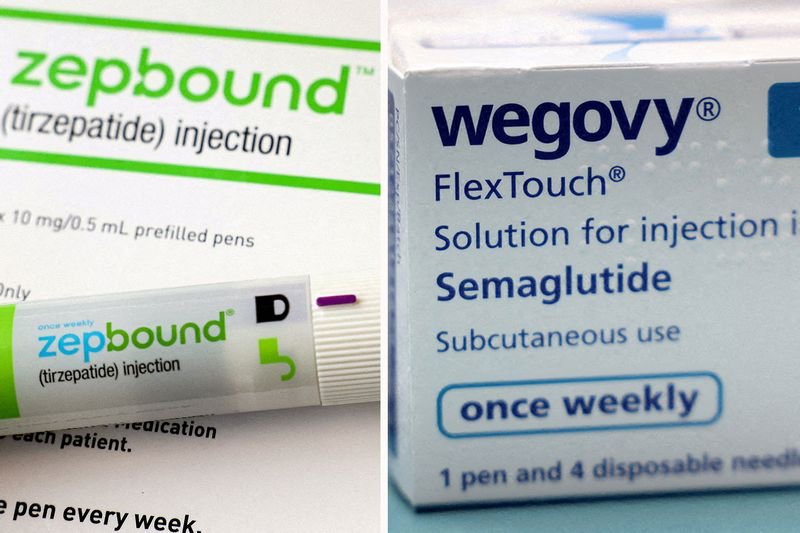
After the launches of Wegovy in 2021 and Lilly’s rival Zepbound in 2023, the drugs retailed for about $1,000 per month in pharmacies. Faced with political pressure to lower costs in the U.S., they are now sold on company websites for starting prices of $149 to $299, in part reflecting a deal with the Trump administration.
Story Continues
