


Newly released federal dietary guidelines for Americans call for fewer ultra-processed foods, but some public health experts are concerned that a lack of information around definitions for such foods could pose possible barriers for both the policies and informed consumption decisions.
“In short, we are asking individuals to eat less of nearly 70% of the food supply without giving them the tools, clarity, or systemic support to do so, and without confronting the economic and marketing forces that keep ultra-processed foods at the center of the American diet,” Alexina Cather, director of policy and special projects for the Hunter College New York City Food Policy Center, told ABC News.
The updated guidelines, released Jan. 7 by U.S. Health and Human Services Secretary Robert F. Kennedy Jr., warned Americans for the first time to avoid
“highly processed foods” referencing common examples of “packaged, prepared and ready-to-eat, or other foods that are salty or sweet” and “sugar-sweetened beverages, such as soda, fruit drinks and energy drinks.
The guidelines, which are updated every five years, shape what many Americans eat daily and directly impact programs such as school meals and nutrition assistance benefits.
The Centers for Disease Control and Prevention reported last August that Americans get more than half of their total calories from ultra-processed foods.

Jacquelyn Martin/AP – PHOTO: Agriculture Secretary Brooke Rollins stands by an image of a food pyramid during a briefing at the White House, Jan. 7, 2026, in Washington.
While there is not one standard definition for ultra-processed foods in the U.S., Dr. Nate Wood, assistant professor of medicine at Yale School of Medicine, told ABC News that ultra-processed foods are “made with industrial ingredients.”
Wood pointed to the NOVA Food Classification System — used by nutritionists, dietitians and food policy experts — which organizes foods into four different groups based on their, “level of processing.”
He said the best explanation for a Group 4 food is that it’s made with what he called industrial ingredients that for most people are “not something you have at home in your kitchen.”

NOVA Classification; Yale Medicine – PHOTO: Types of Unprocessed and Processed Foods
Cather told ABC News she believes without a consensus definition that can be used by policymakers, regulators and, critically, consumers, there is a gap between the federal guidance and how Americans apply it.
Last year, the Food and Drug Administration (FDA) committed to research ultra-processed foods (UPFs), and establish a uniform definition with the Department of Agriculture (USDA) to “develop consistent policies and programs focused on UPFs.”
“It’s one of the most striking omissions,” Cather said of the new guidelines being released before a uniform definition. “This is not just a semantic debate. If the purpose of the Dietary Guidelines is to improve population health, there should have been a clear definition and robust public education effort rolled out alongside the 2025–2030 edition. Instead, the current language puts the onus squarely on individuals, as if people simply don’t know better, without grappling with the broader forces that shape food choice.”
The lack of definition, she added, also makes it difficult for public health agencies to assess how much ultra-processed foods people consume and raises obstacles for researchers creating studies, and for policymakers setting labeling or marketing standards.
White House spokesman Kush Desai told ABC News that the dietary guidelines are foundational for American nutrition decisions and help shape public policy for “dozens of federal feeding programs ranging from childhood nutrition assistance initiatives to the meals served to our nation’s schoolchildren and military.”
“The Trump administration’s reformed Dietary Guidelines are a scientifically unimpeachable overhaul of how our country approaches diet and nutrition, an overhaul that over the coming years will transform key federal programs by promoting affordable, whole, healthy, and nutrient-dense foods for countless everyday Americans,” Desai said in a statement.

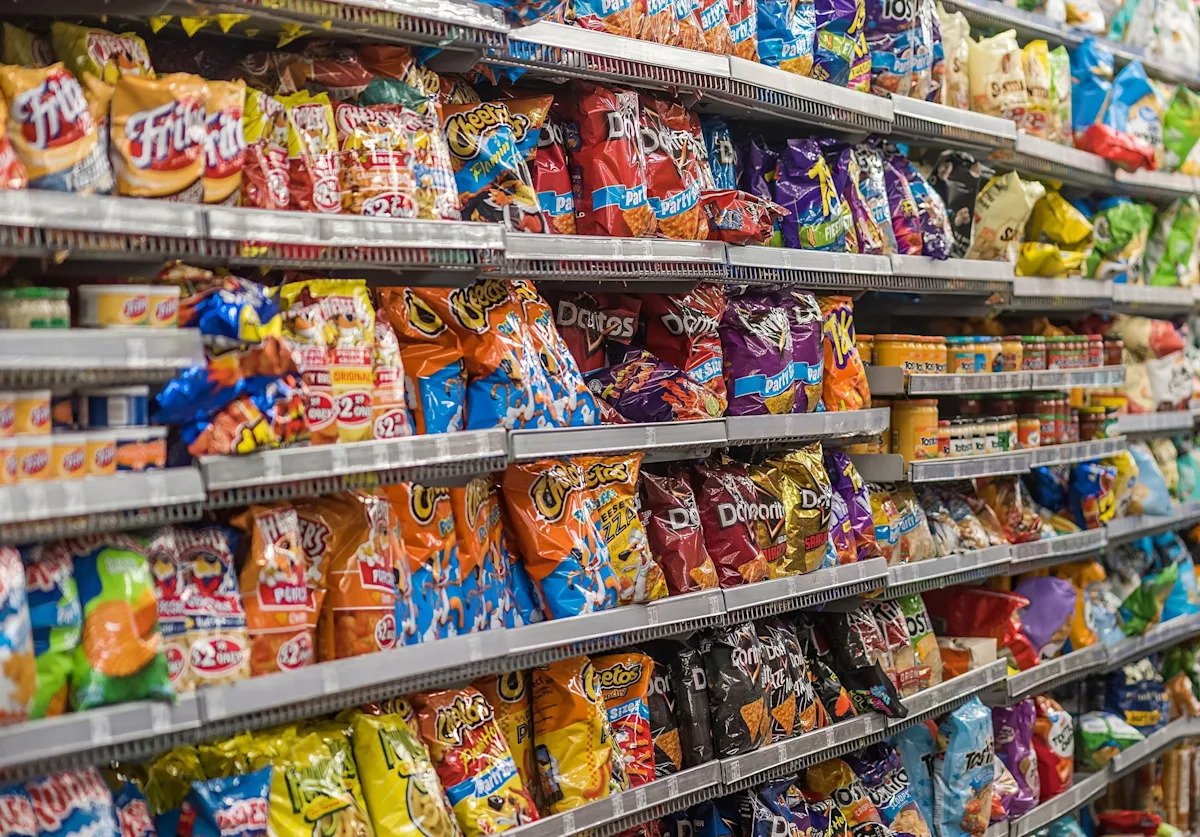
Alexandre Rotenberg/Adobe Stock – PHOTO: Snacks on display in a supermarket in Orlando, Florida, Nov. 8, 2025.
Wood noted that while the guidelines are correct to call on Americans to eat less ultra-processed foods, it can be difficult for the average consumer to fully decipher which store-bought items are potentially unhealthy.
“What’s confusing to a lot of people — and what we’re kind of grappling with in the nutrition community — is that we understand that not all ultra-processed foods are bad,” he said. He added that things like whole-grain bread or tofu, while considered processed foods, are still “health promoting,” which the guidance does not fully explain.
Wood believes front-of-label packaging would be a pivotal next step for U.S. food policy, referencing examples like Europe that have enforced simplified nutrition information on the front of packaged foods.
According to Wood, a quick way for consumers to avoid ultra-processed foods is to read the ingredients list on packaged foods closely.
“You have to check if it’s high in fat, sugar, or salt, because if it’s high in even one, but especially two or three of those, then you know that’s probably not going to be health promoting,” Wood said.
Some public health experts, including Cather and Wood, argue that calling on Americans to eat less processed foods ignores the broader forces that make those foods cheap and accessible for many Americans.
“There’s little discussion in the guidelines about the role of food systems, subsidies, corporate practices, or economic inequities in driving overconsumption of ultra-processed foods,” Cather said. “These products dominate shelf space, advertising, price promotions, and even federal nutrition programs, not necessarily because people want them, but because they’re engineered to be profitable and cheap, especially in communities with fewer healthy options. A public health approach that ignores these structural drivers will always fall short.”
Landmark bill banning some dyes in food served in California schools passes
According to Cather, there are limited policies currently aimed at helping consumers navigate the ultra-processed food environment in the U.S.
“A few localities and states have experimented with front-of-pack labeling or marketing restrictions that could indirectly help consumers identify products with excessive additives, sugars, and sodium, key ingredients in ultra-processed foods,” Cather said. “Though these policies are not widespread.”
