


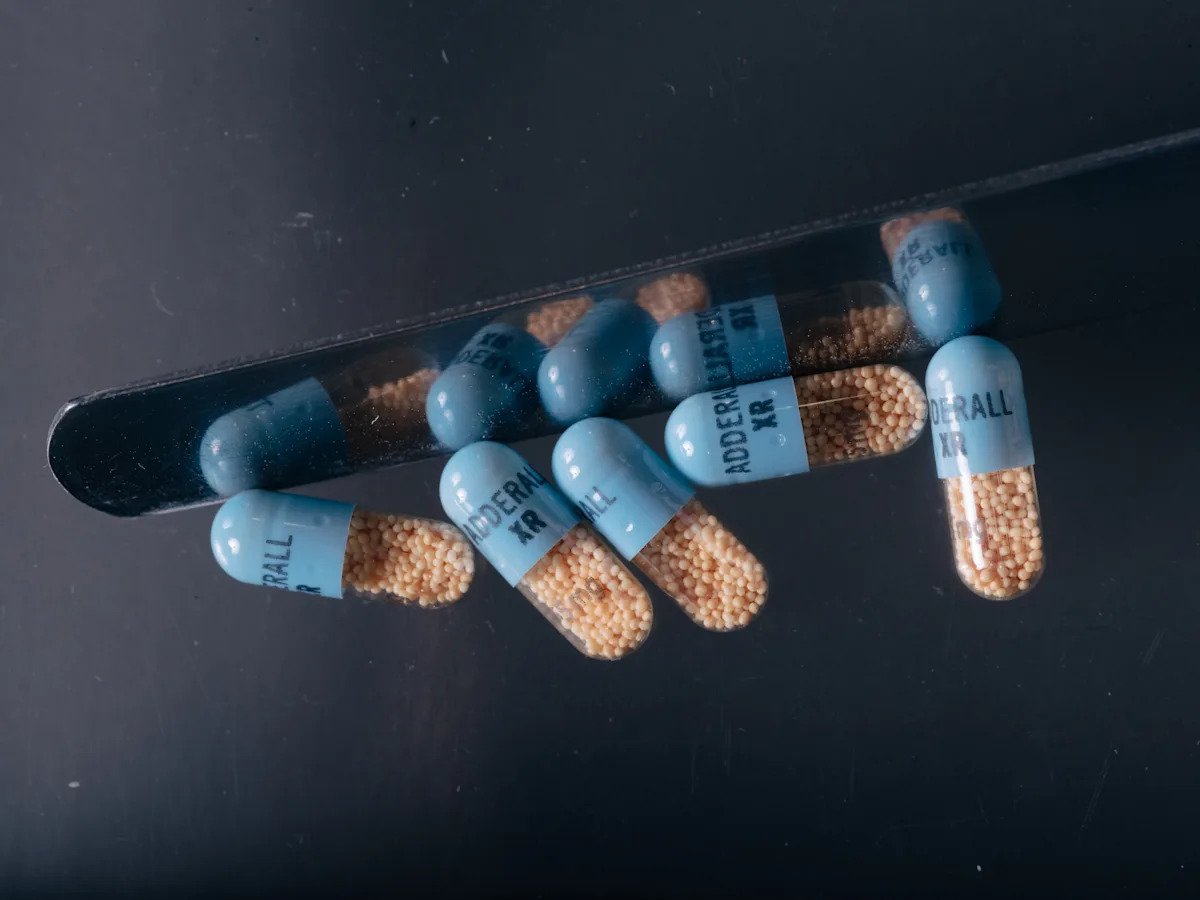
The stimulants Ritalin and Adderall have been used to treat attention-deficit/hyperactivity disorder (ADHD) for decades, but research shows they don’t act on the brain’s attention circuitry as had long been assumed.
Instead, the medications primarily target the brain’s reward and wakefulness centers, according to a new study published in the journal Cell. The research, which used brain imaging data from almost 5,800 children ages 8 to 11, also pointed toward the important role that lack of sleep plays in the disorder.
Subscribe to The Post Most newsletter for the most important and interesting stories from The Washington Post.
“When I first saw the results, I thought I had just made a mistake because none of the attention systems are changing here,” said Benjamin Kay, one of the study’s authors and a professor of neurology at Washington University School of Medicine in St. Louis.
It’s not that the stimulants are ineffective.
“The paper clearly shows that they help,” said Nico Dosenbach, another of the authors and a professor of neurology at the university. “They help kids who have a diagnosis of ADHD do better in school and do better on tests, and they help kids who don’t sleep enough ― and a lot of Americans don’t sleep enough.”
Although ADHD is often thought of as a childhood condition, an estimated 15.5 million American adults have the diagnosis; roughly half of them received the diagnosis in adulthood. The disorder afflicts an estimated 7 million children, ages 3 to 17. The prevalence among American children rose from 6.1 percent in 1997 to 1998 to 10.2 percent in 2015 to 2016, according to one study.
The exact cause of ADHD remains unknown, and there is no single test for the condition.
“Despite the name ‘Attention Deficit,’ ADHD is a multifaceted disorder in which difficulty focusing attention is just one component,” Maggie Sweitzer, a professor of psychiatry and behavioral sciences at Duke University School of Medicine who did not work on the study, said in an email.
“It’s important to remember that ADHD is not a benign condition – individuals with ADHD are not only at risk for school problems in childhood, but also for occupational, social, and physical, and mental health problems across the lifespan. For many people these medications are transformative.”
The brain images used in the Cell paper published last month came from children enrolled in the Adolescent Brain Cognitive Development (ABCD) study, which began in 2015.
Researchers compared images of children who took prescription stimulants on the day of their scan with those of children who did not take stimulants.
By studying the connections that allow different regions of the brain to communicate with one another, the scientists discovered that stimulants were promoting increased activity in the wakefulness and reward regions, but not in the attention ones.
Dosenbach said the stimulants “pre-reward our brains and allow us to keep working at things that wouldn’t normally hold our interest,” such as a class in school that feels like drudgery.
The stimulants “are not a cognition booster,” Dosenbach said. “They don’t make you smarter, I don’t think. They don’t actually give you better attention.”
Researchers found that the stimulants not only helped children diagnosed with ADHD, but also those who had slept less than the recommended nine hours a night.
The stimulants did not lead to better school performance by children who did not have ADHD and were not sleep-deprived.
Psychiatrists said there are some non-stimulants used to treat ADHD, such as Atomoxetine.
The new study supports an increasing body of research that has pointed toward lack of proper sleep as a contributor to ADHD.
“Sleep disturbances are incredibly common in ADHD, impacting about three out of four children and adolescents with the disorder,” Jessica Lunsford-Avery, a professor of psychiatry and behavioral sciences at Duke University School of Medicine who was not involved in the study, said in an email.
“It is increasingly clear that clinicians and families should view ADHD as a 24-hour disorder. Unfortunately, sleep problems are rarely recognized or adequately treated in children and adolescents with ADHD.”
Sinan Omer Turnacioglu, interim division chief of neurodevelopmental pediatrics and neurogenetics at Children’s National Hospital, said that while sleep medications can be prescribed for children with ADHD, it is also important to address “behavioral management,” including limiting light exposure and time in front of a computer screen before bed. He suggested that people “have some kind of winding-down bedtime routine to really decrease the level of stimulation” before going to sleep.
Turnacioglu and other experts stressed that giving prescription stimulants such as Ritalin or Adderall to children is not the same as giving them a 5-Hour Energy shot. The prescription stimulants, he said, “don’t work in the exact same way in the nervous system.”
Sweitzer said the study suggests that clinicians and families should be discussing sleep, behavioral strategies and medication options to address ADHD.
Max Wiznitzer, a professor of pediatrics and neurology at Case Western Reserve University’s School of Medicine and member of the board of directors for the nonprofit Children and Adults with Attention-Deficit/Hyperactivity Disorder (CHADD), said research has shown that the condition can shorten life expectancy.
“Because they’re impulsive, they don’t necessarily make good choices,” Wiznitzer said. “They don’t remember to take their medicines. They sometimes eat too much. There’s more obesity, more cardiovascular disease, more diabetes.”
Related Content
‘This is war’: In texts, U-Va. board members plot with Youngkin, decry DEI
Despite Gaza ceasefire, war still deadly along Israel’s ‘Yellow Line’
Phones ruled their lives. A new college class helped them break free.
