


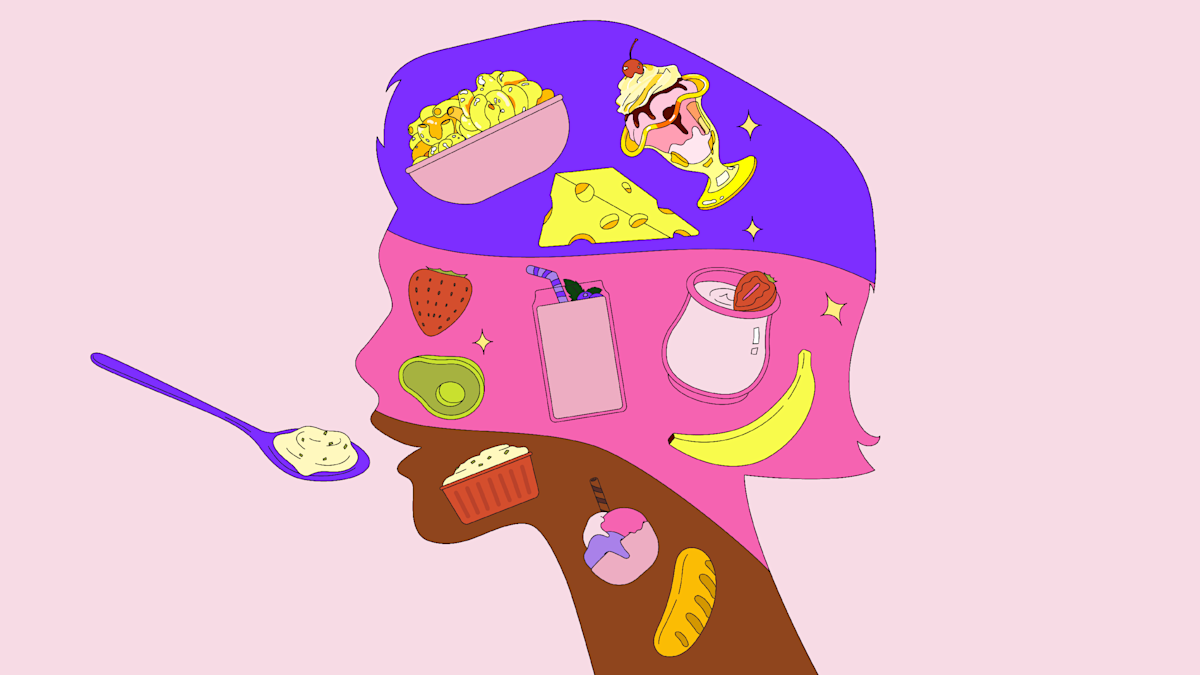
Buttery mashed potatoes. Creamy macaroni and cheese. Luscious ice cream and smoothies. It’s hard to overlook the fact that when it comes to soft foods Americans seem to have, well, a soft spot. Just ask the Atlantic, the New York Times and Salon, the latter of which cited an evolutionary purpose for the preference. And it’s no wonder: These foods are not only delicious but also comforting.
“Soft foods are just very satisfying because they feel really indulgent,” registered dietitian Bree Phillips tells Yahoo Life. “A lot of those foods tend to be really rich in fat or sugar, like mac and cheese or ice cream. Those are really satisfying foods to eat.”
Some are also linked to childhood memories and those nostalgic comfort foods you used to eat as a kid. “A lot of the foods that are soft tend to have memories attached to them — mashed potatoes, stuffing on Thanksgiving,” says Phillips. “There’s a nostalgia element that also plays into why they are so satisfying.”
Food scientist Bryan Quoc Le points out that many super-soft foods are desserts like ice cream, custard, pudding and cake. “Even with cookies, we like them softer,” he tells Yahoo Life. Le uses bread as another example, explaining that Americans tend to prefer soft bread compared with a crunchy French baguette. “I think it’s an interesting phenomenon from a food culture standpoint,” he says.
Food manufacturers are keenly aware of the appeal of soft foods. Food scientist Abbey Thiel explains that at many food companies, product developers are often separated into two teams, one for creating U.S. products and another for European products, since each population has “drastically different” preferences when it comes to food textures. “Americans like a softer version, while Europeans prefer harder textures,” Thiel tells Yahoo Life. “However, this isn’t just limited to texture. Americans also prefer higher sweetness levels and brighter colors than Europeans.”
Dietary concerns aside, there’s just one pesky thing to take into consideration: When you’re eating soft foods, you’re not exactly chewing — and the health effects of that can be a little hard to (metaphorically) swallow. Food experts break it down.
Why chewing your food matters more than you think
You probably don’t think much about it, but chewing plays a key role in both satiety (meaning feeling satisfied with the amount of food you’ve eaten) and digestion.
“The more we chew, the more time our bodies have to register fullness,” says Thiel. “Solid foods that require extensive chewing, like a steak, promote slower eating and give the brain a chance to catch up with the stomach.”
Phillips explains that when you chew and slow down the pace of your meal, it allows time for gut hormones that play a role in appetite (she specifically mentions GLP-1 and peptide YY, or PYY) to signal fullness to the brain.
But many soft, processed foods are engineered to be quickly eaten and swallowed, which Thiel says delivers calories rapidly without triggering the same fullness signals.
“Liquids can be consumed up to 60 times faster than solids, and because they require little to no chewing, they provoke a weaker satiety response, even when they contain the same number of calories,” Thiel says. Smoothies are a good example of this.
Registered dietitian Maura Fowler adds: “The less you chew, then the quicker you are able to swallow your food, allowing less time between bites for your stomach to send the appropriate hormones to your brain to let you know that it’s becoming full.” The result: “You can end up with indigestion,” says Le.
Texture also plays a hidden role in how much we eat.
So are soft foods easier to overeat?
Soft foods can contribute to overeating, say experts. Thiel points to a study by researchers in the Netherlands that found people tend to consume more calories with soft foods. That’s because “they’re eaten more quickly, without triggering the same level of satiety as harder foods that require more effort to chew,” Thiel says. “Over time this can lead to increased calorie intake without even realizing it.”
Soft foods tend to have what’s called vanishing caloric density, meaning they melt in your mouth and make it more likely that you’ll reach for more. “Texture also plays a hidden role in how much we eat,” says Thiel. “Many processed carbs are designed to melt in the mouth or break down quickly in saliva. For example, puffed snacks collapse rapidly due to their airy structure, encouraging fast consumption before the body has time to signal that it’s full.”
Phillips says that soft foods also tend to be lower in fiber, which is important for digestive health and feeling full and satisfied. Le also notes that some soft foods contain preservatives and additives to maintain that coveted softness. For example, “in order to make white bread, there’s a lot of manipulation you need to do to not only get it soft but keep it soft on the shelf,” Le says, “and that requires a lot of additives.”
You can still enjoy soft foods
You don’t need to pass on that side of mashed potatoes or ditch your morning smoothie; it’s more about being mindful of how easy it is to quickly eat these foods. It’s also important to point out that not all soft foods are unhealthy. Greek yogurt is packed with protein and probiotics. Oatmeal is heart-healthy and high in fiber, something many Americans aren’t getting enough of. Avocado is rich in healthy fats, while bananas are packed with potassium. And beans and lentils are full of fiber and protein.
Soft foods are also essential for certain groups, from infants who are starting to eat solid foods to seniors with weaker jaw muscles and teeth, which make it harder for them to eat foods that require more chewing, Fowler tells Yahoo Life. People with difficulty swallowing (a condition called dysphagia) or those recovering from dental, mouth or throat surgery may also need soft foods to get proper nutrition. “How many adults remember getting wisdom teeth taken out and told to just eat mashed potatoes and ice cream?” says Fowler. “I do! And I know I wasn’t mad about it.”
