


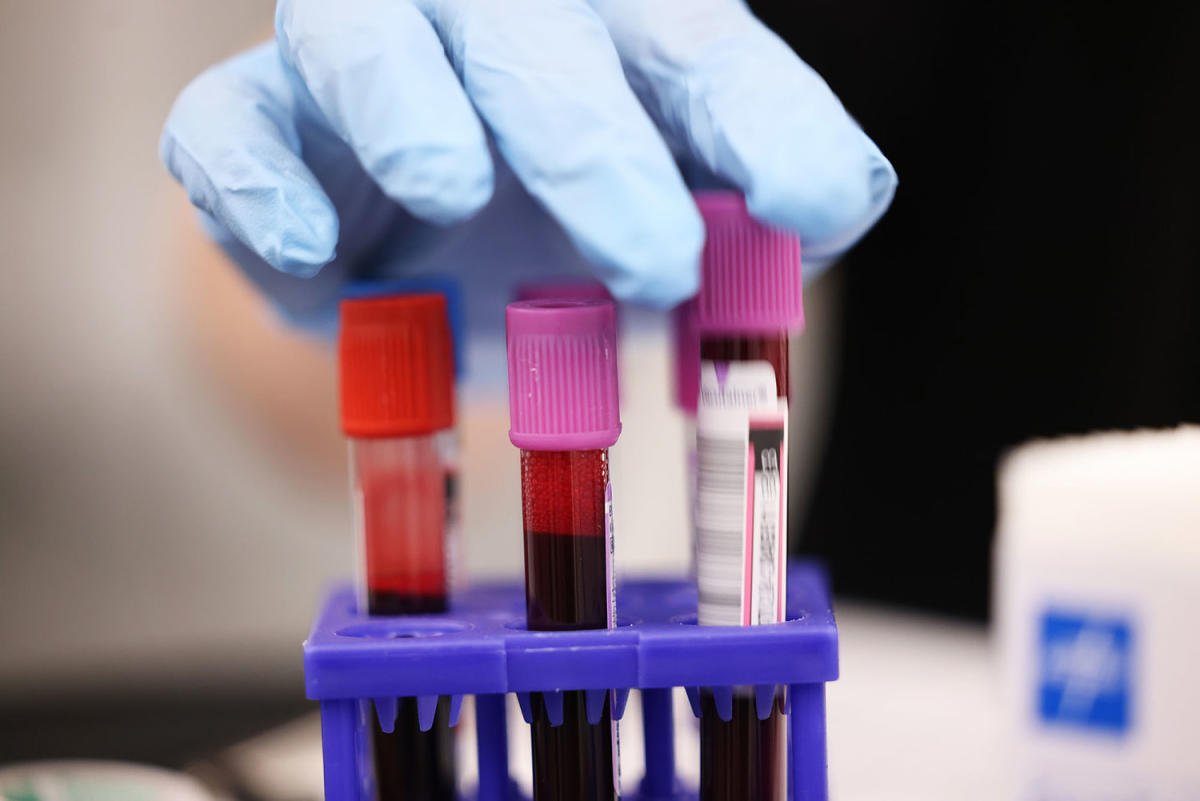
New research suggests that blood tests known as “liquid biopsies” can improve the treatment of some people with metastatic breast cancer and help their tumors remain under control for more than a year.
For many, it’s been a long time coming: More than a decade ago, researchers and investors predicted that liquid biopsies — which are sensitive enough to detect tumor cells and DNA in the blood — would be “game changers” in the realm of cancer.
Although liquid biopsies haven’t replaced standard cancer screening methods like mammograms and colonoscopies, the new study and others like it demonstrate that the blood tests can help doctors monitor cancer and help them select treatments likelier to work.
Liquid biopsies are so sophisticated that they can detect minuscule bits of DNA that have leaked out of tumor cells and are floating freely in the blood. The most sensitive liquid biopsies, like those used in the new study, go one step further, detecting ominous changes in key proteins in cancer cells.
The research — published Sunday in The New England Journal of Medicine and presented at the American Society of Clinical Oncology’s annual meeting in Chicago — focused on people whose breast cancers are fueled by estrogen. The most effective treatment for that type of advanced disease includes drugs designed to target specific proteins in breast cancer cells. If those proteins mutate, the drugs stop working, and it’s only a matter of time before the cancer begins growing again.
By detecting these mutations, liquid biopsies serve as an early warning system that people need a different medication, said Dr. Nicholas Turner, study co-author and a professor of molecular oncology at the Institute of Cancer Research and The Royal Marsden hospital in the United Kingdom.
In the new study, people who changed their treatment based on liquid biopsy results were twice as likely to have their tumors controlled than study participants who didn’t change therapy.
Turner said the approach offers a significant improvement compared with current practice.
Currently, doctors look for signs that a cancer treatment is no longer working by performing imaging tests, such as CT scans or PET scans, every three months. These scans allow doctors to see whether tumors are getting bigger.
The study found that liquid biopsies can detect mutations up to nine months before the changes would have become apparent on scans, Turner said. That gives people the opportunity to abandon ineffective treatments as early as possible and switch to ones with better chances of controlling the cancer.
In about 1 in 10 people in the study, liquid biopsies found that their cancer had developed mutations that would make their current treatment less effective.
“We have very effective treatments, but they can wear off,” Turner said. “And if they wear off and the cancer starts growing again, it can make the person unwell. If they have cancer in the bones, it can start to cause pain.”
Researchers randomly assigned half of the 315 people with mutations to change therapy right away and the other half to continue their medications as usual, said Dr. Massimo Cristofanilli, an author of the study and director of breast medical oncology at Weill Cornell Medicine and NewYork-Presbyterian Hospital. One percent of study participants were men.
For the people who changed therapy early, researchers replaced a hormonal drug they had been taking with an experimental cancer drug called camizestrant, which isn’t yet approved by the Food and Drug Administration. Camizestrant interferes with estrogen’s ability to stimulate cancer growth. AstraZeneca funded the clinical trial, which was built on early, basic research funded by the National Institutes of Health, Cristofanilli said.
In study participants who switched to camizestrant, their cancers remained stable — without significant tumor growth — for 16 months, compared with nine months for people who didn’t switch medications, according to the study.
After one year, 61% of study participants who switched to camizestrant had stable disease, compared with 33% of those who didn’t change treatment, according to the study. After two years, 30% of people who switched still had stable disease, compared with 5% who didn’t.
Study participants who switched therapies reported good overall health and quality of life for 23 months, compared with others in the study, who reported a deterioration in health and quality of life after 6.4 months.
“If we switch the treatment at just the right time, we can keep the cancer asleep, stop it from progressing and keep the person well,” Turner said. “Many of my patients get back to work and just keep going with normal lives. They get time with their kids.”
Although camizestrant is only available through clinical trials, a similar drug, Faslodex, has been approved by the FDA.
Unanswered questions
Although camizestrant caused more side effects than the hormonal drugs, most people continued taking it. About 1.3% of participants stopped taking camizestrant because of side effects, compared with 1.9% who discontinued therapy with the hormonal drug.
Side effects of camizestrant included a reduction in white blood cells and a heart rate that is slower than normal. People taking the drug also were likelier to see flashes or floating spots in their peripheral vision.
Dr. Heather Parsons, a medical oncologist at Dana-Farber Cancer Institute in Boston and an assistant professor of medicine at Harvard Medical School, who wasn’t involved with the research, said: “This is an important study, but the results are immature.”
“We need to understand if changing therapy early helps patients or if it leads us to use more toxic therapies sooner,” Parsons said.
The study didn’t answer a major question: whether the new approach helps patients live longer. Turner said he plans to follow the participants to learn whether the new regimen improves survival.
Thanks to better treatments, people with metastatic breast cancer now live about five years after their cancer spreads. That means that it can take several years to detect whether one treatment extends life more than another, Turner said.
Doctors don’t know whether all patients would respond as well as those in the study. Most people in the study were white, with very few Black participants.
About 317,000 new cases of invasive breast cancer will be diagnosed in women in the U.S. this year, in addition to 2,800 cases in men, according to the American Cancer Society. About 42,170 people will die from the disease.
Dr. Kelly Shanahan, a physician who has lived with estrogen-driven metastatic breast cancer since 2013, called the results “exciting” and “compelling.”
“I would certainly want to talk to my oncologist about an early switch if I were in this situation, especially if the side effects of camizestrant were acceptable to me,” said Shanahan, who serves as the director of research and president of the board of METAvivor, an advocacy group for people with metastatic disease.
Other uses for liquid biopsies
Scientists are developing liquid biopsies to improve the treatment of many types of cancer.
In a study published in The New England Journal of Medicine in 2022, researchers in Australia used tumor DNA in the blood to predict which people with early colon cancer would need chemotherapy after surgery — and who could skip it without increasing their risk of relapse. Many doctors now use liquid biopsies when treating colon cancer patients, although the tests used in the study aren’t available in all countries, said Dr. Jeanne Tie, the first author of that study and a senior research fellow of personalized oncology at the Walter and Eliza Hall Institute of Medical Research in Victoria, Australia.
Liquid biopsies are also being studied to screen healthy people for cancer.
For example, the FDA last year approved the first blood test, called Shield, to screen for colorectal cancer. The blood test is not meant to replace the colonoscopy, however, which is still required as part of a definitive diagnosis, and neither the American Cancer Society nor the U.S. Preventive Services Task Force has endorsed Shield as a form of cancer screening. While the Shield test correctly identified 83% of colon cancers, it hasn’t been shown to save lives.
Doctors might one day use liquid biopsies to provide further answers when mammogram results are unclear, particularly for women with dense breasts, whose tumors are often missed by standard screenings, Cristofanilli said. He hopes that blood tests will reduce the number of painful needle biopsies.
This article was originally published on NBCNews.com
