


People who regularly ate higher-fat cheese and cream had a lower risk of developing dementia over 25 years, while low-fat dairy and other dairy foods showed no clear association, according to a new study.
Those who consumed 50 grams per day or more of high-fat cheese daily – roughly a third of a cup – had a lower overall risk of dementia, vascular dementia, a form of cognitive decline caused by impaired blood flow to the brain, according to the 25-year Swedish study of nearly 28,000 people published in Neurology, the medical journal of the American Academy of Neurology.
People who averaged at least 20 grams of high-fat cream – about one and a half tablespoons – also showed a lower dementia risk, the study indicated.
However, the study did not find similar benefits for low-fat cheese, low-fat cream or butter. Milk consumption, whether high- or low-fat, also did not lower dementia risk.

STOCK PHOTO/Getty Images – PHOTO: Rear view of senior woman and her home caregiver spending a chilly, windy day outdoors in city park.
According to Emily Sonestedt, an associate professor at Lund University and senior author of the study, the reason full-fat cheese and cream show benefits for the brain while whole milk does not could be down to differences in nutrition and how these products fit into people’s diets.
“Cheese is fermented, which produces bioactive compounds that may influence inflammation and blood vessels. Cream is usually used in home-cooked meals, not consumed in large quantities on its own,” Sonestedt told ABC News. “Milk intake, on the other hand, varies more across diet patterns and doesn’t have the same fermentation process.”
New dementia cases in US projected to double to 1 million by 2060: Study
Source and quality of dairy may matter too, Dr. Richard Isaacson, a neurologist specializing in dementia prevention at the Institute for Neurodegenerative Disease, told ABC News.
“Not all cheese is created equal,” Isaacson said. “What a cow eats determines what’s in the milk — and that determines what’s in the cheese”, he added.
Isaacson explained that dairy from grass-fed cows, especially those who ate grass their entire lives, usually contain higher levels of omega-3 fatty acids.
“Omega-3 fatty acids are preferentially protective for the brain,” said Isaacson, adding that this is true particularly for people at risk of cognitive decline.
The 15-20% of people who carry at least one copy of a genetic variant known as APOE ε4 genetic variant, did not benefit from any type of dairy intake, the study found.
“The fact that we saw a clearer association with vascular dementia, and with Alzheimer’s only in people without the APOE ε4 variant, suggests that the pathway may be more related to vascular and metabolic factors than to the core amyloid processes,” Sonestedt said.

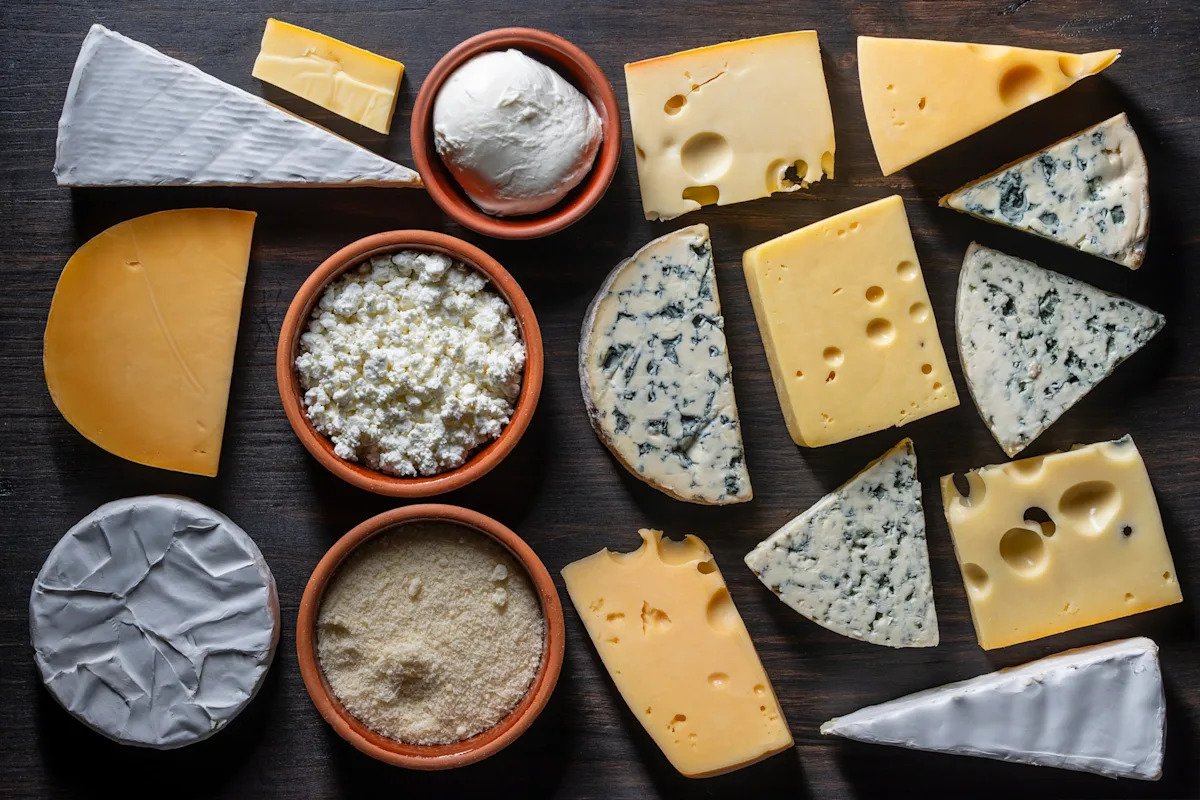
STOCK PHOTO/Getty Images – PHOTO: Set of different cheeses on wooden background, closeup, top view . Various types of cheese
The lack of benefit among APOE ε4 carriers highlights the growing understanding that dietary advice for brain health may need to be personalized.
“People who carry the APOE ε4 gene are more sensitive to saturated fat than people who don’t,” Isaacson said.
He added that while saturated fat in moderation may be tolerated by some people, others — particularly those with a high genetic risk for dementia — may need to be more cautious.
Emma Heming Willis shares reaction to Bruce Willis’ dementia diagnosis in new interview with Diane Sawyer
“There is no one-size-fits-all approach to Alzheimer’s prevention,” Isaacson stressed.
But these findings do not prove that eating large amounts of high-fat cheese and cream prevents dementia, Sonestedt cautioned.
“It’s an observational study. Cheese and cream may simply be markers of broader eating patterns and lifestyle factors. This is not a green light to dramatically increase intake.” she said.
An estimated 6.7 million older adults have Alzheimer’s disease in the United States. That number is expected to double by 2060, according to the Alzheimer’s Association.
“I wouldn’t recommend major diet changes based on one study… But people who enjoy cheese or use cream in cooking don’t need to feel concerned about these foods in moderate amounts,” Sonestedt said.
Veronica Danquah, MD is a family medicine resident at Mercy Health Saint Elizabeth Hospital and a member of the ABC News Med Unit
