


Oura, the maker of smart rings beloved by athletes and celebrities, has said it’s on course to generate $1 billion in revenue this year. Now it’s setting its sights beyond fitness and health tracking as it looks to capture its next billion-dollar opportunity.
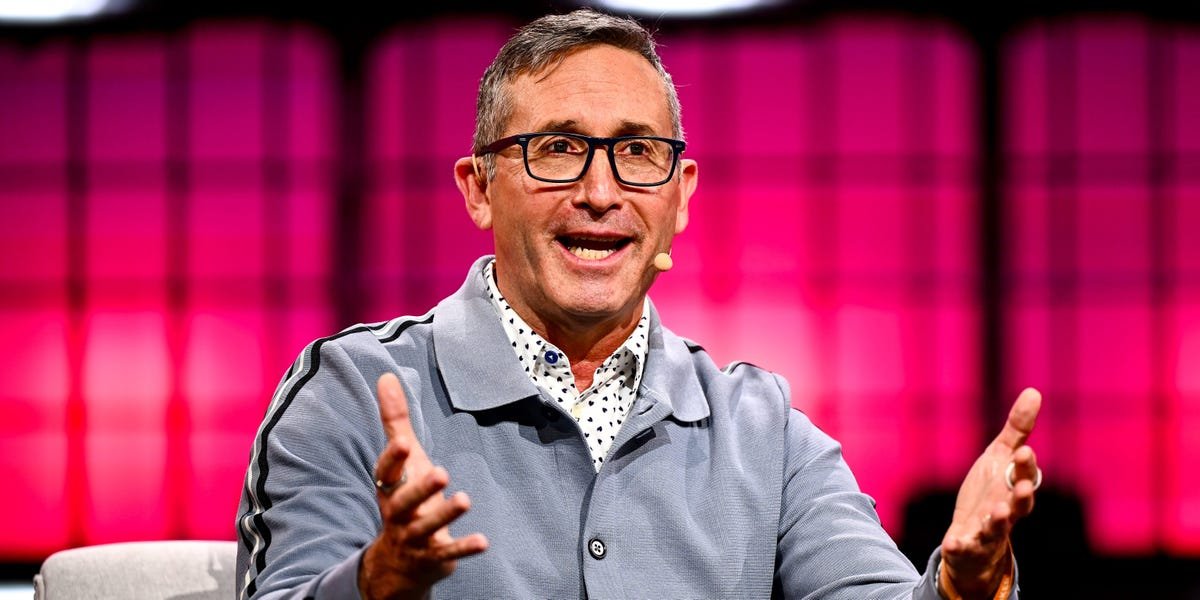
Speaking to Business Insider at the Web Summit tech conference in Lisbon this month, Oura CEO Tom Hale outlined a vision to expand into areas like digital identity and payments.
“The idea is very straightforward: What if this is your key? What if this is your wallet?” Hale said of the company’s smart rings, which retail for up to $499.
Hale said there’s a lot of friction within enterprises when it comes to validating identity — from office workers remembering their passwords when they log on to their computers, to those with clearance to operate weapons systems getting access to the control room.
“This is a biometric wearable that can identify you,” Hale said.
Hale didn’t give a timeline for when such features might be brought to the device.
“We’re not suddenly going to become an identity provider,” Hale said. “It’s an additional value of biometric identification and payments as an application.”
Oura first signaled its intent to move into the authentication space in 2023, when it acquired the identity technology provider Proxy in an all-equity deal. At the time, Oura said the deal gave it the opportunity to expand its addressable market, although it has largely kept details of precisely what it’s working on under wraps since.
Oura raised a $900 million Series E funding round in October of this year, valuing the company at $11 billion. Hale said the fresh investment would primarily be used to support its international expansion.
Frederick Stanbrell, an analyst who focuses on the wearables market at the research company IDC, said Oura has many factors in its favor as it expands into areas like payments and IDs. Many consumers are already accustomed to swiping their smartwatches or using wearables to make payments on public transport, Stanbrell said.
Oura has sold more than 5.5 million devices, the company said earlier this year. Stanbrell said Oura has an audience base that consists of many ultra-high-net-worth individuals, which could work in its favor for striking partnerships with payment providers such as Visa and Mastercard.
However, integrating an NFC chip comes with challenges. Its compact size means the signal can be “quite weak,” Stanbrell said, adding that skin on the wearer’s finger can also “absorb some of the signal.”
“Other companies have struggled to do it,” he said, pointing to Samsung, which was expected to bring identity and payments tech to its Galaxy Ring but didn’t.
Hale acknowledged integrating NFC hardware into a smart ring is “an engineering challenge,” but added that NFC “is becoming more and more ubiquitous — it’s highly reliable, and it’s a low power draw.”
