


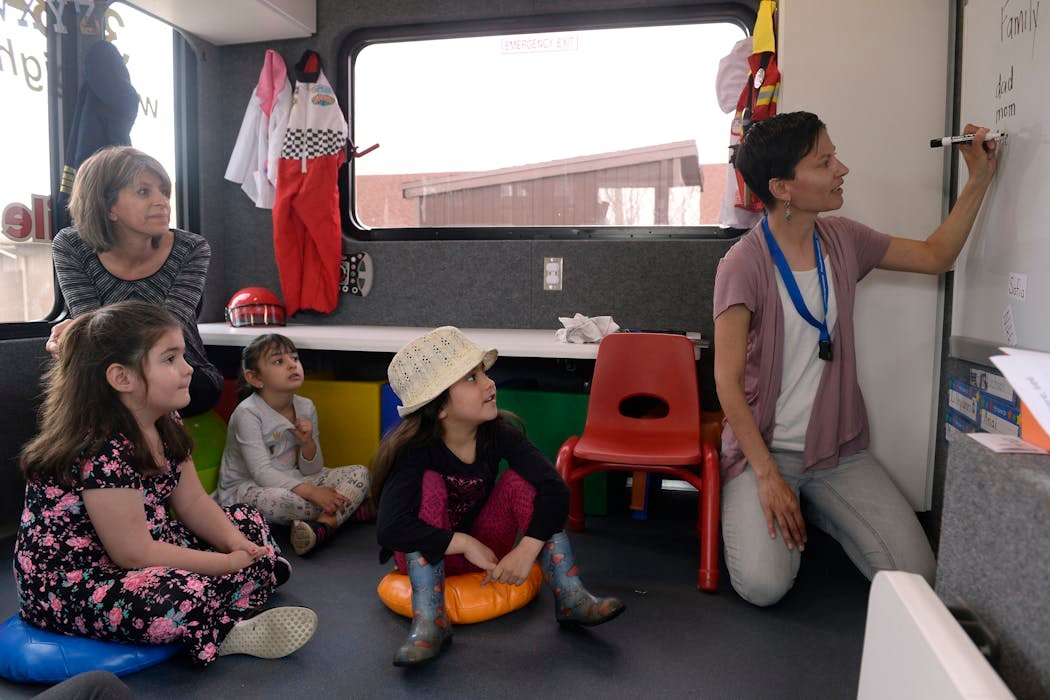
Early childhood educators and staff nurture and teach children under the age of 5. At its best, this type of early care sets kids up for long-term success.
But educators who are experiencing poor mental health are less able to cultivate positive relationships with the children in their care, which negatively affects the children’s development.
“We work in a field that has a high demand for kids to be safe and enjoy learning,” one educator told us. “We have … little people that depend on us, parents depend on us, and we need to make sure that we are there for the kids when they need us.”
Our research team – led by a clinical associate professor and a research assistant professor in public health – set out to learn how child care workers were coping with all of this responsibility.
What we learned was concerning and needs to be understood by parents and policymakers alike.
Studying 42 Head Start centers
Our peer-reviewed study examined the mental health of 332 early child care educators and other staff at 42 Head Start centers in the Denver metropolitan area and southeast Colorado.
We found that roughly 25% of early child care staff in Colorado self-reported discrimination and condescending or demeaning treatment from a colleague in the past year, with 15% experiencing more than one kind.
We measured discrimination tied to age, race, ethnicity and gender. We also measured types of demeaning treatment, which included bullying, harassment and condescending behavior. And we looked at physical violence.
Higher levels of workplace mistreatment were related to greater numbers of poor mental health days. The child care staff we surveyed reported an average of seven poor mental health days in the month prior to completing the survey.
Mistreatment in early childhood education
The early child care workforce also reports higher rates of depression than the national workforce.
High stress of educators and staff even pushes some workers out of the profession.
Working conditions matter, too, with early child care workers reporting substantial physical and psychological workplace challenges, such as lifting and carrying children, as well as managing a wide range of ages and capabilities among children in the classroom.
Our survey also revealed that 1 in 4 early child care staff experienced condescending or demeaning treatment by colleagues or superiors in the past 12 months. This was the most common type of workplace mistreatment.
In early child care, teamwork and collegiality are integral and are linked to educator well-being. Mistreatment between colleagues can strain relationships, contribute to burnout and reduce the likelihood of educators stepping into leadership roles.

Our study found that 1 in 10 early child care staff reported discrimination at work based on race or ethnicity. Experiences of discrimination have an impact beyond mental health and also affect physical health, job attitudes and engagement in the workplace.
Younger workers are struggling
Discrimination was three times as likely to be reported by the younger workforce, ages 18-29, than older workers. Discrimination between age groups affects trust and can reduce employee engagement.
Mistreatment of early child care workers can take several forms that happen at the same time. For example, age discrimination can occur in either direction. Younger staff may be viewed by older colleagues as less experienced, less committed or less capable than more experienced colleagues. Older colleagues may be perceived to be less creative or less willing to adapt to new strategies and practices.
Yet overall, younger workers seemed to be struggling more. Workers under 35 reported an average of eight to nine poor mental health days in a 30-day window; older workers reported an average of 5.6.
Improving staff well-being
Our study indicates a need for both societal and organizational change to prevent mistreatment of early child care staff, which can improve worker well-being and lead to better care for young children.
At a societal level, it is important to acknowledge the integral role of the early child care workforce and compensate these workers at a level commensurate with their importance. In 2023, the average U.S. preschool teacher earned an annual income of $37,120 compared to the $63,680 annual income of elementary school teachers.
Adequate pay and appreciation can reduce turnover. Rates of turnover are four times higher among early child care educators than elementary school teachers.
“Turnover has a lot to do with pay, unfortunately, and we don’t get paid a whole lot of money,” one educator said. “And … I don’t think I’ve always felt valued in the position I’m in.”
At an organizational level, leaders can implement health-centered policies and offer managerial training on how to build supportive teams. Total Worker Health interventions may also help to guide needed policy changes with input from staff. These interventions are holistic programs that focus on both the safety and well-being of workers and include elements such as environmental and social supports. They are shown to improve worker well-being.
One initiative compared wellness intervention models across six Early Head Start and Head Start networks nationally to address the comprehensive well-being in staff. Direct outcomes of the programs included workplace and organizational culture improvements, as well as higher staff well-being.
We designed the WELL Program, which has successfully been implemented at five Colorado-based Head Start networks. The program includes training to promote better sleep and mindfulness.
“WELL help(ed) people keep going every day and deal with their stress in a healthy way so it didn’t come out in the classroom, or come out against kiddos that are tough,” one participant said.
Our study also suggests there may be generational differences in workplace communication and a varied understanding of what it is to be mistreated. Additional research on these differences may help us to address causes of mistreatment and find solutions.
This article is republished from The Conversation, a nonprofit, independent news organization bringing you facts and trustworthy analysis to help you make sense of our complex world. It was written by: Virginia McCarthy, University of Colorado Anschutz Medical Campus; Charlotte Farewell, University of Colorado Anschutz Medical Campus; Jini Puma, University of Colorado Anschutz Medical Campus, and
Read more:
Charlotte Farewell receives funding from the Administration for Children and Families.
Jini Puma receives funding from the Administration for Children and Families.
Kyla Hagan-Haynes and Virginia McCarthy do not work for, consult, own shares in or receive funding from any company or organization that would benefit from this article, and have disclosed no relevant affiliations beyond their academic appointment.
