


Here’s a very 2025 headline, courtesy of Variety: “Paramount Bid for WB Discovery Backed by Saudis, Qatar and Abu Dhabi.”
But a few hours after that one was published on Tuesday, it got a rewrite: “Paramount Skydance Denies That Its Warner Bros. Discovery Bid Involves Arab Sovereign Wealth Funds.”
Variety’s earlier story, Variety explained, had been swatted down by Paramount PR, which called it “categorically inaccurate.”
So there you go. Larry and David Ellison, who own Paramount and now want to buy Warner Bros. Discovery, aren’t going to use Middle Eastern oil money to make that deal happen. Got it?
Except: Variety isn’t the only publication to suggest that the Ellisons might, actually, be interested in partnering with a petrostate for a $71 billion deal.
On the same day Variety ran its stories, the Financial Times reported that David Ellison had recently met with Saudi Arabia’s Public Investment Fund “and other officials from the region after they independently expressed an interest in participating in the bid.” That evening, The New York Times also suggested that “the Saudi sovereign wealth fund could be part of [the Ellisons’] deal.”
Neither of those stories feature denials from Paramount. A Paramount rep tells me the company isn’t commenting on its bid for WBD. (And yes, while Larry Ellison is one of the world’s richest men — one who has been getting much richer during the AI boom — even he might want partners to finance a $71 billion deal.) The Saudi fund didn’t respond to a request for comment.
The truth is, we don’t really know if Saudi money, or money from any other part of the Middle East, is going to be involved in any of the bids for Warner Bros. Discovery.
But the fact that petrostates could be in the mix tells us a lot about 2025. The notion of oil money flowing into some of American media’s prized assets would have seemed impossible a few years ago. Now it feels close to inevitable.
That’s because the petrostates have already been using their money to buy some or parts of all kinds of high-profile assets in recent years — including big media properties. The Saudis, for instance, have created their own golf league and stocked it with high-profile players; bought the storied Newcastle United soccer team; and financed much of the $55 billion deal to take video game powerhouse Electronic Arts private.
There’s ongoing debate about whether these deals are really “green-washing” — an attempt to burnish Saudi Arabia’s reputation — or if they represent an actual interest in turning a profit, with a focus on deals that can bring tech and know-how to the country.
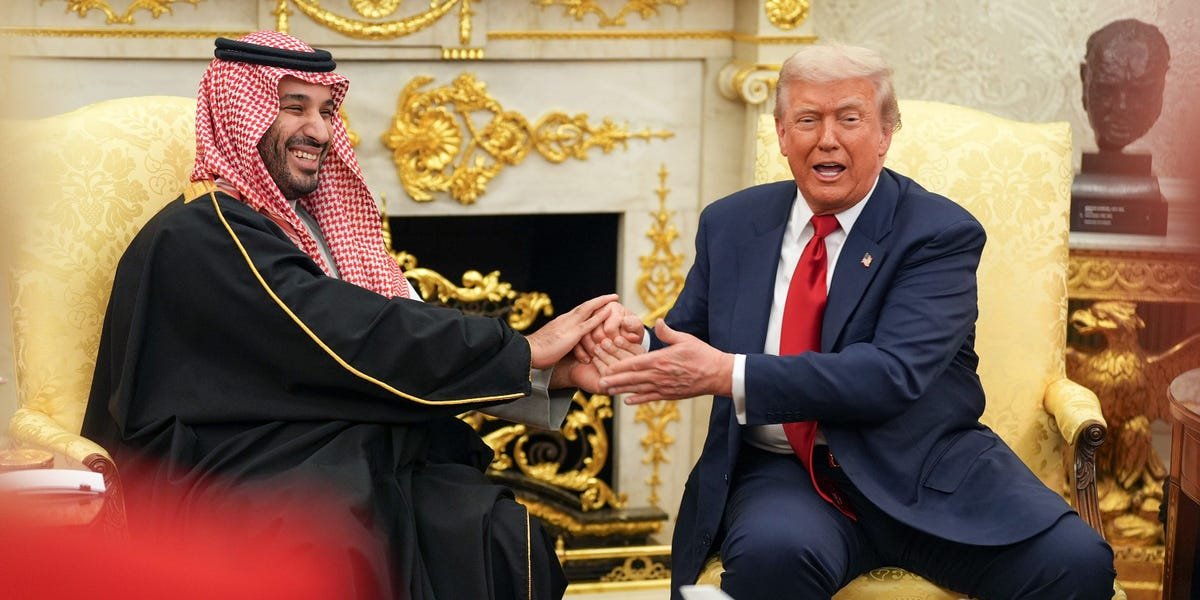
But there’s little debate about whether big American companies want that money. When Saudi Arabia’s Crown Prince Mohammed bin Salman toured the US in 2018, America’s mogul class clamored for an audience. More recently, American business leaders have been showing up at Saudi-run business conferences, flying out to the desert to attend high-profile events alongside Donald Trump; and packing the White House for this week’s events feting bin Salman.
The only time American interest in oil money has flagged was after October 2018, after the murder and dismemberment of Washington Post contributor Jamal Khashoggi — a shocking act the CIA concluded was ordered by bin Salman himself. In the fallout of Khashoggi’s death, many American firms scrambled to distance themselves from Saudi money; Ari Emanuel, the high-profile Hollywood agent, made a point of returning a $400 million investment the country had made in his Endeavor agency.
But within a few years, Americans were open to doing business with the kingdom again. In fact, many media and tech leaders say, they have no choice but to work with the Saudis and other petrostates — because that’s where the money is. And now the Trump administration is actively courting oil money — and bristling at suggestions that Kashoggi’s death is a reason not to do that.
“Things happen,” Trump told reporters this week, while continuing to insist that bin Salman had nothing to do with the murder. “He knew nothing about it.”
If oil money does end up financing a Paramount bid for WBD, it wouldn’t be the first time we’ve seen foreign money in American media. Australian-born Rupert Murdoch became a US citizen specifically so he could build Fox in the 1980s. Japan’s Sony has been in Hollywood since 1989, when it bought what was then called Columbia Pictures. French conglomerate Vivendi used to own Universal Studios.
So if you want to, you can shrug and say that money from Saudi Arabia, or Qatar, or Abu Dhabi, is nothing new — money is money.
But some money is trickier to accept than other money. See, for instance, the recent flare-up when a group of high-profile comedians accepted outsize checks to perform at a Saudi-sponsored festival. And it’s certainly worth wondering what oil money might mean in a media company that makes movies, TV shows, and runs multiple news outlets — like a combined Paramount-WBD. Would there be pressure — explicit or implicit — to create content that’s more acceptable to the country writing the checks?
We don’t know. But we do know that they can afford it — and that today’s political climate suggests they might be able to pull it off.
