


The US is racing ahead in artificial intelligence, but its biggest obstacle is more than chips, rare earths, or talent — it’s electricity, according to a new report from Goldman Sachs.
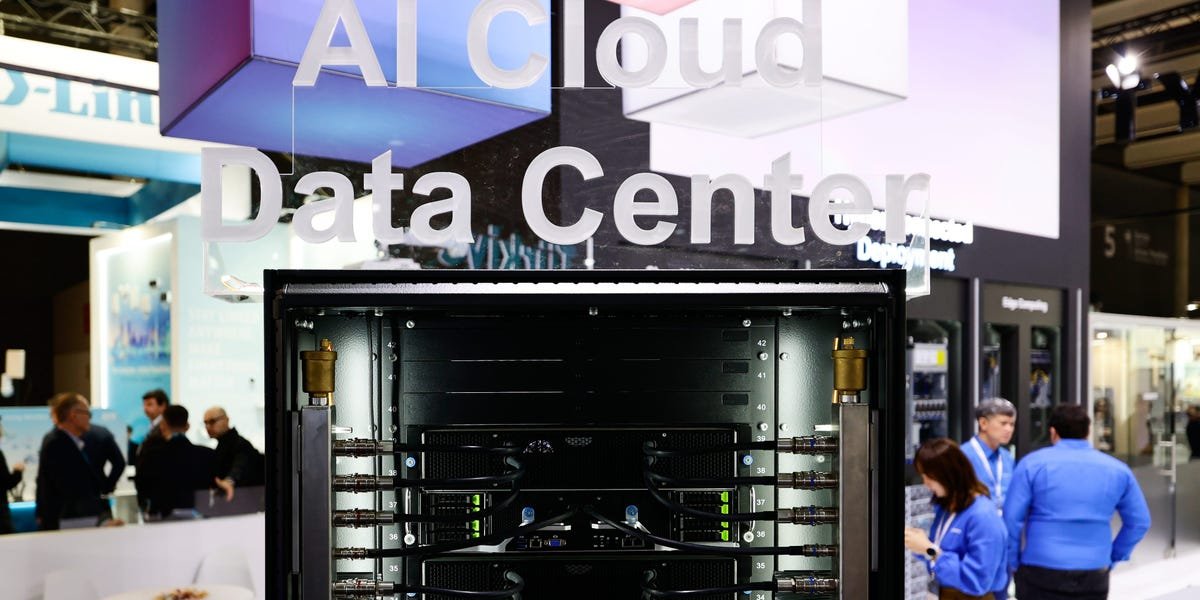
The US power grid is already straining under the surge of data centers fueling AI models, with these massive facilities now accounting for about 6% of total US electricity demand.
That share is expected to nearly double to 11% by 2030, pushing parts of the country’s grid past critical limits, Goldman’s analysts estimate.
“As AI demands massive power, a reliable and ample power supply is likely to be a key factor shaping this race, especially because power infrastructure bottlenecks can be slow to solve,” wrote Goldman’s analysts.
The issue could slow the US’s pace in the AI tech race, where it is a frontrunner.
The US leads the world in AI infrastructure, with 44% of global data center capacity — about as much as China, the EU, Japan, Korea, and India put together.
However, the US power market has been tightening, with US peak summer spare power generation capacity decreasing from 26% five years ago to 19% as demand from data centers rose.
By the end of the decade, this spare capacity could fall below the “critically tight” 15% level if AI growth continues at its current pace, Goldman’s analysts estimate.
China powers ahead
While the US grid tightens, China has been quietly stockpiling energy.
Goldman projects that by 2030, the country’s effective spare power capacity will reach around 400 gigawatts — more than three times the world’s total expected data center power demand.
“We expect China’s spare capacity to remain sufficient to accommodate data center power demand growth while supporting demand in other industries,” Goldman’s analysts wrote.
China’s buildup follows an energy crunch in 2021 that led Beijing to ramp up power generation across renewables, natural gas, nuclear, and coal to ensure energy security.
The US, by contrast, is retiring coal plants faster than it’s adding new natural gas or renewable capacity. Other issues that could limit data center growth in the US include lengthy project timelines and a global shortage of gas-powered turbines.
“Reliable and ample power supply is likely to be a key factor shaping this race,” the analysts wrote, “especially because power infrastructure bottlenecks can be slow to solve.”
Goldman’s report came amid an intensifying race for artificial intelligence between the US and China.
Earlier this month, Nvidia CEO Jensen Huang also mentioned energy as an issue that could hinder the US’s AI development.
Speaking to the Financial Times, Huang noted a growing wave of AI regulations emerging across US states and warned that too many new rules could stifle innovation.
By contrast, he said China’s government energy subsidies make it cheaper for local tech firms to power homegrown AI chips, as “power is free.”
