


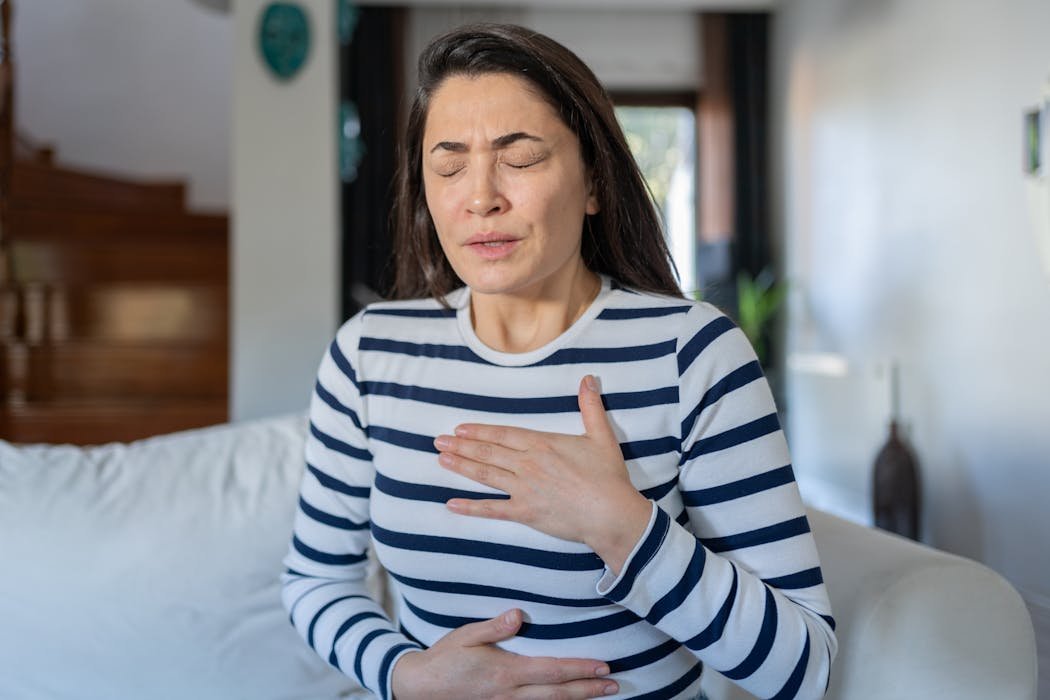
Asthma is a common, serious and difficult-to-manage chronic health condition. In the U.S., 1 in 7 people are diagnosed with asthma, and that number is rising.
Over the years, researchers have identified a mix of individual and environmental factors that play a role in asthma. For instance, obesity and alcohol use increase a person’s risk for asthma. And more extreme weather is linked to worse asthma symptoms.
In that mix of research, a new pattern has emerged pointing to links between asthma and abuse by a current or former romantic partner. As surprising as that might sound, these links are important because intimate partner abuse is common in the U.S. An estimated 47% of women and 44% of men are physically or sexually victimized or stalked by intimate partners at some point in their lives.
As a psychologist and an asthma specialist, we have teamed up to learn more about asthma and intimate partner abuse.
And what we’re seeing has important implications for treatment.
The role of inflammation
To understand how factors such as obesity or extreme weather can result in asthma, researchers have focused on inflammation. Inflammation plays a key role in keeping humans and other animals healthy.
When pathogens such as viruses attack the body, or the body suffers an injury, the immune system responds with inflammation. This immediate, short-term response helps the body minimize damage to cells and fight infection. It’s also what causes the red hotness that surrounds a skin injury or bothersome symptoms when fighting a cold.
While short-term inflammation is critical to good health, the inflammation system can go awry. Chronic inflammation contributes to many kinds of diseases, including asthma.
Uncontrolled inflammation drives asthma development and symptoms. Over the years, a better understanding of different types of inflammation that can worsen asthma has led to the identification of critical targets for asthma medications and important advances in care.
Because of this inflammation-asthma connection, most drug treatments for asthma today target overactive inflammation in the airways.

Looking for other explanations
Despite significant advances in drug treatments for asthma, a majority of adults with the condition have uncontrolled asthma, which means more flare-ups and an increased chance of dying from the disease.
As researchers and medical providers have figured out that not everyone responds to common medications, they’ve turned to more personalized approaches to understanding asthma predictors.
That more personalized approach led one of us, Dr. Wang, to wonder whether intimate partner abuse might play a role in asthma for some of her patients. After all, intimate partner abuse is linked with a host of health problems and health care costs.
Using a large database that was representative of the U.S. population, one of us (Dr. Wang) led a team in 2021 that discovered intimate partner abuse was associated with worsened asthma attacks and symptoms. That study included over 2,600 adults and found that having asthma along with a history of intimate partner abuse meant significantly greater odds of asthma attacks, more frequent symptoms and greater impact of symptoms on daily life.
This pattern was true even for adults who were out of the abusive relationships for a year or more, suggesting a persistent effect of intimate partner abuse on asthma.
Over time, other research teams also found links between intimate partner abuse and increased rates of having or developing asthma for adults.
In addition, research showed that intimate partner abuse also affects the next generation. Multiple studies have shown increased rates of asthma in children of women who were abused by their intimate partners.
A new view of inflammation
So, does this mean that intimate partner abuse leads to chronic overinflammation, which in turn causes asthma? Not necessarily, according to another study we did.
We worked with a team of researchers to recruit 60 adults with uncontrolled asthma into our study and examined many different markers of inflammation in the blood. Importantly, about half of those adults told us they had been abused by an intimate partner at some time in their lives. And about half said they had not.
First, we looked at the traditional types of inflammation studied in prior asthma research, including those targeted by currently available treatments. On measure after measure, our team found that patients with histories of intimate partner abuse had lower inflammation than those without histories of abuse, despite having uncontrolled asthma.
Surprised by this finding, we tested whether other factors that have been linked with asthma could better explain what we found. However, the pattern was still there – even when we took into account factors such as gender, obesity, anxiety and depression.
Next, we looked closely at the histories of abuse that patients reported. Most were out of the abusive relationship for more than a year. Therefore, these new findings offer additional evidence that intimate partner abuse can affect people’s health long after the trauma has ended.
Ultimately, these findings have important implications for public health and the treatment of asthma. Current asthma treatments target specific types of overinflammation. However, survivors of intimate partner abuse had lower levels of the types of inflammation that medications target. That could be key to understanding why survivors are more likely than other patients to have uncontrolled asthma even with treatment.
Our recent findings suggest that intimate partner abuse may be linked to asthma through other biological mechanisms, such as alternative or nontraditional types of inflammation. More research is needed to identify what drives asthma among survivors so more effective treatments can be developed.
This article is republished from The Conversation, a nonprofit, independent news organization bringing you facts and trustworthy analysis to help you make sense of our complex world. It was written by: Anne P. DePrince, University of Denver and Eileen Wang, University of Colorado Anschutz Medical Campus
Read more:
Anne P. DePrince has received funding from the Department of Justice, National Institutes of Health, State of Colorado, and University of Denver. She has received honoraria for giving presentations and has been paid as a consultant. She has a book with Oxford University Press. She is an Advisory Group Member of the National Crime Victim Law Institute and a Senior Advisor to the Center for Institutional Courage.
Eileen Wang receives funding through her institution from the American College of Allergy, Asthma, and Immunology; Colorado Clinical and Translational Sciences Institute; Optimum Patient Care; GSK; Genentech; and Mount Sinai.
