


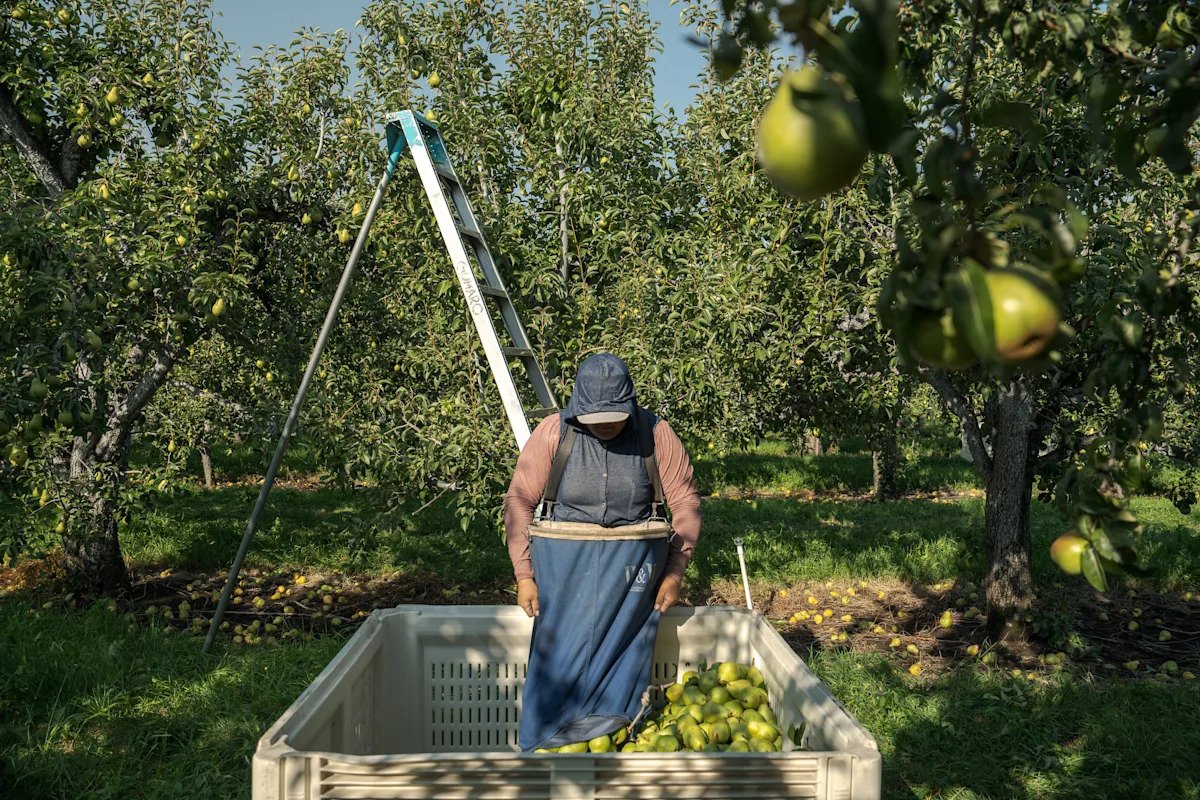
Agricultural workers are already among the most vulnerable to extreme heat. For pregnant workers, those risks are higher because the body must work harder to cool down and requires more liquids, making it more easily dehydrated. While protections exist, experts say they need better enforcement and more are needed. The Associated Press interviewed four agricultural workers who recounted experiences of working in extreme heat while pregnant.
Here are takeaways from AP’s story:
How much are temperatures rising?
Average temperatures are increasing globally, including in the U.S.’s most agriculturally-productive states. Since the start of the 20th century, California temperatures have increased almost 3 F (1.67 C). Warming has accelerated, and seven of the past eight years in that state through 2024 have been the warmest on record. In Florida, average temperatures have increased by more than 2 F (1.11 C).
When it comes to how the body reacts to heat, even small temperature increases can be significant.
One study found that agricultural workers had more than 35 times the risk of heat-related deaths than other workers. In the U.S., an estimated one-third of farmworkers are women — an increasing share of the farm workforce.
How are pregnant farmworkers more at risk?
Pregnancy increases the risks of extreme heat because the body has to work harder to cool down. Heat exposure has been linked to increased risk of miscarriages, stillbirths, preterm births, low birth weight and birth defects.
Combining pregnancy and heat with physical labor can more quickly overwhelm the body’s cooling system, increasing the likelihood of dehydration, heat illness and heat stroke.
Farmworkers are also less likely to demand employers provide adequate shade, water or rest, or speak out when they’re feeling overheated for fear of being fired or having immigration enforcement officials called on them.
Pregnant farmworkers in rural areas generally have less access to maternity care because clinics are farther away. Other times, they can’t miss hours of work or aren’t given time off. Many also don’t get employer-sponsored medical care or paid leave.
Compounding these risks is the Trump administration’s immigration crackdown. Health care providers have reported seeing fewer walk-ins, patients delaying prenatal care and more pregnant patients whose first doctor’s visit was for labor and delivery, according to research by the group Physicians for Human Rights. Others have reported an increase in no-shows and canceled appointments.
What protections are in place?
No federal heat protections exist, although the Trump administration appears to be moving forward with a proposed rule. Some states, including California, have their own protections, while others, like Florida, have barred local governments from implementing their own. In states with protections, advocates say they’re not adequately enforced and pointed to a widespread distrust of reporting systems.
More than 30 states and cities have laws requiring employers to provide accommodations for pregnant workers. Most recently, 2023’s federal Pregnant Workers Fairness Act requires employers to provide “reasonable accommodations” to pregnant workers, those who recently gave birth or have medical conditions related to birth or pregnancy. Other laws make it illegal to fire or discriminate due to those factors.
Even so, some experts said there aren’t enough legal protections for pregnant workers. “It’s probably one of the reasons why we have some of the highest rates of maternal and infant mortality in high-income countries in the world,” said Ayana DeGaia, assistant professor of obstetrics and gynecology at the University of Washington in Harborview.
Others said it’s also unclear how some of these protections are enforced in agriculture and how they benefit women farmworkers.
In Florida, a top U.S. producer of indoor plants and tropical foliage, the nursery industry’s mostly women workers have joined a fight for heat protections. In California, workers have been advocating for guaranteed compensation when they lose wages due to heat waves and other extreme weather events, as well as extra pay when they work during dangerous weather conditions.
___
The Associated Press receives support from the Walton Family Foundation for coverage of water and environmental policy. The AP is solely responsible for all content. For all of AP’s environmental coverage, visit https://apnews.com/hub/climate-and-environment
