


Within throwing distance of Apple stores around Manhattan and Google’s New York HQ, bus stop posters teased the Big Tech giants.
“AI can’t generate sand between your toes,” one read. “No one on their deathbed ever said: I wish I’d spent more time on my phone,” said another.
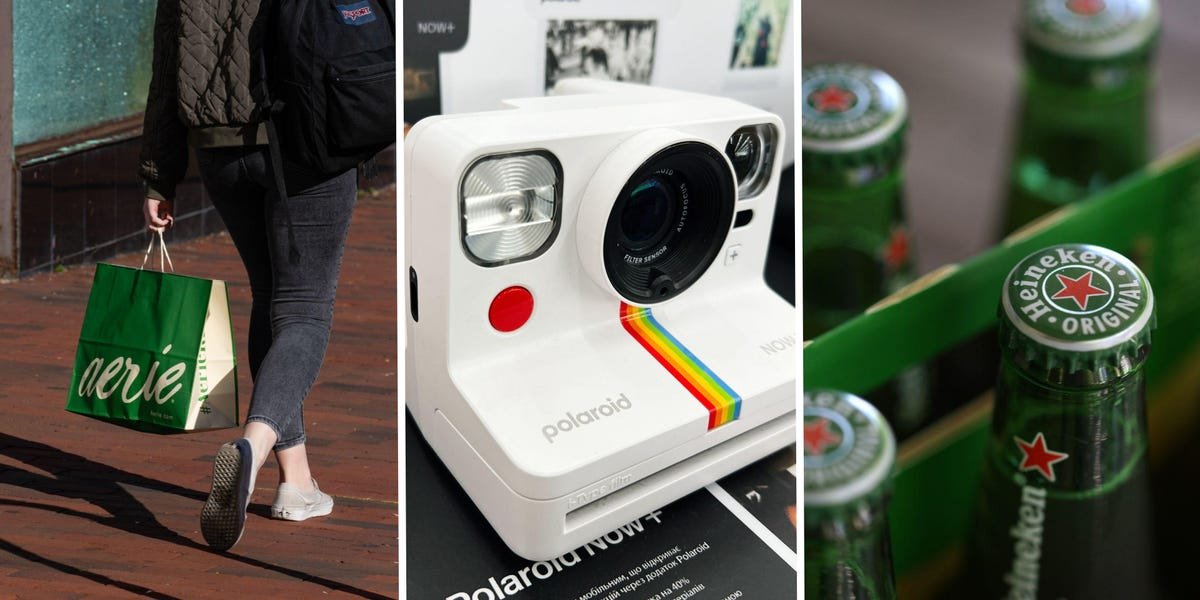
The ribbing came from Polaroid, promoting its point-and-click Flip camera.
“We are such an analog brand that basically gave us the permission: We can own that conversation,” said Patricia Varella, Polaroid’s creative director.
It has some competition. A wave of anti-AI ads is appearing on TV screens, billboards, and social media feeds worldwide, as big brands tap into consumers’ weariness with the technology.
Heineken joined New Yorkers’ disdain for AI wearable Friend with a billboard campaign declaring “The best way to make a friend is over a beer.” Aerie’s promise not to use AI in its ads was the brand’s most popular Instagram post in the past year. In India, the candy brand Cadbury 5 Star ran a campaign entitled “Make AI Mediocre Again,” a fictional movement to flood the internet with nonsensical websites to trick content-scrapers. And DC Comics’ Jim Lee said the company will “not support AI-generated storytelling or artwork.”
It’s all in response to increasingly vocal AI haters. Never-AI Gen Zers cite reasons like the environment and mental health for eschewing the tech. Workers in Corporate America are mounting a resistance to pressure to use AI at work. Still, the incentive for companies is strong if the tech fulfills its promise of saving time and money.
For some brands, it’s time to pick a side.
Related stories

Business Insider tells the innovative stories you want to know
Business Insider tells the innovative stories you want to know
AI ads give customers the ick
Ads generated by AI tools have also courted their fair share of controversy.
Coca-Cola rang in the holidays last year with a campaign depicting a fleet of lit-up trucks, polar bear families, and smiling faces — all AI-generated. In summer 2024, Toys “R” Us released an ad created by OpenAI’s Sora that showed its founder, Charles Lazarus, as a boy. Both ads were widely panned online as soulless and criticized for replacing human-made creativity with automation. H&M, Skechers, and Guess have also taken heat for using AI brand ambassadors instead of human models.
In contrast, some brands are eager to signal authenticity, said Haley Hunter, cofounder at the comedy-focused ad agency Party Land, whose client roster includes Liquid Death, Men’s Wearhouse, and Twitch. That’s especially important for younger people.
“They want unpolished, unpretentious, undeniably real,” Hunter said. “They care if the work feels honest, and we’ve yet to feel that true on-screen connection to an AI brand.”
A Pew Research study published in September found that 50% of Americans were more concerned than excited about the increased use of AI in daily life, up from 37% in 2021. More than half (57%) of those surveyed rated the societal risks of AI as “high,” with the potential weakening of human skills and connections the most common concern cited. And while most Americans said it was important to be able to tell the difference between AI- and human-generated content, 12% of those polled said they were confident they could.
That’s part of why clothing retailer Aerie is making it clear that its ads will only feature real humans. As an extension of the brand’s promise more than 10 years ago that it would no longer retouch photos of models, it told its Instagram followers this month that it’s committed to using “real people only” in ads.
Stacey McCormick, chief marketing officer, said she’s observed strong reactions to AI-generated content in other brands’ comment sections. It’s Aerie’s hope that with its anti-AI stance, companies are “a little inspired to do the same as far as building transparency.”
AI grabs attention, but that’s not always a good thing
Ian Forrester, CEO of DAIVID, a creative testing platform that measures viewer emotions, said the beef with AI-generated ads is that “they are a little cold; a little too bloodless to really move people in any way.”
His company evaluated the effectiveness of 21 ads, either entirely or partly AI-generated, and from the likes of Volvo, Microsoft, and Puma. They induced slightly more emotional engagement, attention, and brand recall from viewers than the industry average. However, they were 3% less likely to generate intense positive emotions than the industry norm and 12% more likely to generate feelings of distrust.
NielsenIQ found similar results in 2024: Even the best-quality AI-generated ads weren’t good at triggering memories in the brain.
“Brains have a prototype or a blueprint for everything we experience. If there’s something slightly different in that blueprint, it sends a signal to us that something’s just off,” said Megan Belden, global practice lead for ad effectiveness at NielsenIQ. The area where that was found to be most sensitive was in ads that featured human faces, human motion, and human connection.
“We’re really good at detecting authenticity in expression,” Belden added.
While entirely AI-driven ads may still be in their uncanny valley era, there’s no escaping that AI and the ad industry have become intertwined. Large agency groups from UK-based WPP to French holding company Publicis and US ad giant Omnicom have each pledged to invest hundreds of millions of dollars in AI over the next few years. The pitch to clients is that agencies can act as a consultative partner to marketers trying to figure out how to use AI within their own businesses, while also harnessing the tech themselves to free up time for human creatives to do what they do best.
Companies across industries will weigh this balance since ditching AI altogether could put businesses at a major disadvantage. For now, at least, the AI haters are winning with some brands that are promoting their plans to keep it real.
“There’s always something in our nature, the analog element of us,” said Polaroid’s Varella, “that layer of imperfection that makes us human and beautifully imperfect — something we think is important to remind people.”
