


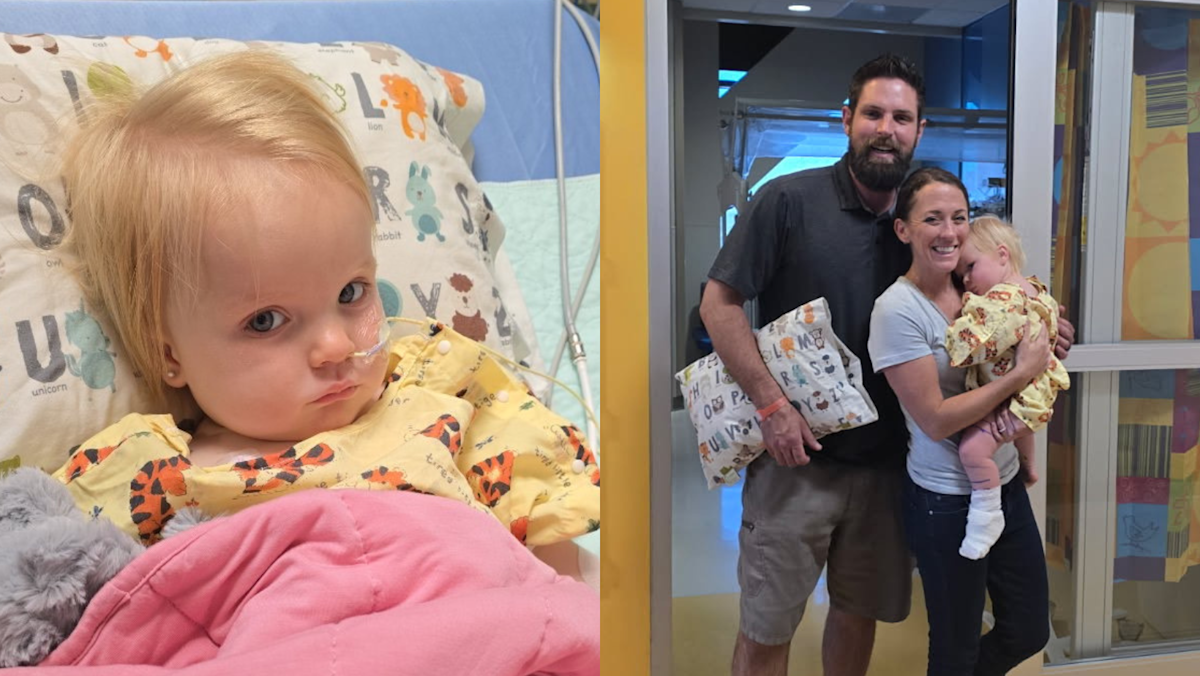
An Arizona toddler has returned home after a six-day hospital stay and treatment with 30 antivenom vials for two rattlesnake bites.
While playing in her yard May 16, 15-month-old Cara Reed was bitten by a rattlesnake twice on her left foot, as reported by The Arizona Republic, part of the USA TODAY Network. Cara’s mother Jacquelyn Reed told USA TODAY after her release from Phoenix Children’s Hospital that she is still recovering.
“She’s laughed one time and giggled one time, so we’re excited that she can start to perk back up before she has to go back under,” Jacquelyn said.
In a Facebook post a few days earlier, she had called Cara “truly a miracle” but said the trauma had “temporarily changed her vibrant personality.”
The Arizona Republic: Florence mom and nurse acted fast to save daughter bitten twice by rattlesnake
When happened to Cara Reed?
While playing in the family carport in Florence, Arizona, which is just more than 60 miles southeast of Phoenix, Reed was bitten twice by a rattlesnake that appeared from under a nearby propane tank, The Arizona Republic reported. Initially, Jacquelyn took Reed to a nearby emergency room, before she was airlifted to Phoenix Children’s Hospital.
Once at Phoenix Children’s Hospital, Reed’s medical team focused on correcting the toddler’s plummeting oxygen levels due to the venom, The Arizona Republic reported.
In a May 21 Facebook post, Jacquelyn shared that Cara was still showing signs of weakness and because she was not able to pass a swallow test, she was given a feeding tube in her nose.
Reed remained on a breathing tube until May 19, The Arizona Republic reported, and a feeding tube until the next day, Jacquelyn told USA TODAY.

Jacquelyn Reed holds her 15-month-old daughter Cara Reed. Cara was bitten twice by a rattlesnake in Florence, Arizona on May 16, 2025. After a six-day hospital stay, she returned home on May 22, 2025.
Jacquelyn is working with Cara’s medical team on a physical therapy plan ahead of upcoming reconstructive surgery on Cara’s foot.
Jacquelyn said it will likely need debridement, the removal of dead or infected tissue from a wound, and possibly a skin graft, using a patch of healthy skin from another part of her body to help the area heal. She said the family has yet to hear exactly how the foot wounds will be handled.

Cara Reed, left, with her parents, Matthew and Jacqueline Reed at Phoenix’s Children’s Hospital in Phoenix, Arizona. Cara was bitten twice by a rattlesnake at her home in Florence, Arizona on May 16.
“Sweet Cara still has yet to smile and has a thousand yard stare for right now,” Jacquelyn shared in her May 23 Facebook post. “Matthew and I truly believe that her best chance of recovering while not much medical intervention is needed is at home with her family. She is so very loved and so very cared for.”
A GoFundMe fundraiser was created shortly after Reed’s hospital admittance. As of May 24, the fundraiser had raised more than $45,000.
How common are rattlesnake bite-induced deaths?
Rattlesnake bites are rarely fatal.
According to the Centers for Disease Prevention and Control, between 7,000 to 8,000 people are bit by a venomous snake (including rattlesnakes, copperheads, cottonmouths and coral snakes) in the U.S. each year. Of those cases, about five are fatal.
When it comes to how a snakebite affects a child in comparison to a full-grown adult, recent research says there aren’t many differences.
A 2020 study published in Journal of Medical Toxicology found that adult and pediatric patients bitten by venomous snakes had similar rates of system toxicity, severity, length of stay and late hematologic toxicity − low blood count.
This story has been updated to add more information.
Greta Cross is a national trending reporter at USA TODAY. Story idea? Email her at gcross@usatoday.com.
This article originally appeared on USA TODAY: Arizona toddler returns home after intensive treatment for snake bites
