


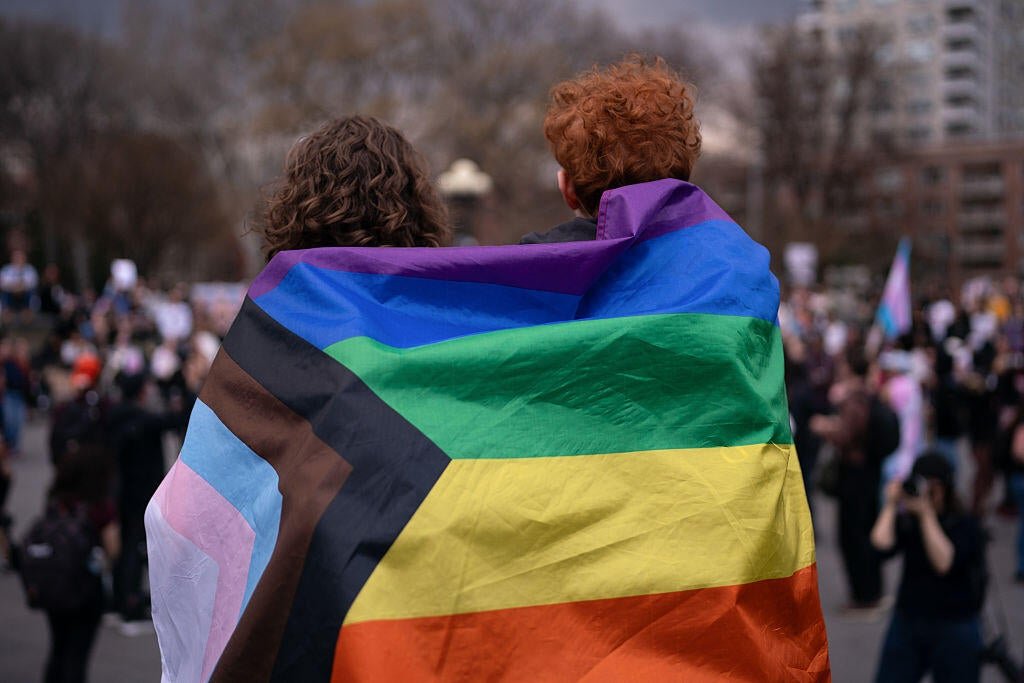
Mental health distress among LGBTQ+ youth in the United States has been increasing amid a surge in anti-LGBTQ+ legislation, but strong support networks and access to health care were shown to ease symptoms for some, a study found.
The findings were published Thursday by The Trevor Project, an LGBTQ+ advocacy organization that provides crisis intervention and suicide prevention services. Researchers followed 1,689 LGBTQ+ young people between the ages of 13 and 24 between September 2023 and March 2025.
The study is the first to follow a sample of LGBTQ+ young people over an extended period of time, said Ronita Nath, vice president of research for The Trevor Project.
“We know that LGBTQ+ youth are at a significantly higher suicide risk than their cisgender heterosexual peers, but most research only captures their experiences at one point in time, which really limits our understanding of how risk and protective factors play out over months or years,” Nath told CBS News.
The participants of the study were asked to complete a 139 question survey about a range of risk and protective factors on three separate occasions between six month intervals.
Researchers found mental health distress increased substantially throughout the study’s first year. LGBTQ+ youth reporting recent anxiety symptoms rose from 57% to 68%. Those reporting depressive symptoms climbed from 48% to 54%. Suicidal ideation among LGBTQ+ youth grew from 41% to 47%, the data shows.
The findings show how experiencing discrimination or support preceded changes in mental health, suggesting they drive rather than coincide with negative or positive health outcomes, Nath said.
Trevor Project data shows living in an LGBTQ+-affirming home was linked to 37% lower odds of suicidal thoughts. Receiving high support from family was associated with 62% lower odds of suicidal ideation when controlled for age, sexual orientation, gender identity and race/ethnicity.
Data also indicates conversion therapy, or attempts to change a person’s sexual orientation or gender identity, remains a harmful experience for LGBTQ+ youth contributing to mental health distress.
“While we may think it’s a relic of the past, this data indicates that these dangerous practices are still happening and actually may be on the rise,” Nath said.
Reports of being threatened with conversion therapy doubled in the first year of the study, and exposure to the practice rose from 9% to 15% among participants.
Last week, the Supreme Court heard arguments in a case challenging a Colorado law banning conversion therapy treatments for minors. Colorado is one of at least 20 states that prohibit mental health professionals from engaging in any practice, including talk therapy, that attempts to change an individual’s sexual orientation or gender identity.
Transgender and nonbinary youth between ages 13 and 17 reported the poorest mental health outcomes. They were twice as likely to report anxiety and suicidal ideation compared to their cisgender peers, a pattern that persisted over the course of the study.
Legislation restricting legal and medical protections for transgender and nonbinary youth may be contributing to the worsening outcomes, Nath said.
“Access to medical, legal, and social supports for gender transition, which includes hormones, puberty blockers, accurate identification documents contributed to improved mental health among transgender and nonbinary youth, which I think highlights the potential harm created by legislation reducing access to transgender health care,” she said.
The ACLU is tracking at least 25 laws passed across the U.S. to limit access to affirming health care for trans youth.
While mental health outcomes worsened, suicide attempts among the LGBTQ+ youth surveyed declined from 11% to 7%. Still, that rate remains higher than national estimates for cisgender heterosexual youth.
“LGBTQ+ young people are not inherently prone to higher suicide risk, but that, they’re placed at higher suicide risk because of how they’re stigmatized and denied support,” said Nath.
Nath emphasized the overarching takeaway from the study is how support from family and community can affect the mental health of LGBTQ+ youth.
“Across all our analysis, supportive family environments, accepting friends, and greater cumulative family support actions all reduce the likelihood of later anxiety, depression and suicidal ideation, which really does echo decades of research on the protective power of family acceptance,” she said.
If you or someone you know is in emotional distress or a suicidal crisis, you can connect to a crisis counselor at The Trevor Project by texting “START” to 678-678 or calling 1-866-488-7386.
For more information about mental health care resources and support, The National Alliance on Mental Illness (NAMI) HelpLine can be reached Monday through Friday, 10 a.m.-10 p.m. ET, at 1-800-950-NAMI (6264) or email info@nami.org.
What to expect from Trump’s news conference with FBI Director Kash Patel
Lawmakers sound off on Trump’s Argentina bailout as government shutdown continues
Hamas says it has handed over all hostage remains it can recover amid destruction in Gaza
