


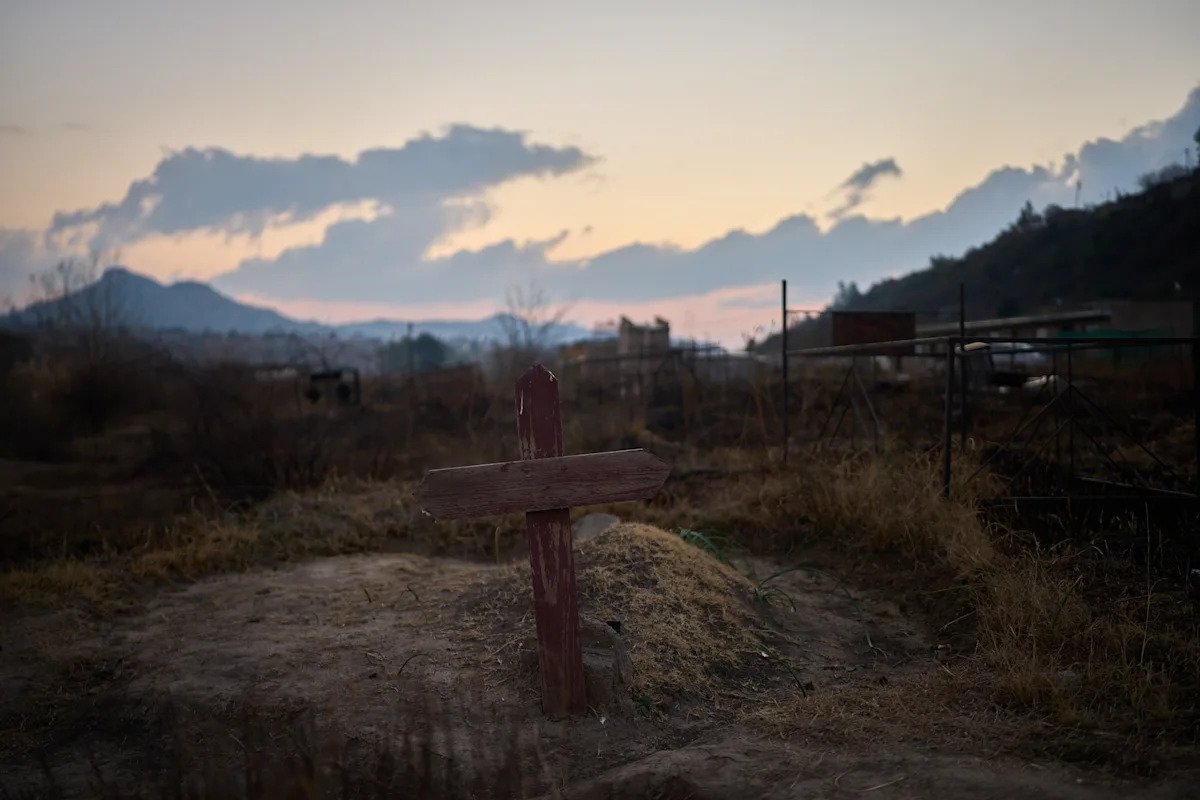
HA LEJONE, Lesotho (AP) — In the wake of massive U.S. cuts to foreign aid, the small country of Lesotho, in southern Africa faces deep uncertainty and worry over its HIV-positive residents.
Lesotho long had the world’s second-highest HIV infection rate. Over years, with nearly $1 billion in U.S. aid, Lesotho patched together a health network efficient enough to slow the epidemic’s spread. But when U.S. President Donald Trump froze foreign assistance and dismantled the U.S. Agency for International Development, chaos and confusion followed in Lesotho. Clinics shut down, workers were let go, and patients stopped treatment.
Much of Lesotho’s system to treat hundreds of thousands of HIV-positive residents is crumbling, and experts are sounding alarms, even as some U.S.-funded programs are temporarily reinstated.
Here are some takeaways from The Associated Press’ reporting on the effects of the aid cuts in Lesotho.
Nine months after cuts began, there’s still much confusion
When aid cuts began, confusion followed in nearly all the 130 countries with USAID-supported programs. More than nine months later in Lesotho, there’s still little clarity.
Weeks ago, the U.S. announced it would reinstate some flagship initiatives to combat HIV worldwide. Officials here applauded the move. But the measures are temporary solutions that stress countries must move toward autonomy in public health.
The State Department told the AP in an email that its six-month bridge programs would ensure continuity of lifesaving programs while officials work with Lesotho on a multiyear agreement on funding.
Those negotiations will likely take months. While programs may have been reinstated on paper, restarting them on the ground takes considerable time, Lesotho health workers and experts told AP.
HIV-positive residents, families and caregivers say the chaos that reigned most of this year has caused irreparable harm, and they’re consumed with worry and uncertainty about the future. Most feel deep disappointment — even betrayal — over the loss of funds and support.
“Everyone who is HIV-positive in Lesotho is a dead man walking,” said Hlaoli Monyamane, an HIV-positive 32-year-old miner.
Key programs have been cut, and people have lost jobs
HIV prevention programs — targeting mother-to-child transmission, encouraging male circumcision, and working with high-risk groups including sex workers and miners — were cut off.
Unpaid nurses and other workers have been using informal networks to reach isolated communities. Labs and clinics shuttered. Patients started abandoning treatment or rationing pills.
Rethabile Motsamai, a 37-year-old psychologist, saw her HIV counselor role eliminated. She worries for the populations she served. “They’ll just stop taking their medication,” she said of those who would have to travel particularly far.
Catherine Connor, of the Elizabeth Glaser Pediatric AIDS Foundation, emphasized that “any step backward creates a risk of resurgence.”
In the 16 years her organization has worked in Lesotho, HIV transmission from mother to child dropped to about 6% from nearly 18%. Lesotho’s government should get credit, Connor said, but her group and others were key in targeting children’s treatment and prevention.
“When a child never gets diagnosed, it feels like a missed opportunity,” Connor said. “When a child who was receiving treatment stops getting treatment, it feels like a crime against humanity.”
Some stress that many lives are at stake
Mokhothu Makhalanyane, chairperson of Lesotho’s legislative health committee, said the cuts’ impact is huge, estimating the country was set back at least 15 years.
“We’re going to lose a lot of lives,” he said plainly.
Experts with UNAIDS — the U.N. agency tasked with fighting the virus globally — warned in July that up to 4 million people worldwide would die if funding weren’t reinstated. And Lesotho health officials said the cuts would lead to increased HIV transmission, more deaths and higher health costs.
Calculating how many lives are lost or affected is a massive task, and those responsible for tracking and adding data to a centralized system were largely let go.
PEPFAR funds were pivotal to the effort
In 2003, the U.S. launched the President’s Emergency Plan for AIDS Relief. PEPFAR became the largest commitment by any nation to address a single disease, and its main implementing partner was USAID. PEPFAR was so well known in Lesotho that health professionals and residents use the term as shorthand for any HIV aid.
When foreign assistance was frozen, Lesotho lost at least 23% of its PEPFAR money, putting it in the top 10 countries for share of such funding cut, according to the Foundation for AIDS Research.
Rachel Bonnifield, of the Center for Global Development, called the Trump administration’s new vision for PEPFAR — with funds sent directly to governments rather than through development organizations — ambitious but high-risk.
“It is disrupting something that currently works and works well, albeit with some structural problems, in favor of something with high potential benefits … but is not proven and does not currently exist,” she said.
Some Lesotho officials see overdue signs to stop relying on international aid.
“This is a serious wake-up call,” Makhalanyane said. “We should never put the lives of the people in the hands of people who are not elected to do that.”
Lesotho had made notable progress
Lesotho reached a milestone late last year — UNAIDS’s 95-95-95 goal, with 95% of people living with HIV aware of their status, 95% of those in treatment, and 95% of those with a suppressed viral load. Still, the nation must care for the estimated 260,000 of its 2.3 million residents who are HIV-positive.
UNAIDS’ main goal is to end the AIDS epidemic as a public health threat by 2030. Lesotho had made enough progress in reducing new infections and deaths to be on track, according to Pepukai Chikukwa, UNAIDS’s country director in Lesotho.
But after the aid cuts, things were “just crumbling,” she said.
“Lesotho’s made progress one should not overlook,” she added. “At the same time, it is still a heavily burdened country with HIV.”
Chikukwa was optimistic about the U.S. temporarily reinstating programs. “There is some hope,” she said.
But it’s not clear how much those bridge programs will “close the gap,” added Chikukwa, even as she’s leaving Lesotho. Her role was eliminated because of the aid cuts. The South Africa UNAIDS office will oversee Lesotho, she said, but she wasn’t sure where she’d be reassigned.
_____
Pascalinah Kabi and Limpho Sello in Maseru, Lesotho, and Thalia Beaty in New York contributed.
___
For more on Africa and development: https://apnews.com/hub/africa-pulse ___
The Associated Press receives financial support for global health and development coverage in Africa from the Gates Foundation. The AP is solely responsible for all content. Find AP’s standards for working with philanthropies, a list of supporters and funded coverage areas at AP.org.
