


On Netflix’s hit show, Love Is Blind, 32 singles spend about 10 days unable to see who they’re dating. Making contestants temporarily blind to the physical attributes of their potential partners is the whole premise of what the hosts and participants like to refer to as “the experiment.”
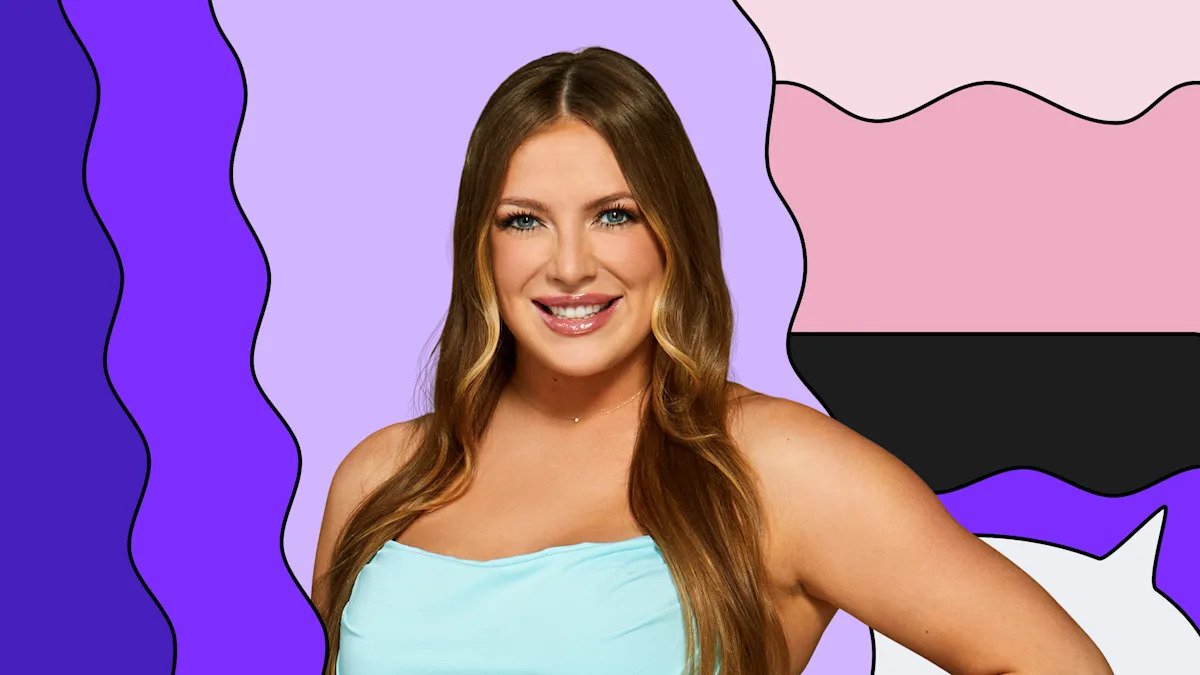
But for one of the contestants in the show’s ninth season, which premiered on Oct. 1, the “blind” aspect isn’t a game at all. Madison Maidenberg was diagnosed with a rare eye disease — and one day she may lose her sight altogether. “I wanted to go on Love Is Blind because the experiment is so similar to what my life could be like if I actually lose my vision,” the 28-year-old UI/UX designer tells Yahoo.
Will Maidenberg find love in the pods? Come on, we can’t tell you that! But, as told to Yahoo’s Natalie Rahhal, Maidenberg opens up about seeing the world through static and coming to see herself more clearly through Love Is Blind.
I couldn’t see what other people saw
I’ve worn glasses and corrective lenses since I was 12 and got annual retinal scans to check for eye diseases. For years, nothing came up on those scans, but by the time I was 14, I noticed that when I went to the movies with my friends, I couldn’t really see very well in the dark theater. Other people were definitely seeing things that I wasn’t, especially at night.
A few years later, I went camping with my sister and brother-in-law. The campground had night sky-viewing binoculars set up. My brother-in-law looked through them and said he could see stars, then told me to look through. I was like, “God, I don’t even know what he’s talking about.” I wasn’t seeing the stars at all. And then I realized I hadn’t seen stars since I was 11 or 12.
That turns out to be a common sign of my condition, retinitis pigmentosa, or RP. The condition means that the rods and cones in my eyes are rapidly deteriorating, and it really affects my night vision and my peripheral vision. It can be really difficult for me to go from very bright lighting to darker spaces. I also always see a sort of filter over my vision. If you can imagine what TV static looks like, that’s what I see all the time, even in the light. That’s what kept me from seeing the stars. So for a while, I actually thought that I had something called visual snow syndrome. I was scared that that might be my diagnosis, because there are just not really any answers about that condition.
Still, my health care providers didn’t think anything was terribly wrong with my vision until I switched eye doctors when I was 21. After doing my retinal scan, my new doctor asked, “Has anybody ever told you that you have bone spicules on your retina?” I was like, “No, I have no idea what that means.” Bone spicules are deposits of pigment that clump around some of the retina’s blood vessels, and they’re indicative of RP. The doctor sent me to a retina specialist, and I got my official diagnosis.
A diagnosis gave me one answer — and led to many more questions
RP is genetic, but I have the recessive form, which means that the condition only happens in the rare instances when both parents have the gene. That also means that no one in my family has anything like this eye disease, even though they may carry the gene. So it was hard for me to understand why this had happened to me. Being diagnosed meant I got an answer, but it actually just led to more questions.
Eventually, I found the Foundation Fighting Blindness. They did my genetic testing and paired me with a genetic counselor. That was amazing, because after my diagnosis, I felt very lonely. I still have days when I’m on the floor crying, wondering, Why me? My prognosis was, and still is, a big question mark. But after finding the foundation, I started volunteering with them and was recently elected president of the Colorado chapter. Having this community and getting to shed light on conditions like mine has been really valuable for me.
Luckily, over the last two years, there hasn’t been a significant deterioration in my vision like there was from ages 14 to 24. I’m very fortunate to still be able to drive (though I avoid driving at night). Right now, I’m relatively stable. But RP is a blinding eye disease, so most people with it do end up losing their vision. It varies with age, but I know people who have never driven because their RP is more advanced and others who are in their 80s who still have a decent range of vision.
There’s always a bit of a learning curve for my partners to learn what I can and can’t see.
I can’t hide my vision impairment on dates. On Love Is Blind, I couldn’t hide from myself
Love Is Blind represents an opportunity for me to see if there is a partner for me that can really light me up without me being able to see them and simulate what that would be like if I were to lose my vision.
I love dating, and in fact, I went on 40 dates last year before signing up for Love Is Blind. But it isn’t always easy. Just because somebody doesn’t have a white cane or doesn’t “look” blind doesn’t mean they aren’t struggling to function the same way that nondisabled people operate. Before dates, I have often had to look up the restaurant or bar we were going to so I have a sense of what the layout will be and how dim the light will be. I’ve definitely been on dates where guys have said something … not thoughtful about my vision. And that’s definitely difficult.
I lived alone for several years before I signed up for Love Is Blind, and, in many ways, it was easier than sharing a home. There was no one else to move things around or leave a drawer open for me to run into. I am hyper-independent and will try to just do things by myself. There’s always a bit of a learning curve for my partners to learn what I can and can’t see. But when I’ve dated people who are really perceptive and take the time to learn my needs — things like subtly pulling me away from a trash can I would’ve run into while we were holding hands, or giving verbal cues about when to step up on a stair — it’s really helpful.
I’ve always disclosed my eye condition early on when dating someone; frankly, it becomes evident pretty quickly because, if we’re in a dark bar, I’m probably going to need them to help me find the bathroom. And I’ve been very fortunate that most people I’ve dated have been really receptive and understanding. But my vision impairment has been difficult for me to fully accept about myself. It’s made me question whether I’m enough or worthy of love. For a long time, my RP was something that I felt a little ashamed of.
When dating in person, I think we have things we can lean on that make us feel valid or worthy. But the pods are such a bubble. You can’t hide from yourself there. You either have to really open up, or you’re going to have to face some demons. For me personally, it was a moment when I had to bear everything about who I am, and that includes my eye condition. I have to love that because it’s part of me. Being in the pods and having to use all of my other senses to interact with the people I was dating has been really helpful and actually very validating.
This has been edited for length and clarity.
