


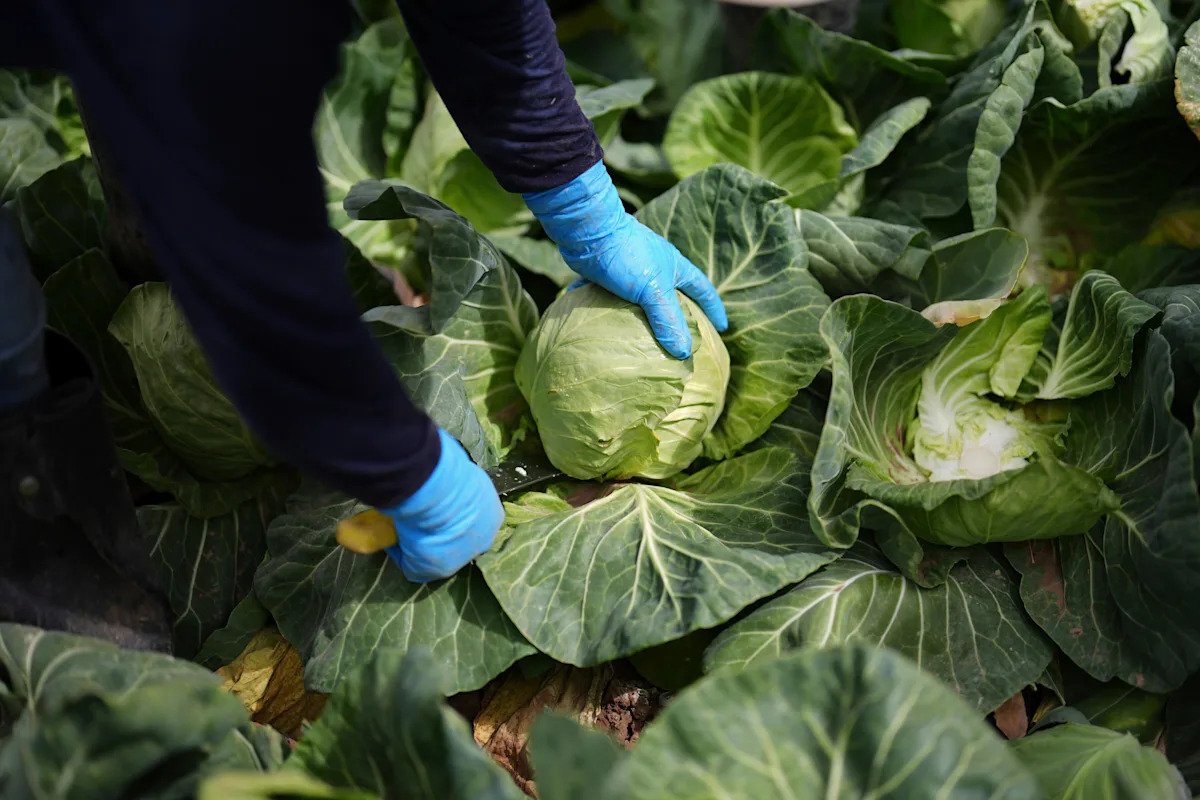
About 15 million deaths could be avoided each year and agricultural emissions could drop by 15% if people worldwide shift to healthier, predominantly plant-based diets, according to the EAT-Lancet Commission, which brought together scientists worldwide to review the latest data on food’s role in human health, climate change, biodiversity and people’s working and living conditions.
Their conclusion: Without substantial changes to the food system, the worst effects of climate change will be unavoidable, even if humans successfully switch to cleaner energy.
“If we do not transition away from the unsustainable food path we’re on today, we will fail on the climate agenda. We will fail on the biodiversity agenda. We will fail on food security. We’ll fail on so many pathways,” said study co-author Johan Rockström, who leads the Potsdam Institute for Climate Impact Research.
The commission’s first report in 2019 was regarded as a “really monumental landmark study” for its willingness to take food system reform seriously while factoring in human and environmental health, said Adam Shriver, director of wellness and nutrition at the Harkin Institute for Public Policy and Citizen Engagement.
Key points from the latest report:
A ‘planetary health diet’ could avert 15 million deaths every year
The first EAT-Lancet report proposed a “planetary health diet” centered on grains, fruits, vegetables, nuts and legumes. The update maintains that to improve their health while also reducing global warming, it’s a good idea for people to eat one serving each of animal protein and dairy per day while limiting red meat to about once a week. This particularly applies to people in developed nations who disproportionately contribute to climate change and have more choices about the foods they eat.
The dietary recommendations were based on data about risks of preventable diseases like Type 2 diabetes and cardiovascular disease, not environmental criteria. Human and planetary health happen to be in alignment, the researchers said.
Rockström said it may seem “boring” for an analysis to reach the same conclusion six years later, but he finds this reassuring because food science is a rapidly moving field with many big studies and improving analytics.
Food is one of the most deeply personal choices a person can make, and “the health component touches everyone’s heart,” Rockström said. While tackling global challenges is complicated, what individuals can do is relatively straightforward, like reducing meat consumption without eliminating it altogether.
“People associate what they eat with identity” and strict diets can scare people off, but even small changes help, said Emily Cassidy, a research associate with climate science nonprofit Project Drawdown. She wasn’t involved with the research.
Our food choices could push the planet past a tipping point
The researchers looked beyond climate change and greenhouse gas emissions to factors including biodiversity, land use, water quality and agricultural pollution — and concluded that food systems are the biggest culprit in pushing Earth to the brink of thresholds for a livable planet.
The report is “super comprehensive” in its scope, said Kathleen Merrigan, a professor of food systems at Arizona State University who also wasn’t involved with the research. It goes deep enough to show how farming and labor practices, consumption habits and other aspects of food production are interconnected — and could be changed, she said.
“It’s like we’ve had this slow awakening to the role of food” in discussions about planetary existence, Merrigan said.
Changing worldwide diets alone could lead to a 15% reduction in greenhouse gas emissions from agriculture, because the production of meat, particularly red meat, requires releasing a lot of planet-warming gases, researchers concluded. Increased crop productivity, reductions in food waste and other improvements could bump that to 20%, the report said.
Cassidy said that if the populations of high- and middle-income countries were to limit beef and lamb consumption to about one serving a week, as recommended in this latest EAT-Lancet report, they could reduce emissions equal to Russia’s annual emissions total.
Incorporating justice in an unequal world
Meanwhile, the report concludes that nearly half the world’s population is being denied adequate food, a healthy environment or decent work in the food system. Ethnic minorities, Indigenous peoples, women and children and people in conflict zones all face specific risks to their human rights and access to food.
With United Nations climate talks around the corner in November, Rockström and other researchers hope leaders in countries around the world will incorporate scientific perspectives about the food system into their national policies. To do otherwise “takes us in a direction that makes us more and more fragile,” he said.
“I mean both in terms of supply of food, but also in terms of health and in terms of stability of our environments,” Rockström said. “And this is a recipe to make societies weaker and weaker.”
___
Follow Melina Walling on X @MelinaWalling and Bluesky @melinawalling.bsky.social.
___
The Associated Press’ climate and environmental coverage receives financial support from multiple private foundations. AP is solely responsible for all content. Find AP’s standards for working with philanthropies, a list of supporters and funded coverage areas at AP.org.
