


Oct.1 marks the beginning of Breast Cancer Awareness Month, and the American Cancer Society (ACS) is commemorating 40 years of spreading awareness about the condition.
Breast cancer is the second most common cancer among women, with one in eight developing breast cancer in her lifetime, according to the ACS.
MORE: At 34, I was nervous about my breast cancer risk. Here’s what I did
However, the group also says that early detection can significantly improve treatment outcomes.
ABC News has compiled resources to help you learn more about breast cancer diagnosis, treatments and support.
Breast cancer statistics
Breast cancer is the second most common cancer among women in the U.S., behind skin cancer, accounting for one in three of all new female cancers every year, according to the ACS.
Between 2018 and 2022, more than two-thirds of cases of female breast cancer were diagnosed at a localized stage, meaning the cancer was contained to the breast, according to data from the Centers for Disease Control and Prevention (CDC).

STOCK PHOTO/Getty Images – PHOTO: In this undated stock photo, a doctor performs a mammogram on a patient.
Breast cancer is the second leading cause of cancer deaths among women, behind lung cancer, although death rates have been decreasing over the last three decades. ACS states this is believed to be due to earlier screenings, better treatments and increased awareness.
To learn more key statistics about breast cancer, click here or here.
Diagnosing breast cancer
Although breast cancer can be found after symptoms appear, many patients have no symptoms.
The most common symptom of breast cancer is a new lump or mass, but other signs and symptoms include swelling of the breast, skin dimpling, breast or nipple pain, nipple discharge aside from breast milk and nipple or breast skin that is red, dry, flaky or thickened, according to ACS.
Tests use to detect breast cancer include mammograms, breast ultrasounds and breast MRIs.
MORE: Women diagnosed with breast cancer in their 20s, 30s, 40s describe being robbed of their femininity
For women with low incomes and are uninsured or underinsured, the CDC’s National Breast and Cervical Cancer Early Detection Program offers free or low-cost mammograms.
To learn more about breast cancer symptoms and what imaging tests are available, click here.
Treating breast cancer
Treatment for breast cancer can vary depending on the type, stage and location of the cancer.
Options include surgery, radiation, chemotherapy, hormone therapy, immunotherapy and targeted drug therapy.
The ACS recommends patients discuss all treatment options that are available to them with their doctors.
To learn more about treatment options and approaches, click here.
What to know about screening
Currently, the U.S. Preventive Services Task Force recommends women between ages 40 and 74 who are at average risk for breast cancer get a mammogram every two years.
Women who are at higher risk with a family history of breast cancer or other risk factors should discuss timing of screening with their health care provider.

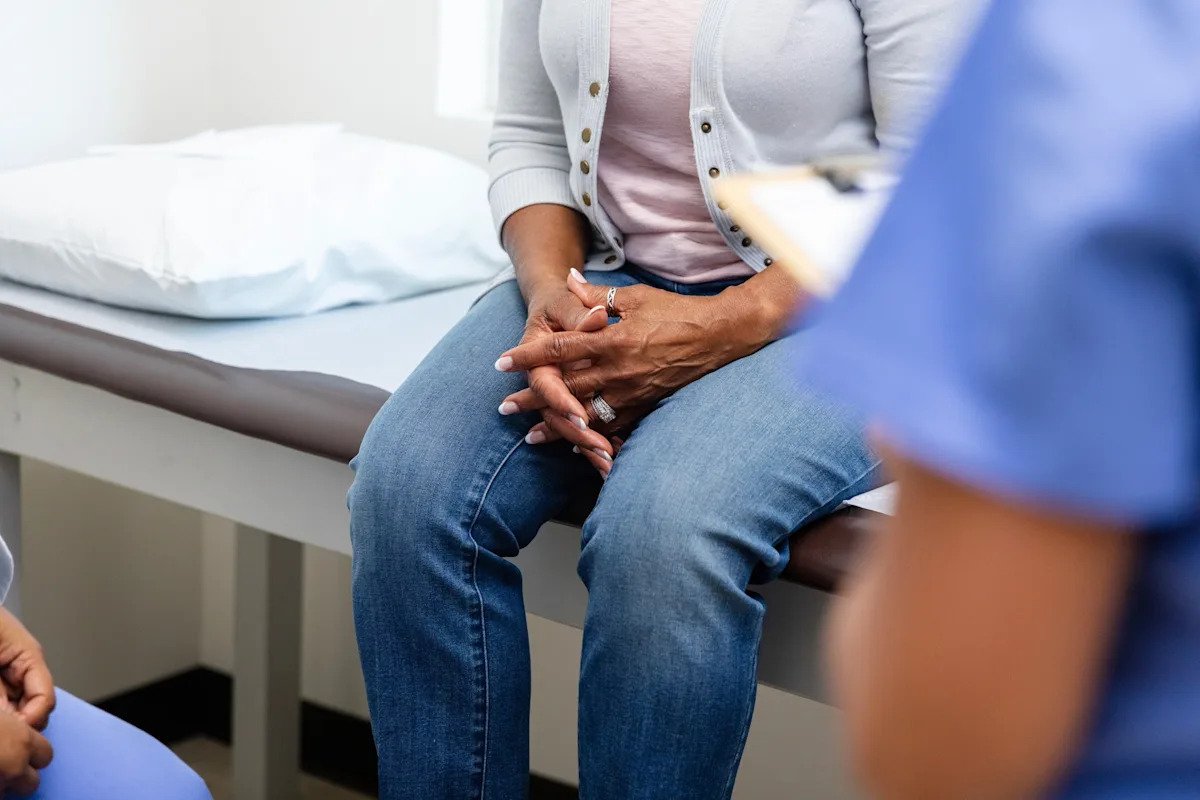
STOCK PHOTO/Getty Images – PHOTO: A woman patient at a doctor’s office in an undated stock photo.
Experts say screenings can help detect breast cancer in its early stages, when it’s easier to treat.
To learn more about screening and what tests are available, click here.
Sign up for a walk
One of ACS’ fundraising efforts includes Making Strides Against Breast Cancer.
The non-competitive walks, between three and five miles, are meant “to provide a supportive community for courageous breast cancer survivors and people living with metastatic breast cancer.”
To find an event near you, click here.
Connect with a breast cancer survivor
Through the American Cancer Society’s app, ACS CARES, those who have been diagnosed with breast cancer can connect with trained volunteers who are breast cancer survivors.
MORE: I had a preventative double mastectomy at 32, and no, I don’t have the BRCA gene
The app can help connect patients with volunteers who have the same cancer experience and similar background including diagnosis, location, race and ethnicity.
To learn more about how to be connected with a volunteer, click here.
