


Breast cancer awareness campaigns often focus on mammograms and self-exams. But there’s another critical piece of the puzzle that has gotten far less attention until recently: breast density.
A year after the FDA began requiring mammogram reports to tell women whether their breasts are dense, experts say it’s important to explain what that means and why it matters.
“About 40% of women are being diagnosed with dense breasts,” Dr. Alpa Patel, senior vice president of population science at the American Cancer Society told ABC News. “You actually find out about your breast density from your first mammogram, and that will actually potentially change over time.”
MORE: Late-stage breast cancer is rising, especially among Black women: Study
Breast tissue is made up of fibrous tissue, which holds everything in place, glandular tissue, which produces and carries milk, and fatty tissue, which shapes the breast, according to the Centers for Disease Control and Prevention. Breast density has nothing to do with breast size. Instead, it reflects how much fibrous and glandular tissue there is compared to fat on a mammogram.
According to the American Cancer Society, women are more likely to have dense breasts if they are younger, pregnant or breastfeeding, taking hormone replacement therapy, or have a lower body weight. Experts say women who are unsure should talk with their health care provider about their individual breast cancer risk and the potential benefits and drawbacks of different screening methods.
When dense tissue appears white on a mammogram it’s the same color as potential tumors, making it harder to detect abnormalities. Some experts liken it to trying to spot a snowball in a snowstorm.

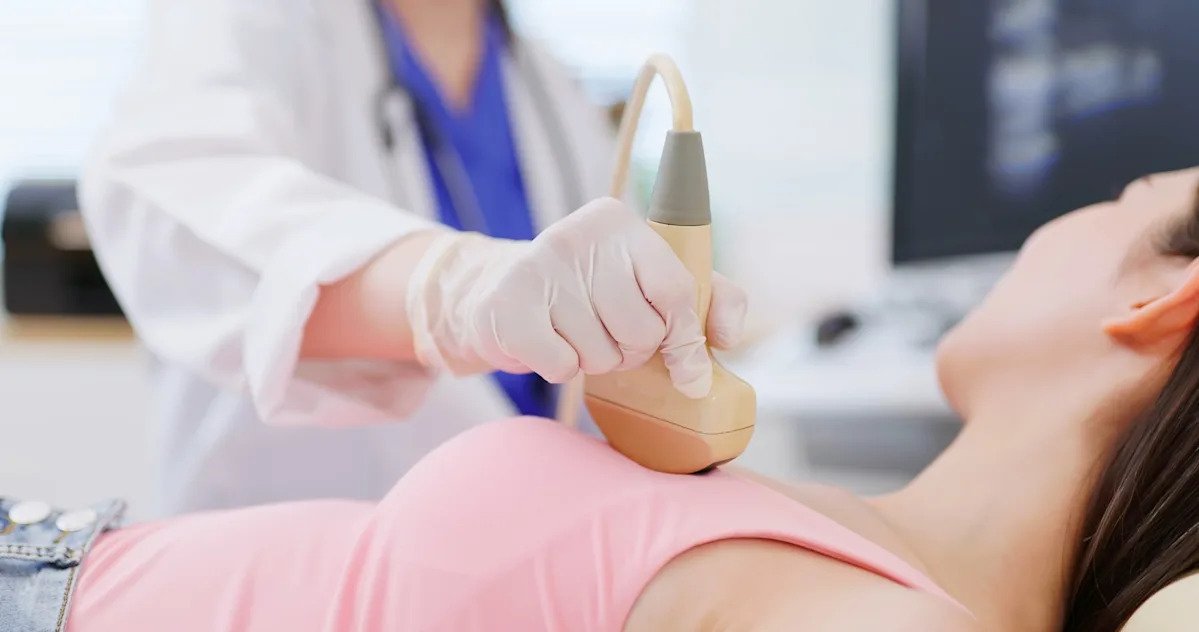
STOCK PHOTO/Getty Images – PHOTO: Close up of a doctor using ultrasound scanner performing examination of breast for her patient.
Breast density isn’t just a screening challenge either. It’s also a risk factor, according to the American College of Radiology, which notes that women with dense breasts are 2 to 3 times more likely to develop breast cancer, though they are not more likely to die from it.
Since September 2024, a new federal law requires mammogram reports to state whether breast tissue is dense, and to mention the possibility of additional imaging. For women with dense breasts, several options exist beyond standard mammography.
3D mammography (also called tomosynthesis) can catch cancers not seen on traditional mammograms but may not be available everywhere. Breast ultrasound uses sound waves to look at the breast and magnetic resonance imaging (MRI) uses radio waves and magnets to make detailed images, often used for high-risk patients. Depending on specific risk factors, providers may recommend one or more of these tests.
The ACR recommends most women have yearly mammograms starting at age 40. If a woman has additional risk factors or dense breasts, she should discuss this with her doctor to determine the benefit of adding supplemental screening tests in addition to mammogram.
MORE: I had a preventative double mastectomy at 32, and no, I don’t have the BRCA gene
“Breast density confers a slightly increased risk of breast cancer, but there are other factors that can confer a greater risk for breast cancer, such as family history or certain types of gene mutations,” Dr. Kimberly Feigin, chief of breast imaging at Memorial Sloan Kettering, told ABC News. “We recommend that primary care physicians do some sort of risk assessment of patients when they are young, so they can determine at what age it’s appropriate to start screening.”
And while not all risk factors are controllable, some are.
“We estimate about one in five breast cancers is actually preventable through things we have control over,” Patel said, pointing out that lifestyle choices can also lower risk.
She said that limiting alcohol, staying physically active with at least 30 minutes of brisk walking a day, eating a diet rich in fruits and vegetables while cutting back on red and processed meats, and maintaining a healthy weight are steps every woman can take to diminish their chances of breast cancer.
Dr. Megha Gupta is a Neurology Resident Physician at Barnes-Jewish Hospital/Washington University in St. Louis and a member of the ABC News Medical Unit.
